






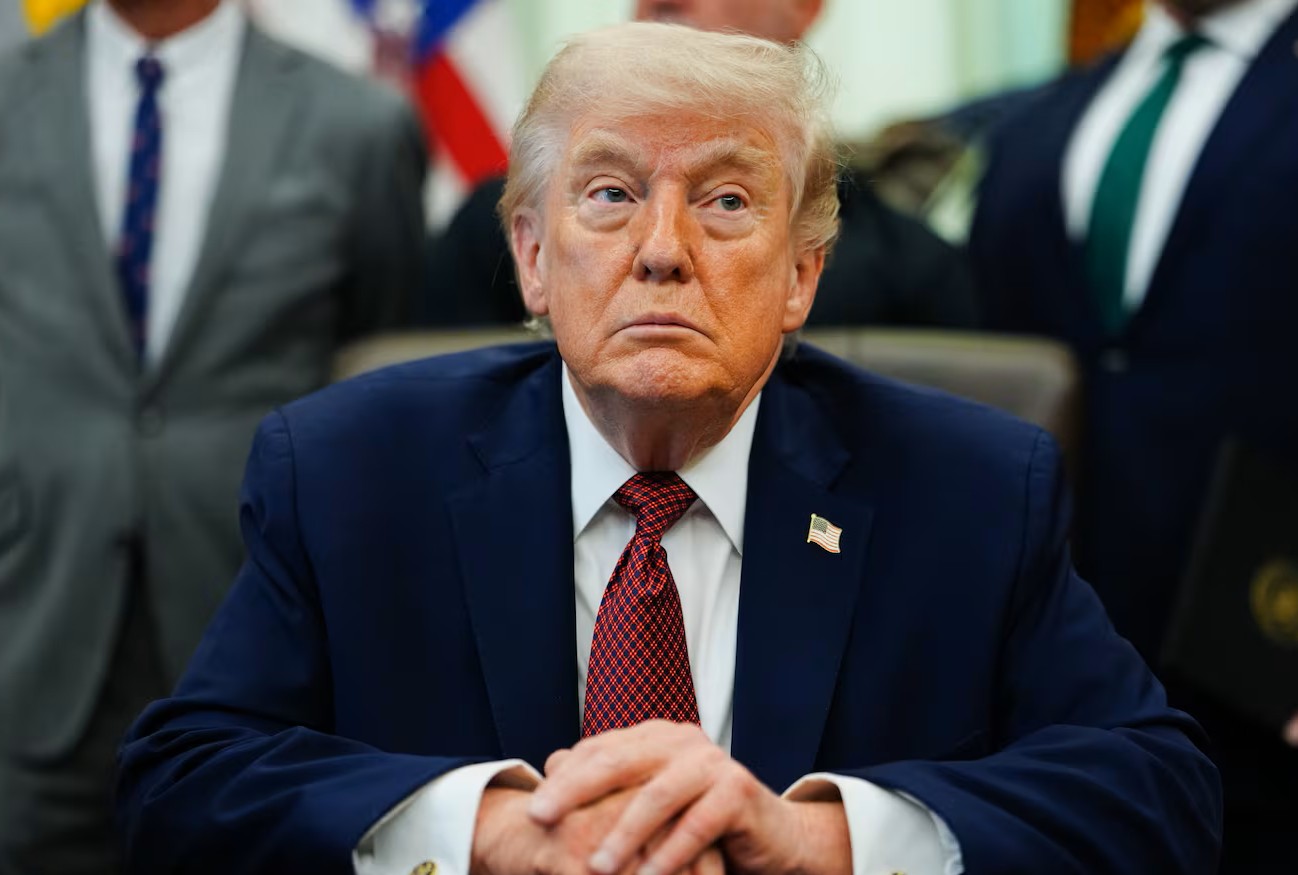
U.S. President Donald Trump has dramatically intensified Washington’s campaign against Iran by reimposing a naval blockade on all Iranian ports, authorizing a new wave of military strikes, and warning that additional attacks on key infrastructure could follow unless Tehran returns to negotiations over its nuclear program and regional security.
The latest measures represent one of the most significant escalations since the conflict began more than four months ago. According to the White House, the renewed military campaign is designed to weaken Iran’s strategic capabilities and increase pressure on its leadership to engage in diplomatic talks. Trump stated that the United States is prepared to expand its operations if Iran refuses to negotiate, with power plants, bridges, and other critical infrastructure identified as potential targets in the coming days.
The reimposition of the naval blockade is expected to tighten restrictions on Iranian trade by limiting maritime access to the country’s ports. U.S. officials argue the move is intended to curb the flow of military supplies and reduce Tehran’s ability to finance its regional activities. However, critics warn that the blockade could further inflame tensions in the Gulf and increase the risk of direct confrontation.
The renewed escalation has also heightened concerns over the security of the Strait of Hormuz, one of the world’s most important energy corridors. Although the waterway remains open to international shipping, military activity in the region has raised fears of disruptions that could affect global oil and liquefied natural gas exports. Energy markets have reacted cautiously, with traders closely monitoring developments for signs of further instability.
Iran has condemned the latest U.S. actions, describing them as violations of international law and accusing Washington of pursuing military coercion instead of diplomacy. Iranian officials have maintained that the country will continue to defend its sovereignty while insisting that any negotiations must take place without threats or external pressure.
The international community has responded with growing concern, urging both sides to avoid actions that could trigger a wider regional conflict. Several governments have renewed calls for dialogue, warning that continued military escalation could have serious humanitarian, economic, and geopolitical consequences extending far beyond the Middle East.
As the standoff enters a new and more dangerous phase, uncertainty continues to dominate the region. With military operations expanding, diplomatic efforts stalled, and global energy markets on edge, the coming days may prove decisive in determining whether the crisis moves toward negotiations or deeper confrontation.





+ There are no comments
Add yours