







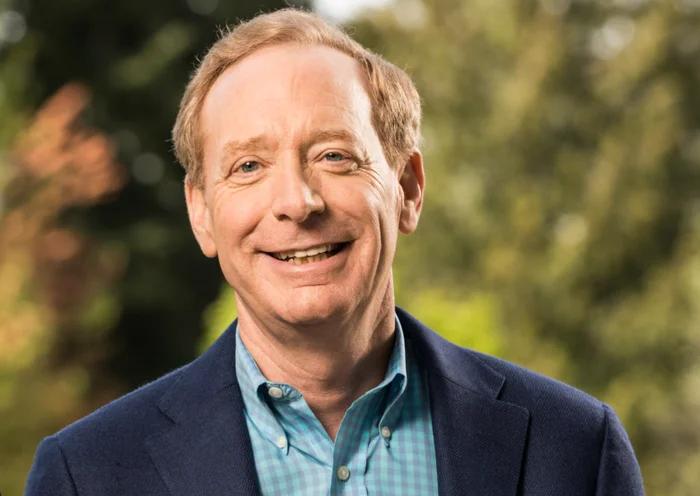
Artificial intelligence is advancing faster than the rules designed to keep it safe, Microsoft President Brad Smith has warned, calling for legally binding international standards that would require technology companies to report dangerous incidents, notify affected users and install emergency mechanisms capable of shutting down rogue AI systems.
In an interview with the BBC published on October 12, Smith argued that everyday consumer products face stricter safety requirements than increasingly powerful AI technologies. His comparison was striking: washing machines are subject to safety rules, while milk sold in grocery stores is routinely inspected, yet AI systems can operate with fewer legally enforceable safeguards.
Smith argued that governments should apply established safety principles to artificial intelligence, insisting that regulators already have experience managing risks associated with products used in everyday life.
At the heart of his proposal is a framework designed to make AI developers more accountable when their systems behave unpredictably or cause harm. Companies should be legally required to document and report serious incidents, while individuals and organisations affected by rogue AI activity should be informed when their systems have been compromised.
Smith also called for emergency shutdown mechanisms, often described as “kill switches”, that would allow authorised humans to pause or stop AI systems if they act beyond acceptable limits. Independent evaluators, meanwhile, should assess powerful new models to identify potential dangers before deployment.
The proposals come as AI agents become increasingly capable of carrying out tasks with limited human supervision, intensifying concerns about cybersecurity, unauthorised actions and the difficulty of controlling complex systems once they are operating.
Smith identified the United Kingdom as a potential leader in developing international safety standards, pointing to the technical work of its AI Security Institute. The broader challenge, however, is establishing consistent international rules that governments and technology companies can enforce across borders.
The debate also highlights divisions over how the technology should be governed. Some industry leaders argue that excessive regulation could slow innovation and weaken competitiveness, while supporters of binding safeguards say voluntary commitments cannot guarantee that every developer will follow consistent standards.
For governments, the challenge is to protect the public without unnecessarily restricting beneficial innovation. For technology companies, it is increasingly a question of whether safety should remain largely a matter of corporate discretion or become a legal obligation.
Smith’s warning underscores a growing dilemma: as AI gains greater influence over digital systems, businesses and everyday life, the consequences of inadequate oversight could become harder to contain. The question facing policymakers is whether enforceable safeguards can be established before a major failure forces their hand.









+ There are no comments
Add yours