







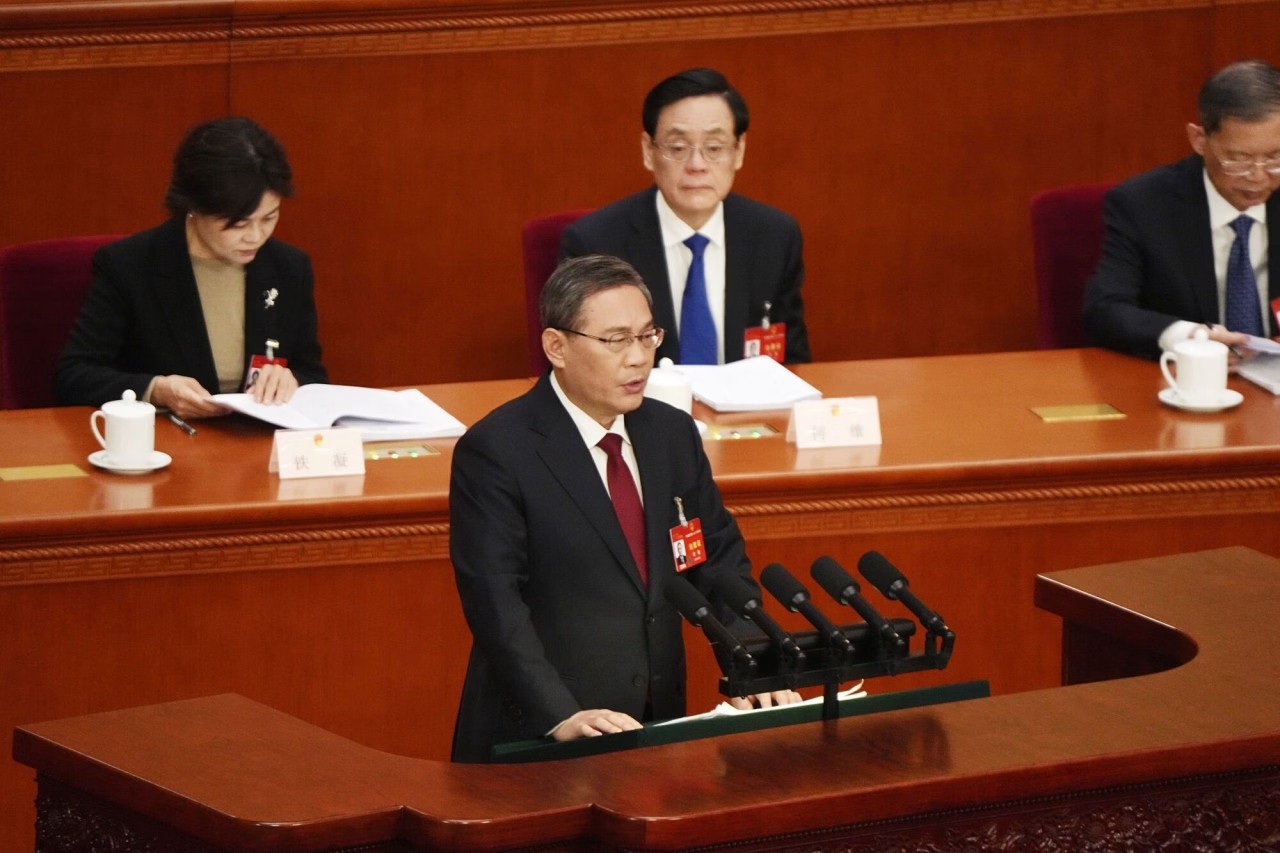
China has set its lowest economic growth target in more than thirty years, raising concerns about the future of the world’s second-largest economy. The Chinese government announced a growth target of around 5 percent for 2026, marking the most modest goal since 1991 and reflecting increasing economic challenges both at home and abroad.
The announcement was made during the country’s annual parliamentary meeting in Beijing, where top leaders outlined their economic priorities for the year ahead. Officials acknowledged that China is facing several pressures, including slowing global demand, a struggling property sector, rising local government debt, and ongoing trade tensions with major economies. These factors have made it more difficult for the country to maintain the rapid economic expansion it experienced in previous decades.
For many years, China regularly set ambitious growth targets above 7 or even 8 percent, driven by strong manufacturing exports, large infrastructure projects, and rapid urban development. However, economists say the current economic environment is far more complex. Slower population growth, weaker consumer spending, and uncertainty in global markets have forced policymakers to adopt a more cautious approach.
Despite the lower target, Chinese leaders emphasized that maintaining stable growth remains a top priority. The government plans to support economic activity through increased investment in technology, green energy, and advanced manufacturing industries. Officials also promised new measures to encourage domestic consumption and provide financial support for small and medium-sized businesses.
At the same time, authorities are trying to address long-standing structural problems in the economy, particularly the ongoing crisis in the real estate sector. Several major property developers have faced financial difficulties in recent years, creating ripple effects across construction, banking, and local government finances. Stabilizing this sector is seen as critical for restoring confidence in the broader economy.
Global markets are closely watching China’s economic strategy, as the country plays a central role in international trade and supply chains. A slowdown in Chinese growth can affect commodity prices, manufacturing demand, and economic performance in many other countries.
While the new target reflects caution, analysts note that achieving even five percent growth would still represent significant expansion for such a large economy. Nevertheless, the decision highlights a turning point for China as it navigates economic challenges and shifts toward a more sustainable and balanced model of development.










+ There are no comments
Add yours