






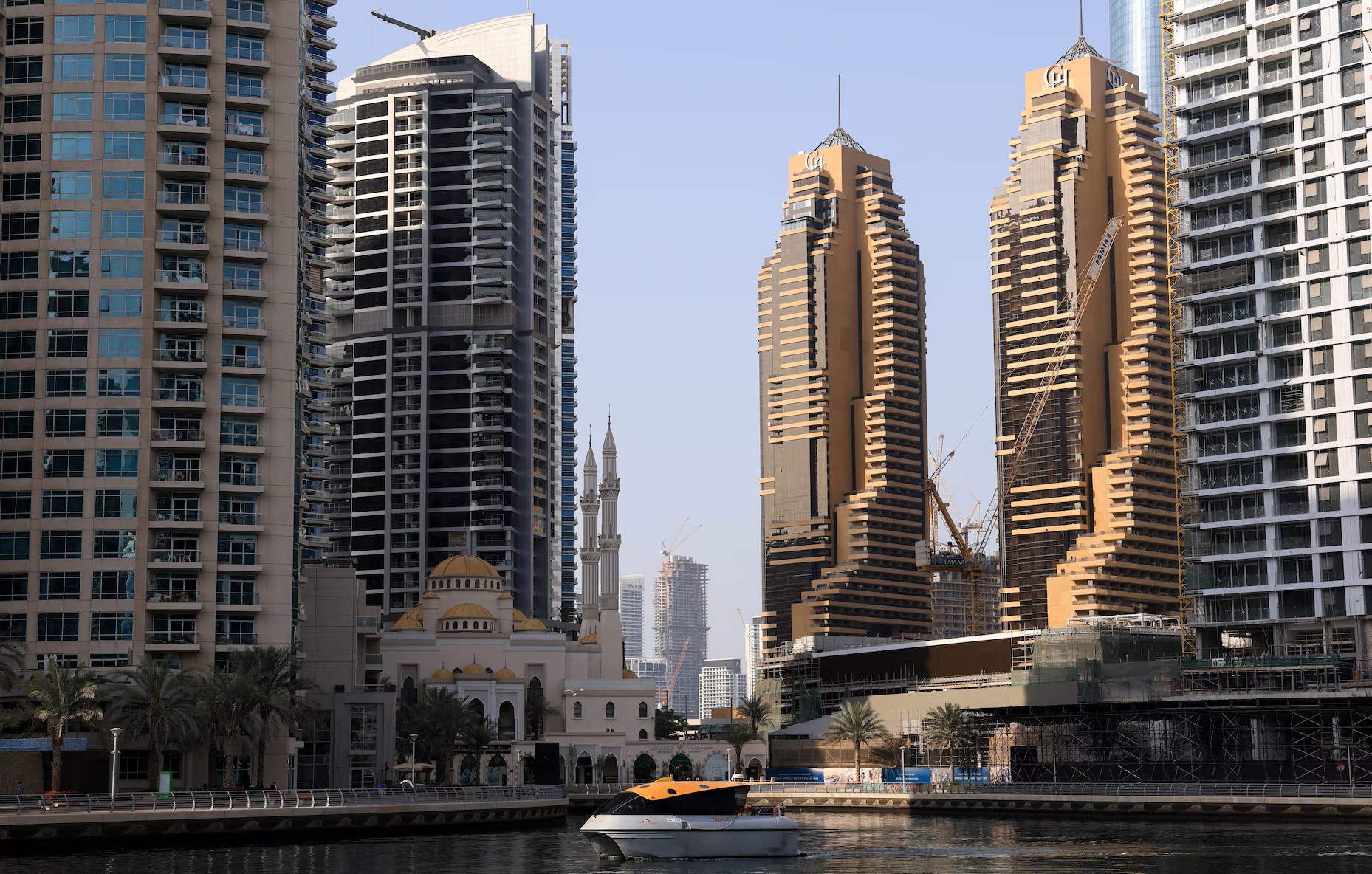
Dubai’s residential property market is showing signs of cooling after years of rapid growth, as geopolitical tensions linked to the Iran conflict and wider economic pressures begin to affect buyer sentiment and investment flows.
Once considered one of the world’s most dynamic property hotspots, the Dubai real estate sector is now experiencing a slowdown in transactions and increased caution among international investors. Analysts say the shift is being driven less by domestic fundamentals and more by rising regional instability and global financial uncertainty.
The ongoing Iran conflict has added a new layer of risk to the Gulf’s investment environment. Higher geopolitical tension has increased volatility in energy markets and raised concerns over security in the broader Middle East region. As a result, some foreign buyers have paused or delayed property decisions, particularly in the luxury and off-plan segments that previously drove much of Dubai’s growth.
Market data from recent months indicates a clear moderation in activity. Transaction volumes have softened compared with the previous boom period, and some developers have reportedly introduced discounts or flexible payment plans to attract hesitant buyers. While prices have not collapsed, momentum has clearly weakened, especially in high-end residential projects.
At the same time, higher global interest rates and tighter liquidity conditions are also weighing on demand. International investors, who make up a significant share of Dubai’s property market, are becoming more selective as borrowing costs remain elevated in major economies. This has reduced speculative buying and shifted demand toward end-users rather than short-term investors.
Despite the slowdown, the market is not in crisis. Core fundamentals such as population growth, infrastructure development, and Dubai’s status as a regional business hub continue to support long-term demand. Rental yields remain attractive compared with many global cities, helping to stabilise the sector even as sales activity cools.
However, analysts warn that continued geopolitical uncertainty particularly if the Iran conflict escalates further could prolong the current softening phase. Investor confidence, they say, will remain sensitive to regional stability and global risk appetite.
For now, Dubai’s residential real estate market appears to be entering a correction phase rather than a collapse: a shift from rapid expansion to cautious consolidation under the combined pressure of war-related uncertainty and global economic headwinds.






+ There are no comments
Add yours