






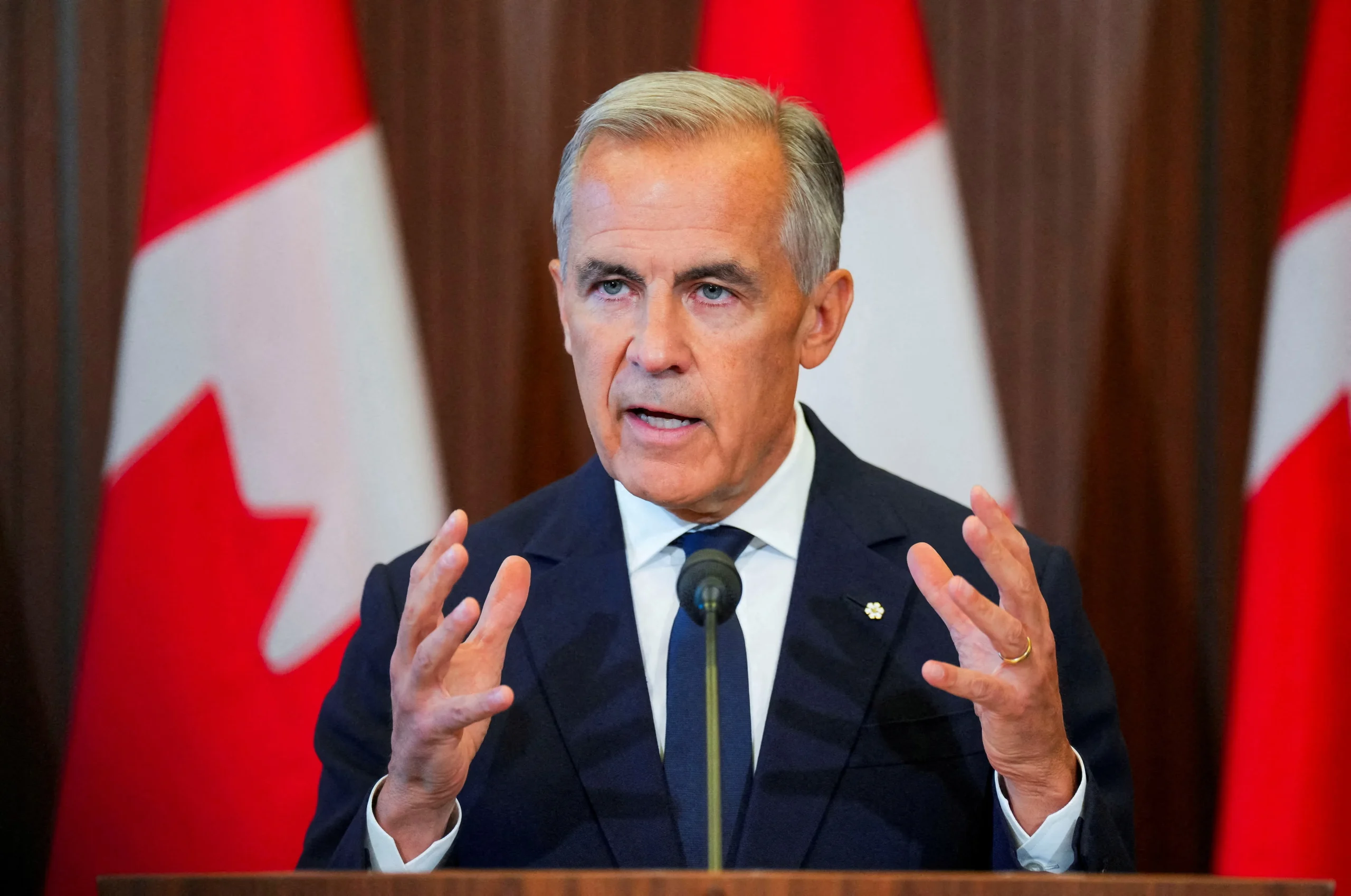
In an increasingly unpredictable world, where economic competition, geopolitical rivalries and shifting alliances are reshaping international relations, Canadian Prime Minister Mark Carney is pursuing a strategy that could redefine his country’s place on the global stage. By strengthening ties with Europe, Carney is seeking to reduce Canada’s dependence on the United States while creating new opportunities for trade, investment, technology and defence cooperation.
The Canadian leader is hosting European Commission President Ursula von der Leyen and European Council President António Costa in Montreal for a summit focused on expanding cooperation between Canada and the European Union. The discussions come at a time when tensions with US President Donald Trump have exposed the economic risks of relying heavily on a single trading partner.
For Carney, the meeting represents more than a diplomatic gathering. It is a test of strategic leadership: whether a country closely connected to the world’s largest economy can diversify its partnerships without damaging an essential relationship or compromising its sovereignty.
For decades, Canada’s economic fortunes have been closely tied to the United States. Shared borders, integrated manufacturing networks and longstanding trade agreements have created one of the world’s most interconnected economic relationships. American consumers remain crucial to Canadian exporters, while businesses on both sides depend on cross-border supply chains for everything from automobiles and energy to agricultural products and advanced technology.
However, Trump’s aggressive trade policies and repeated threats concerning Canada’s sovereignty have forced Ottawa to reconsider the vulnerabilities associated with this dependence. Tariffs and political uncertainty have raised concerns among Canadian businesses about investment, employment and the reliability of existing trade arrangements.
Carney’s response has been to pursue economic diversification rather than rely exclusively on negotiations with Washington. Closer cooperation with Europe offers Canada access to new markets, investment opportunities and technological partnerships that could strengthen its long-term resilience.
The strategy does not necessarily mean abandoning the United States. Instead, it reflects an effort to ensure that Canada has alternatives when disagreements arise and that its economic future is not determined entirely by decisions made outside its borders.
Europe offers considerable opportunities. The European Union represents a major economic bloc with advanced manufacturing capabilities, substantial research institutions and growing demand for secure supplies of energy and critical minerals. Canada, meanwhile, possesses natural resources, technological expertise and a skilled workforce that could complement European industrial priorities.
Critical minerals are particularly important. Materials used in electric vehicles, batteries, renewable energy systems and advanced electronics have become central to economic security. By encouraging investment and cooperation in this sector, Canada and Europe could strengthen supply chains and reduce their exposure to concentrated sources of strategic materials.
Technology presents another opportunity. Cooperation in artificial intelligence, quantum computing, scientific research and digital infrastructure could help businesses on both sides develop new products and compete in global markets. Greater defence cooperation could also create opportunities for Canadian companies while strengthening transatlantic security relationships.
Yet building a closer alliance will require more than shared ambitions. The two sides must negotiate practical arrangements, resolve regulatory differences and ensure that their proposed partnership delivers measurable benefits.
One point of disagreement concerns the idea of Canada becoming an associate member of the European Union. Although the proposal has attracted attention, several European countries have questioned the legal status and institutional implications of such an arrangement. Carney has emphasised that the precise designation matters less than the practical results and has ruled out full Canadian membership in the bloc.
This disagreement highlights a familiar challenge in international leadership: governments may share strategic objectives while disagreeing about the structures needed to achieve them. Successful diplomacy requires flexibility, patience and an ability to distinguish between symbolic language and workable agreements.
Carney must also manage the political consequences of his strategy. Trump’s criticism of closer Canada–Europe ties and warnings of possible retaliation underline the risks of pursuing greater independence from a powerful neighbour. Any deterioration in the American relationship could affect Canadian exporters, manufacturers, workers and investors.
The challenge is therefore to diversify without unnecessarily escalating tensions. Canada still has compelling reasons to maintain strong economic and security ties with the United States. A more developed European partnership would ideally complement those ties while giving Ottawa greater freedom to respond to future challenges.
This balancing act offers a wider lesson about leadership in an interconnected world. Independence does not always mean standing alone. In many circumstances, it means building enough reliable partnerships to avoid becoming excessively dependent on any single country, institution or market.
For Carney, however, the ultimate test will be domestic. International summits can generate headlines and ambitious declarations, but Canadians will judge the strategy by its results. Businesses will want new customers and investment. Workers will look for employment opportunities and industrial stability. Researchers and universities will seek stronger international partnerships.
Turning diplomatic commitments into those practical outcomes will require sustained negotiations, investment and political accountability. Trade diversification cannot happen overnight, and new infrastructure, commercial networks and supply chains take time to develop. The government must also explain how closer European cooperation will serve Canadian interests without creating unnecessary administrative burdens or shifting important decisions beyond public scrutiny.
The initiative builds on the Canada–European Union Comprehensive Economic and Trade Agreement, provisionally applied since 2017, and existing security cooperation. Its success will depend on whether the two sides can expand those foundations into arrangements that create lasting economic and strategic value.
For Europe, closer ties with Canada could strengthen access to natural resources, advanced technology and a trusted partner in North America. For Canada, the benefits could include broader export markets, increased investment and greater resilience against sudden changes in American trade policy.
Nevertheless, the initiative faces considerable obstacles. Differences among European governments, competing domestic priorities, regulatory barriers and the possibility of renewed trade tensions could slow progress. Carney must also demonstrate that his government can maintain a constructive relationship with Washington while pursuing an independent foreign economic strategy.
The broader international context makes the effort particularly significant. As governments reconsider their supply chains, defence arrangements and relationships with major powers, middle-sized economies are increasingly looking for ways to protect their interests through cooperation. Canada’s approach illustrates how diplomacy can become an instrument of economic resilience rather than simply a mechanism for managing political relationships.
Carney’s leadership will be measured not by the strength of his summit speeches but by his ability to convert strategic ambition into durable agreements. That means establishing realistic objectives, securing domestic support, managing competing interests and remaining flexible when negotiations encounter resistance.
Ultimately, the question facing Canada is not whether it should choose Europe over the United States. It is whether the country can build a more balanced international position in which cooperation with one partner does not prevent it from developing relationships with others.
As the Montreal summit unfolds, Carney is attempting to show that national independence and international cooperation can reinforce one another. The strategy carries risks, but it also offers a potential path toward a more resilient economic future.








+ There are no comments
Add yours