





The defeated Brazilian presidential candidate has challenged the election result from the United States, accusing President Luiz Inácio Lula da Silva and the country’s judiciary of political persecution, while offering no evidence to substantiate his claims of electoral fraud.
Brazil’s post-election political crisis has taken a dramatic international turn after defeated presidential candidate Flávio Bolsonaro declared himself the country’s “true president-elect” in his first major public statement since arriving in the United States with his family.
The right-wing senator, who lost Sunday’s presidential runoff to incumbent Luiz Inácio Lula da Silva, published an open letter on social media accusing Brazil’s political leadership and judicial institutions of undermining the democratic process. He subsequently deleted the original statement and issued a revised version in which he described himself as Brazil’s rightful leader.
His declaration has intensified an already bitter dispute over the election, raising questions about the credibility of democratic institutions, the future of Brazil’s conservative movement and the potential diplomatic consequences of the confrontation between Brasília and Washington.
However, Bolsonaro has provided no evidence establishing his allegation that the election was stolen. Brazil’s electoral authorities have recognized Lula’s victory, and international observers have found the vote fair.
A Defiant Statement From American Soil
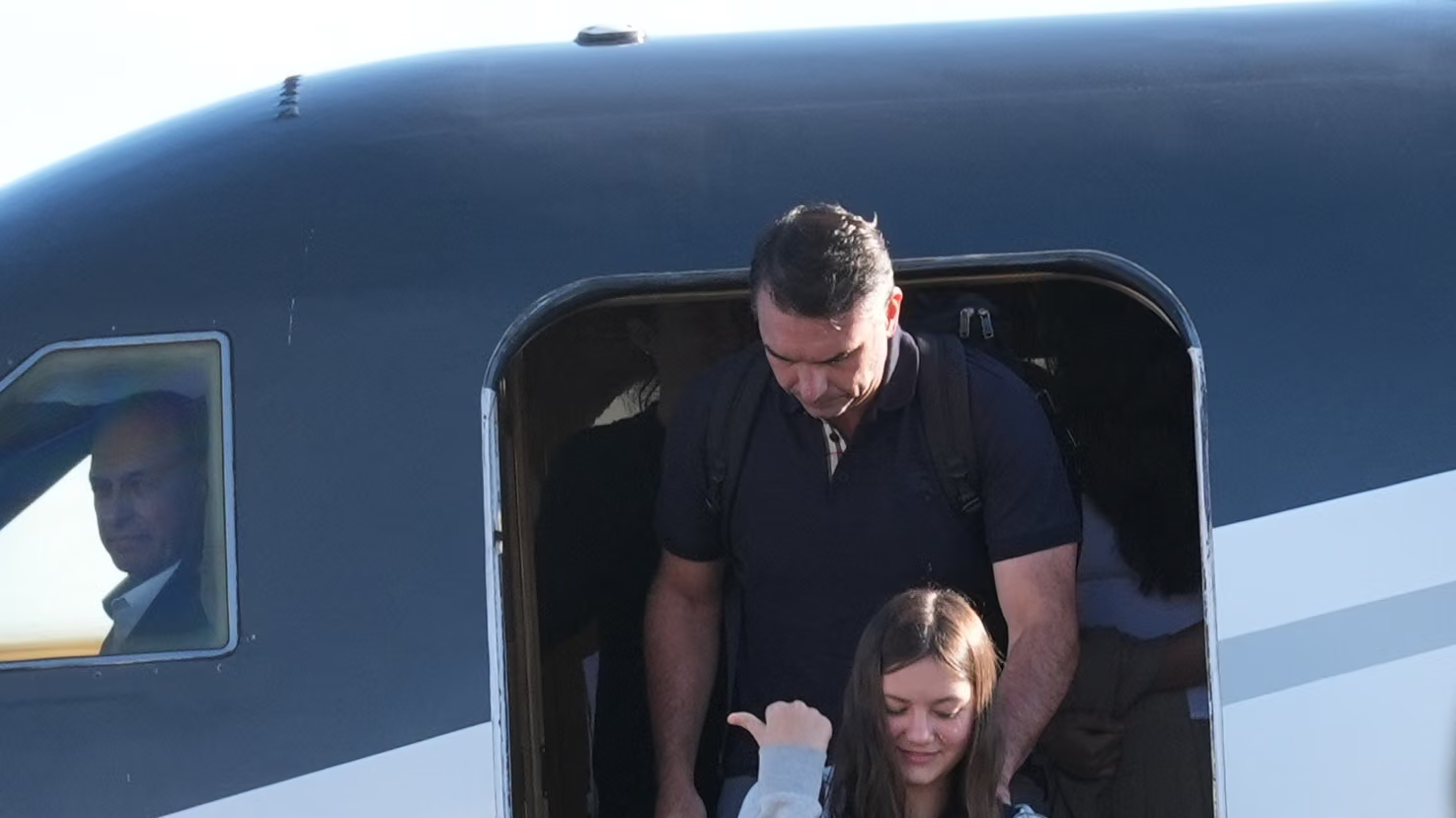
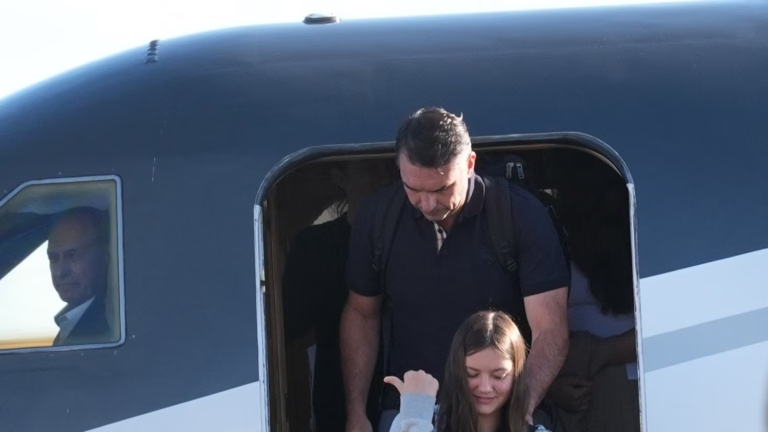
Bolsonaro’s arrival in Miami on Wednesday, October 28, marked a significant development in Brazil’s political crisis.
Rather than remaining in Brazil to challenge the election result through domestic legal channels, the senator travelled to the United States with his wife and two daughters. From Miami, he issued a statement portraying his departure as a necessary step to protect his family and continue his political activities.
“I did not flee Brazil; I left for Brazil’s sake,” Bolsonaro said in his statement, arguing that he needed to remain free to lead the movement that supported his presidential campaign.
He accused the Brazilian justice system of political persecution and called on the international community not to accept what he described as the erosion of democratic freedoms in his country.
The initial version of his letter went further, presenting him as the elected president of Brazil. After deleting that version, he published a revised statement using the term “leader” instead.
The change did not end the controversy. His central message remained a rejection of the election outcome and an accusation that powerful institutions had acted against him.
For Bolsonaro, the declaration was an attempt to maintain political authority despite his defeat. For critics, it raised concerns about a defeated candidate seeking to challenge an officially recognized election result from abroad.
The Election Result He Refuses to Accept
The presidential runoff delivered a clear victory to Lula, who secured approximately 51.8 percent of the valid vote against Bolsonaro’s 48.2 percent.
The difference amounted to more than 4.4 million votes, according to Brazil’s electoral authorities.
Bolsonaro has nevertheless questioned the legitimacy of the result, focusing particularly on a judicial decision that extended voting hours by two hours on election day following concerns about access to polling stations.
He argues that the decision raises questions about the fairness of the process. But the existence of a procedural dispute does not, by itself, demonstrate that an election was fraudulent.
Electoral records indicate that fewer than 35,000 votes were cast during the additional two-hour period. That figure is substantially smaller than Lula’s winning margin.
The circumstances are also complicated by the fact that Bolsonaro’s own campaign sought an extension of voting hours in some areas because of adverse weather conditions.
These details weaken the argument that the extension alone could explain the outcome. No publicly established evidence has demonstrated that the disputed decision changed the winner of the election.
The electoral authorities have recognized Lula’s victory, leaving Bolsonaro’s claims without an established legal or evidentiary basis.
Why Bolsonaro Left Brazil
Bolsonaro’s departure from Brazil has become a separate source of controversy.
His journey to Miami came after a Brazilian Supreme Court order requiring him to surrender his regular and diplomatic passports in connection with an investigation involving alleged money laundering and currency evasion.
The senator denies wrongdoing and has described the investigation as politically motivated.
He did not comply with the deadline to surrender his passports before leaving the country, according to published reporting. His subsequent journey reportedly took him and his family through Argentina and Ecuador before they reached Florida aboard a private aircraft.
The United States granted visas to Bolsonaro and his family, enabling them to enter the country.
Bolsonaro maintains that his departure was not an attempt to evade justice. Instead, he argues that leaving Brazil was necessary to protect himself and his relatives from what he considers an unfair political and judicial environment.
Brazilian authorities, however, have legitimate legal questions to resolve concerning the investigation and the court order. Those questions remain distinct from the election dispute: an investigation does not establish guilt, just as a candidate’s allegations of persecution do not establish that an election was stolen.
The timing of his departure has nonetheless intensified scrutiny of his next move.
Trump and Washington Face a Delicate Decision
Bolsonaro’s arrival in Miami has brought the dispute into the orbit of US President Donald Trump, whose relationship with Brazil’s conservative political movement has attracted considerable attention.
Bolsonaro thanked Trump and Argentine President Javier Milei for their support and for the assistance that enabled him and his family to leave Brazil and reach the United States.
Trump, meanwhile, described Brazil’s election as unusual but said he would not involve himself in Bolsonaro’s dispute over the result.
The American administration now faces a sensitive diplomatic situation. Washington must manage its relationship with Brazil’s government while responding to the presence of a prominent defeated presidential candidate who is challenging his country’s election result from American territory.
The granting of visas to Bolsonaro and his family does not, by itself, amount to recognition of his claim to the Brazilian presidency.
Nor does Trump’s willingness to receive the family establish that the United States has accepted Bolsonaro’s allegations of fraud.
For Brazil, however, the situation raises concerns about whether foreign political support could encourage continued challenges to the legitimacy of its electoral institutions.
Lula’s government has previously expressed concern about American political involvement in Brazil’s domestic affairs. The latest developments risk adding another layer of tension to an already complicated bilateral relationship.
A Familiar Path for the Bolsonaro Family
Flávio Bolsonaro’s journey to Florida has drawn comparisons with that of his father, former Brazilian president Jair Bolsonaro.
Jair Bolsonaro travelled to the United States after losing his reelection bid to Lula in 2022. His departure became part of the wider political turmoil that followed the election, culminating in attacks on Brazil’s presidential palace, Congress and Supreme Court by supporters of the former president on January 8, 2023.
Jair Bolsonaro was later convicted in connection with an attempt to overturn the democratic order and received a prison sentence exceeding 27 years. He is currently under house arrest in Brazil.
The similarities between the two episodes are politically significant, but they do not establish that the same events will occur again.
Flávio’s current position differs from that of his father, and the response of his supporters, party allies and Brazilian institutions remains uncertain.
His decision to leave Brazil could also complicate his efforts to maintain influence within the country. Leading an opposition movement from abroad may offer access to international media and sympathetic political networks, but it can also distance a politician from voters, lawmakers and the practical work of organising a domestic political campaign.
Whether Bolsonaro can maintain his standing among Brazil’s conservatives will depend partly on how his supporters respond to his departure and his refusal to accept the result.
Divisions Within Brazil’s Conservative Movement
Bolsonaro’s declaration has not produced unanimous support among conservative political figures.
Some allies have expressed sympathy for his objections, while others have called for the country to move forward following the election.
São Paulo Governor Tarcísio de Freitas, a prominent conservative politician, has urged respect for the electoral result. His position reflects a broader question facing Brazil’s right: whether to continue contesting the outcome or concentrate on building a political opposition under the incoming administration.
The division matters because the Bolsonaro family has played a central role in mobilising conservative voters. Its influence now faces a test at a moment when political leaders must decide how to respond to Lula’s victory.
For some conservatives, continuing to challenge the election may preserve the loyalty of voters who believe the process was unfair. For others, focusing on future elections, public policy and opposition politics may offer a more practical way to maintain influence.
These competing approaches could shape the future of the country’s conservative movement.
Bolsonaro’s decision to lead from the United States adds another complication. His supporters will have to determine whether his continued challenge strengthens their political position or makes it more difficult to organise around domestic priorities.
The Stakes for Brazilian Democracy
Brazil’s political crisis extends beyond the rivalry between Lula and Bolsonaro.
At its centre is the question of how a democracy resolves disputes when a defeated candidate refuses to accept an officially recognized result.
Electoral systems depend on public confidence, transparent procedures and credible mechanisms for investigating allegations of wrongdoing. Political leaders have the right to question electoral procedures, but claims of fraud require evidence that can withstand independent scrutiny.
When allegations are repeatedly made without substantiation, public confidence in democratic institutions can weaken. This can deepen political divisions and make it more difficult for governments to exercise authority across competing political constituencies.
Brazil’s institutions now face the challenge of maintaining the integrity of the electoral process while ensuring that legitimate legal complaints can be addressed through established procedures.
The response will be closely watched throughout Latin America, where disputes over elections and the peaceful transfer of power have frequently shaped national political crises.
For Brazilian voters, the immediate question is whether the country’s institutions can continue to operate according to constitutional rules despite intense political disagreement.
What Happens Next?
Bolsonaro’s next steps remain uncertain.
From Miami, he has indicated that he intends to continue speaking publicly and lead the opposition to Lula’s government. But his future political strategy will depend on his legal circumstances, the support he retains among conservative lawmakers and his ability to maintain connections with voters in Brazil.
The investigations involving alleged financial misconduct also remain an important part of his situation. Bolsonaro denies wrongdoing, and the allegations must be resolved through the relevant legal processes rather than treated as established facts.
Meanwhile, Lula’s election victory remains officially recognized. Bolsonaro’s declaration has not changed the certified outcome or transferred presidential authority to him.
The coming weeks will reveal whether the dispute remains primarily a political and media campaign, develops into further legal proceedings or creates additional diplomatic friction between Brazil and the United States.
Much will depend on the actions of Brazil’s courts, electoral authorities, political parties and international partners.
Conclusion: A Claim That Challenges the Result, Not the Official Outcome
Flávio Bolsonaro’s declaration from Miami has brought Brazil’s post-election tensions to the international stage.
His claim to be the country’s “true president-elect,” his accusations against the judiciary and his departure from Brazil have raised questions about the future of the conservative movement and the strength of public confidence in democratic institutions.
But the distinction between political assertion and electoral authority remains essential. Lula won the presidential runoff according to the official result, and Bolsonaro has not produced evidence establishing that the election was stolen.
The dispute now presents a test for Brazil’s democracy and a diplomatic challenge for Washington. It also raises a broader question for democratic societies: how should institutions respond when political leaders reject election results without substantiating their allegations?
For Brazil, the answer will depend on whether political disagreements are resolved through evidence, law and constitutional procedures.
The declaration from Miami may prolong the political confrontation, but it does not, by itself, alter who won the election or who holds the country’s official mandate.





+ There are no comments
Add yours