






Wildfires that have affected parts of Europe are showing mixed developments as firefighting efforts bring some relief near Bordeaux in France and Madrid in Spain, while Greece faces renewed challenges from rapidly spreading fires. Authorities across the region continue to battle extreme heat, dry conditions, and strong winds that have increased the risk of destructive blazes.
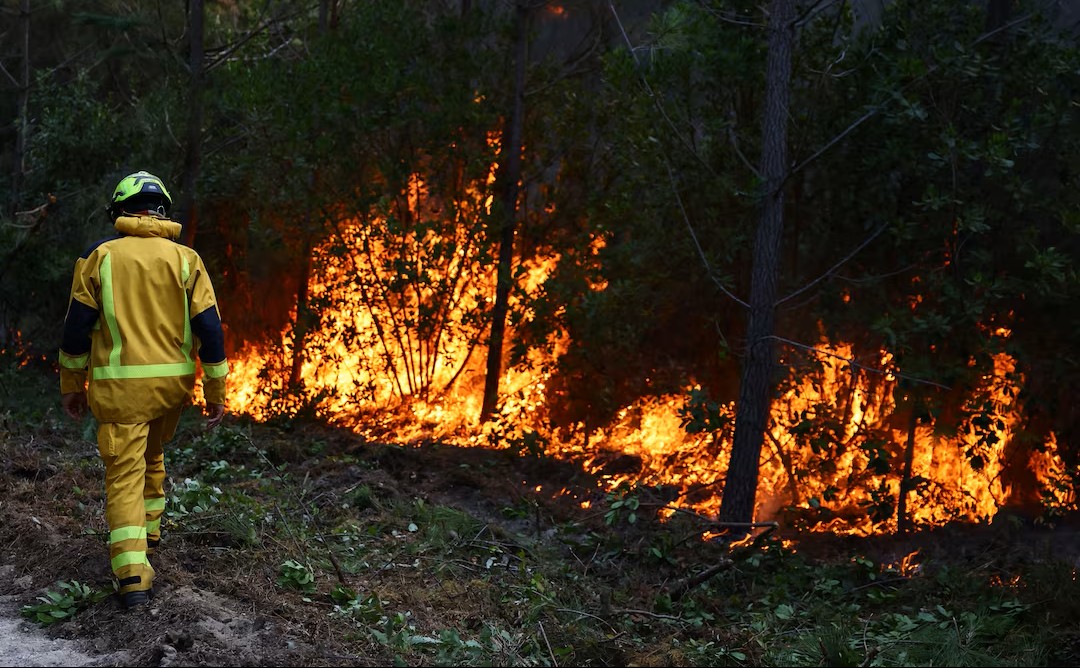
In southwestern France, firefighters have made progress in controlling wildfires near Bordeaux after days of intense efforts. Emergency teams used aircraft, ground crews, and water-dropping operations to slow the spread of flames and protect nearby communities. Although the situation has improved, officials remain cautious because hot weather and dry vegetation continue to create the possibility of new outbreaks.
Residents in affected areas have experienced disruption as authorities issued safety warnings and prepared evacuation plans. Emergency services have worked to ensure that people living near high-risk zones remain informed and protected. Local officials have emphasized that even when a wildfire appears to be under control, changing weather conditions can quickly create dangerous situations.
Spain has also reported improvement in wildfire conditions around Madrid, where firefighters have been working to contain outbreaks fueled by high temperatures and dry landscapes. The easing of conditions has allowed some emergency operations to shift from immediate firefighting toward monitoring and preventing new flare-ups.
However, the situation remains difficult in Greece, where new fires have intensified in several areas. Strong winds and extremely dry conditions have made it challenging for firefighters to contain the flames. Authorities have deployed additional firefighting teams and equipment, including aircraft and specialized emergency units, to protect communities and natural areas.
Greece is among the European countries most vulnerable to wildfires due to its hot summers, dry climate, and large areas of forest and vegetation. Every year, wildfires threaten homes, agricultural land, wildlife habitats, and tourism areas. Officials have repeatedly warned that climate change is increasing the frequency and intensity of extreme weather events, including heatwaves and prolonged dry periods.
The recent wildfires have also raised concerns about the wider impact on the environment. Burning forests release large amounts of carbon emissions, damage ecosystems, and destroy habitats for wildlife. Recovery after major fires can take years, requiring efforts to restore forests and support affected communities.
European countries have increased cooperation in recent years to respond to wildfire emergencies. Through shared resources, firefighting aircraft support, and emergency coordination, nations are working together to strengthen their ability to handle large-scale disasters.
Experts say prevention remains one of the most important tools in reducing wildfire damage. Better forest management, early warning systems, public awareness campaigns, and stricter safety measures can help communities prepare for future threats.
As firefighters continue their work across Europe, the situation remains closely monitored. While progress near Bordeaux and Madrid has provided some relief, the renewed fires in Greece demonstrate the continuing danger posed by extreme weather and the urgent need for stronger wildfire preparedness.
The coming days will be critical as authorities watch weather patterns and work to prevent further destruction. Communities across affected regions remain hopeful that improved conditions will allow firefighters to fully control the remaining fires and begin the process of recovery.






+ There are no comments
Add yours