






Located in the southeastern Pacific Ocean, more than 3,500 kilometers off the coast of Chile, Easter Island is one of the most isolated inhabited places on Earth. Known to its Indigenous people as Rapa Nui, the island has captivated historians, archaeologists, and travelers for centuries with its mysterious giant stone statues, rich Polynesian heritage, and remarkable history.
Easter Island covers an area of about 163 square kilometers and is home to nearly 8,000 residents, most of whom live in the town of Hanga Roa. Although the island is part of Chile, the Rapa Nui people have preserved much of their unique language, customs, and cultural identity.
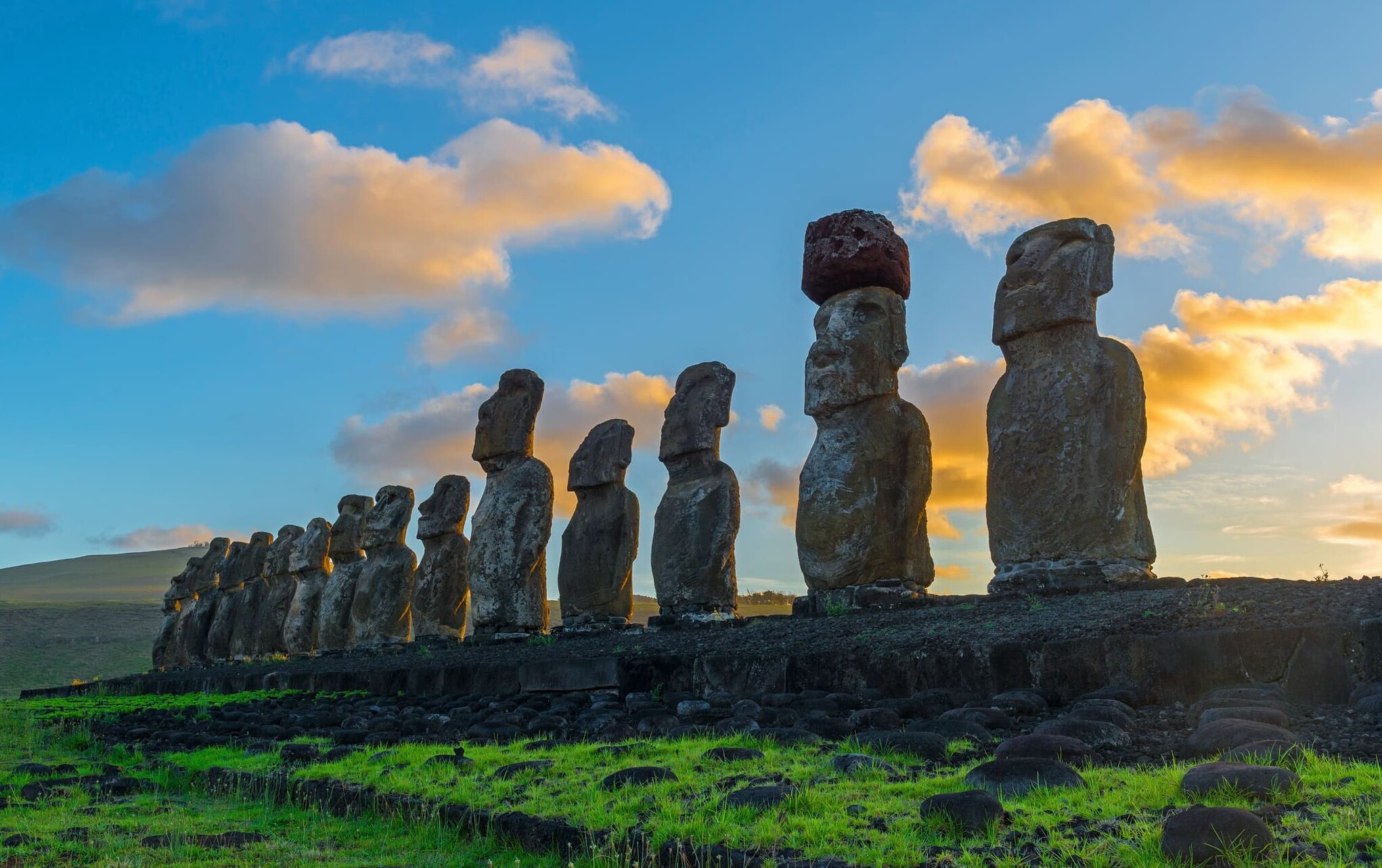
The island first gained international attention because of its nearly 1,000 monumental stone statues, known as Moai. Carved between the 13th and 16th centuries from volcanic tuff at the Rano Raraku quarry, the statues were created to honor important ancestors and tribal leaders. The Moai vary in size, with many standing between four and ten meters tall and weighing several tons. Some unfinished statues remain in the quarry, providing valuable insight into how they were carved.
One of the greatest mysteries surrounding Easter Island has long been how these massive statues were transported across the island without modern machinery. While early theories suggested they were rolled on logs, more recent research indicates they may have been “walked” upright using ropes and coordinated teams of people, demonstrating the remarkable engineering skills of the Rapa Nui civilization.
The island’s history also includes periods of environmental change and social transformation. Centuries of deforestation, competition for limited resources, and internal conflicts are believed to have contributed to the decline of the ancient society before Europeans arrived in 1722. Dutch explorer Jacob Roggeveen reached the island on Easter Sunday, giving it the name Easter Island.
During the 19th century, the Rapa Nui people faced devastating challenges, including slave raids, introduced diseases, and population decline. In 1888, Chile annexed the island, and it has remained a Chilean territory ever since. Today, efforts continue to preserve both the island’s archaeological treasures and the cultural rights of the Rapa Nui people.
In recognition of its extraordinary cultural significance, UNESCO designated Rapa Nui National Park a World Heritage Site in 1995. The park protects many of the island’s archaeological sites, including the iconic Ahu Tongariki, where 15 restored Moai stand overlooking the Pacific Ocean.
Tourism has become the island’s primary economic activity, attracting thousands of visitors each year eager to witness its ancient monuments, volcanic landscapes, and Polynesian traditions. However, local authorities also face the challenge of balancing tourism with environmental conservation and cultural preservation.
Modern archaeological research continues to uncover new information about the island’s past. Studies have revealed that the Moai were more than artistic achievements—they represented political authority, spiritual beliefs, and the connection between the living and their ancestors. Scientists are also using advanced technologies, including drones, satellite imaging, and 3D mapping, to better understand the island’s archaeological landscape.
Despite centuries of study, Easter Island remains one of the world’s greatest archaeological mysteries. Its towering Moai statues, resilient Indigenous culture, and extraordinary history continue to inspire researchers and visitors alike. As efforts to preserve Rapa Nui’s heritage continue, the island stands as a powerful reminder of humanity’s creativity, resilience, and enduring quest to understand the past.







+ There are no comments
Add yours