







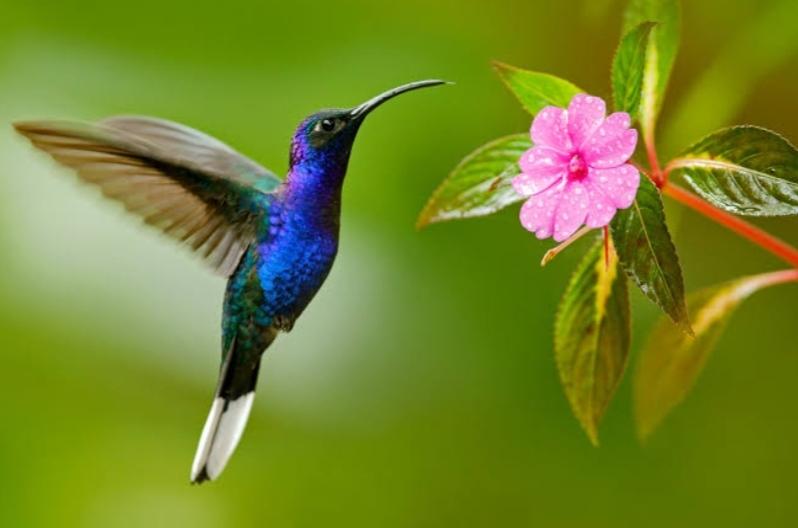
Hummingbirds may be among the smallest birds in the world, but their abilities are anything but small. Known for their brilliant colors, rapid wingbeats and remarkable flying skills, these tiny birds have fascinated people for centuries. Found mainly across the Americas, hummingbirds are especially well known for their ability to hover in one place while feeding on flowers.
One of the most extraordinary features of a hummingbird is its flight. Unlike most birds, hummingbirds can fly forward, backward and sideways, and they can even remain almost completely stationary in the air. Their wings can beat dozens of times per second, allowing them to hover while using their long bills and tongues to reach nectar deep inside flowers.
Hummingbirds have extremely fast metabolisms and need to consume food frequently to maintain their energy. Flower nectar provides them with quick energy, while small insects and other tiny organisms provide important protein and nutrients. Because of their high energy demands, hummingbirds may visit hundreds of flowers in a single day.
Their colorful appearance is another reason they are so admired. Many species have shimmering feathers that can appear to change color when viewed from different angles. Male hummingbirds often have particularly bright feathers around the throat, which they use to attract mates and communicate with other birds.
Hummingbirds also play an important role in nature. As they move from flower to flower searching for nectar, pollen can stick to their bodies and be transferred between plants. This makes them valuable pollinators and helps many flowering plants reproduce.
Some hummingbird species also undertake impressive migrations. Despite their tiny bodies, certain species travel long distances between breeding and wintering areas. Their journeys require enormous amounts of energy, making access to food and suitable habitats especially important.
Hummingbirds face threats from habitat loss, climate changes, extreme weather and declining food sources. Protecting gardens, forests and other natural habitats can help provide these remarkable birds with places to feed, shelter and reproduce.
Small enough to fit in the palm of a hand, hummingbirds demonstrate how extraordinary nature can be. Their speed, agility and role in pollination make them much more than beautiful visitors to a garden. They are a remarkable part of the natural world and a reminder of the importance of protecting wildlife and the habitats they depend on.









+ There are no comments
Add yours