






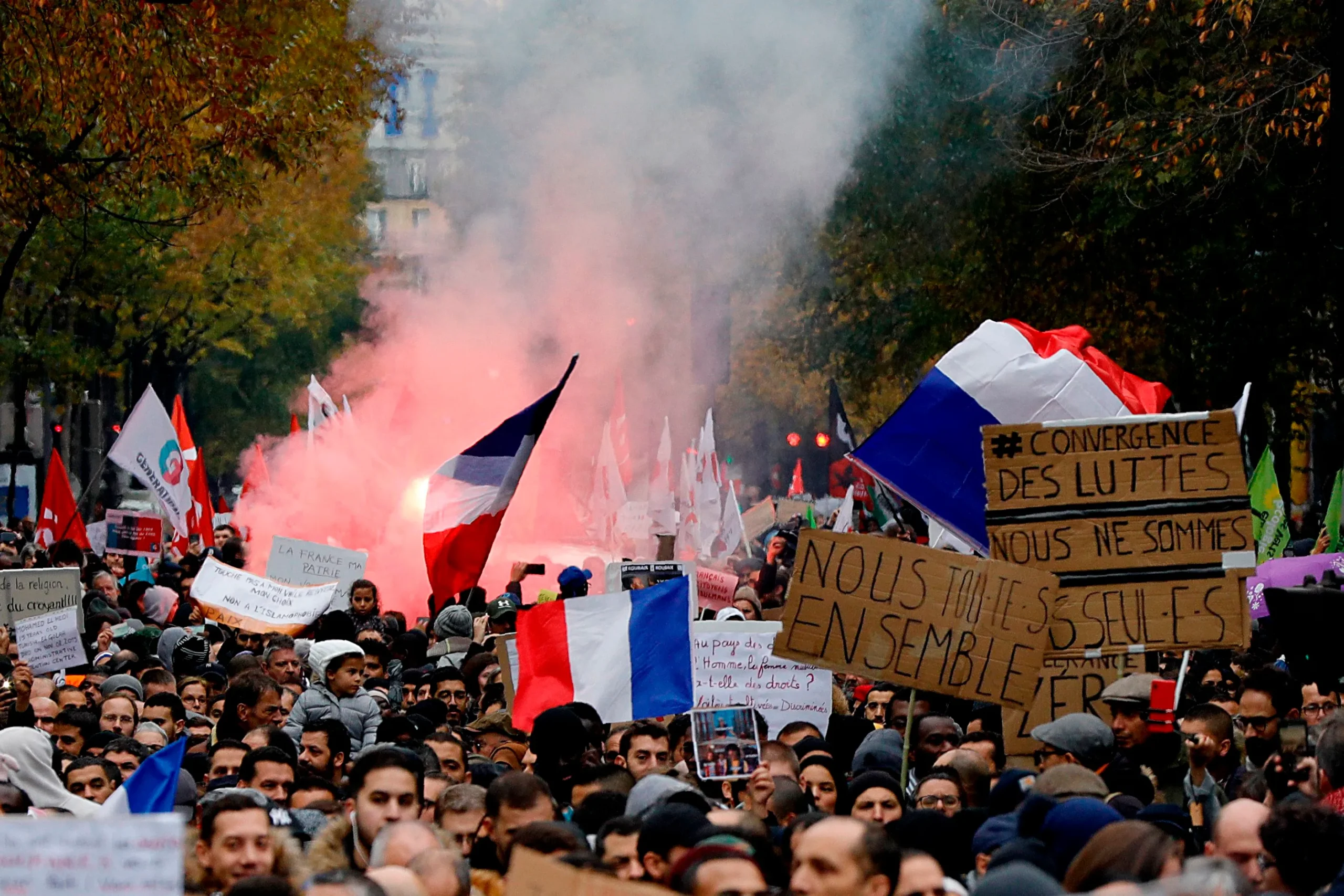
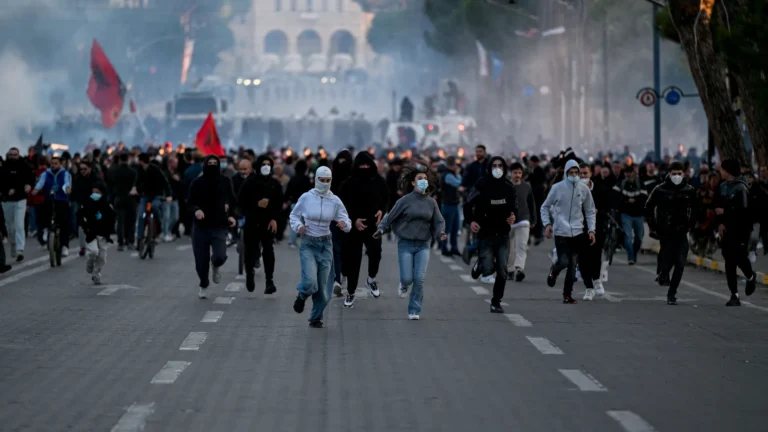
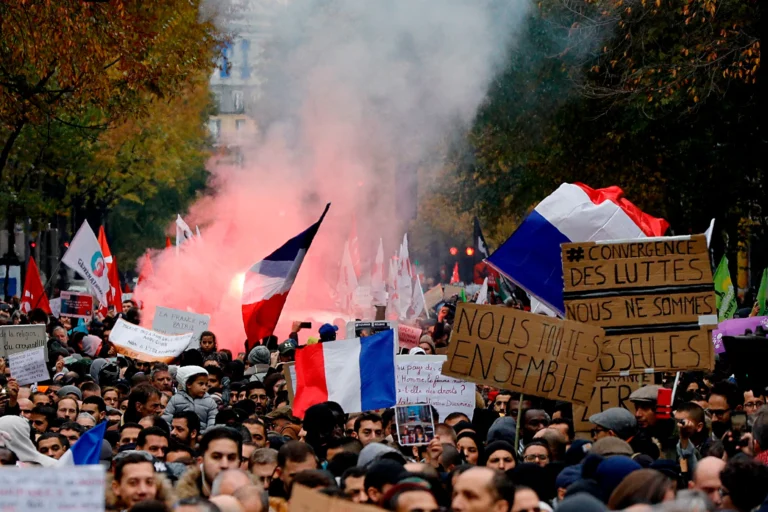
France is facing a deepening political crisis after a weekend of widespread violence, looting and clashes with police transformed nationwide protests over the cost of living and struggling public services into one of the country’s most serious episodes of unrest in recent years. The scale of the disorder has intensified questions about the government’s ability to maintain public order while responding to growing frustration among ordinary citizens.
Hundreds of thousands of people took to the streets on Saturday, October 17, in demonstrations driven by rising household expenses, concerns over education and deteriorating access to public services. While many protesters marched peacefully, groups of rioters and looters attacked businesses, damaged public buildings and clashed with security forces in several major cities. The unrest left communities shaken and placed President Emmanuel Macron’s government under renewed pressure. Associated Press
Some of the most disturbing scenes unfolded in Limoges, where the historic city hall was severely damaged by fire. In Lyon, the city’s tourist office was also set ablaze, while municipal buildings and businesses were targeted in Marseille, Lille and other urban centres. In Paris, shattered shopfronts, damaged vehicles and debris marked streets after confrontations continued into the evening.
The violence created a difficult challenge for police, who faced large, dispersed groups moving through different parts of the cities. French authorities reported thousands of arrests and numerous injuries among law-enforcement personnel. The scale of the damage has also raised concerns among business owners, local officials and residents who fear the consequences of prolonged instability.
President Macron called for calm and national unity in a televised address, insisting that those responsible for violence would face consequences. Prime Minister Sébastien Lecornu convened crisis discussions as the government considered how to restore order, protect public buildings and prevent further destruction. Officials have blamed radical-left groups and criminal elements for much of the violence, while opposition figures have questioned whether the authorities were adequately prepared for the demonstrations.
Yet the crisis extends beyond the immediate challenge of policing the streets. The demonstrations reflect mounting frustration over the cost of living, pressure on household budgets and concerns about the quality of public services, particularly state education. Students, teachers, workers and trade unions have raised concerns about staffing shortages, school conditions and the resources available to public institutions.
For many demonstrators, these issues are connected. Rising expenses make everyday life more difficult, while concerns about schools and other public services have contributed to a wider debate over the responsibilities of the state. The government faces the difficult task of addressing these grievances without allowing violent groups to overshadow the demands of peaceful protesters.
The political response has been sharply divided. Government leaders have condemned the rioting and defended the need for law and order. On the left, critics have accused the authorities of failing to anticipate the scale of the unrest and have called for a more serious response to the concerns driving the demonstrations. On the nationalist right, Marine Le Pen has used the disorder to criticise Macron’s administration and emphasise public security.
The confrontation has exposed the fragility of France’s political landscape, where competing parties remain deeply divided over economic policy, immigration, public spending and the future direction of the country. With the next presidential election approaching, the unrest is likely to intensify political competition and increase scrutiny of the government’s decisions.
France also faces a difficult economic backdrop. Public debt and pressure to control government spending have narrowed the room for manoeuvre as officials debate how to fund public services and respond to demands for support. Cutting spending may help address fiscal concerns, but further reductions could provoke additional anger among people who already feel that essential services are under strain. Expanding public expenditure, meanwhile, could complicate efforts to bring the country’s finances under control.
The government must now balance several urgent priorities: restoring security, supporting damaged businesses and communities, examining the police response and opening meaningful dialogue with students, teachers and workers. Any response focused exclusively on arrests and security measures risks leaving the underlying social concerns unresolved. Equally, the legitimacy of peaceful protest may be weakened when violence and looting dominate public attention.
Further demonstrations have been announced for November 5, raising fears that the unrest could return if political leaders fail to reduce tensions. Authorities are expected to face renewed pressure to demonstrate that public spaces and institutions can be protected while citizens retain the right to protest peacefully.
The coming weeks will test whether France’s political leadership can move beyond mutual accusations and respond to both the immediate security crisis and the grievances that brought people onto the streets. The violence has damaged buildings and businesses, but it has also exposed a deeper divide over living standards, public services and trust in government.
For Macron and Lecornu, restoring calm is only the first challenge. Rebuilding public confidence will require a credible response to the concerns of ordinary citizens, alongside accountability for those responsible for violence. As France confronts the aftermath of the unrest, the central question is whether its leaders can prevent a weekend of disorder from becoming a prolonged national crisis.



+ There are no comments
Add yours