







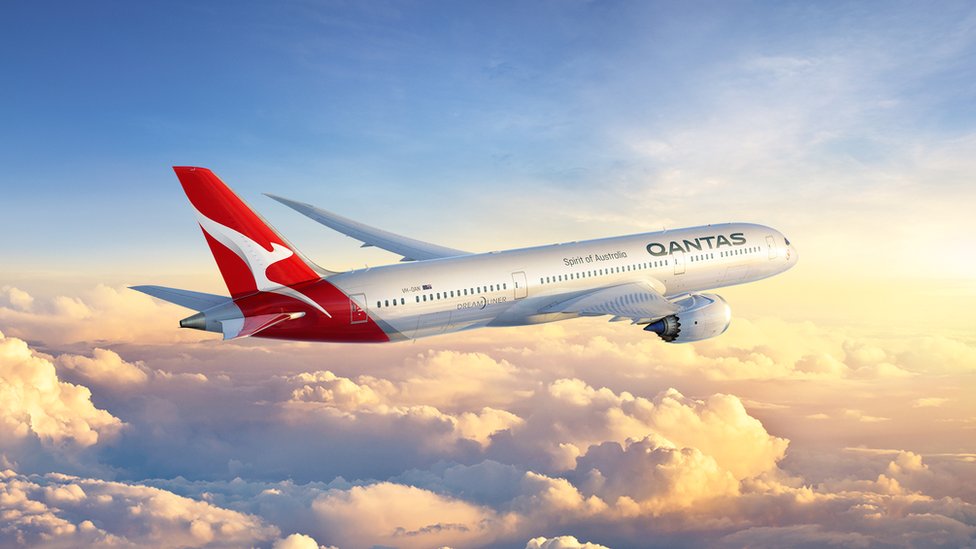
Australian airline Qantas is preparing to take a major step toward redefining long-haul air travel as it moves closer to launching the world’s longest non-stop commercial flights. The carrier is expected to reveal the first destination for its highly anticipated Project Sunrise initiative, which will connect eastern Australia directly to either London or New York without a stopover.
The ambitious project, first announced in 2017, aims to eliminate traditional transit hubs in Asia and the Middle East, allowing passengers to travel directly between Australia and some of the world’s most important global cities. The flights are expected to enter service in late 2027 following years of delays caused by the COVID-19 pandemic and ongoing aerospace supply chain disruptions.
If successful, Project Sunrise will mark one of the most significant developments in commercial aviation in decades. The service is designed to reduce the historic “Kangaroo Route” journey between Australia and the United Kingdom to approximately 22 hours, compared with the current travel time of 24 to 25 hours that includes a stopover, usually in Singapore.
While both London and New York are expected to be among the first destinations served, Qantas has yet to announce which city will receive the inaugural non-stop route. Industry observers expect the airline to make the decision public during a special investor and media event in Toulouse, where Airbus recently conducted test flights of the aircraft designed specifically for the project.
Project Sunrise represents a multibillion-dollar investment for Qantas and a bold gamble on changing passenger preferences. The airline believes travelers, particularly those flying in premium cabins, are increasingly willing to pay more for the convenience of avoiding lengthy stopovers and airport transfers.
Qantas Chief Executive Officer Vanessa Hudson has previously indicated that the airline expects non-stop services to command ticket prices approximately 20 percent higher than comparable one-stop flights in premium economy and business-class cabins. The airline estimates the initiative could contribute more than A$400 million annually to company earnings once fully operational.
Aviation experts say the strategy depends heavily on convincing travelers that the time savings and convenience outweigh the premium cost.
“What they are selling is time,” aviation analyst John Strickland said. “To make the economics work, they need passengers to pay a premium, especially in business and premium economy classes.”
The project takes its name from Qantas’ famous “Double Sunrise” flights during World War II, when aircraft traveling between Australia and Sri Lanka remained airborne long enough for passengers and crew to witness two sunrises during a single journey.
At the heart of the initiative is a specially modified fleet of Airbus A350-1000ULR aircraft. Airbus secured the order in 2019 after a closely contested competition with Boeing’s 777X program. The aircraft have been specially adapted to handle ultra-long-haul operations, featuring an additional rear-center fuel tank that increases their maximum range to approximately 10,000 nautical miles.
Despite the technological achievements, operating such lengthy flights presents unique challenges. Much of the fuel carried onboard is required simply to transport the weight of the remaining fuel over vast distances. Engineers, pilots, and health researchers have spent years studying how to optimize aircraft performance while minimizing passenger fatigue and ensuring crew well-being during flights that may exceed 20 hours.
Qantas has invested heavily in cabin design and passenger comfort, incorporating lessons learned from extensive research into sleep patterns, lighting systems, meal scheduling, and movement during long flights. The airline hopes these innovations will help transform what could be an exhausting journey into a more manageable travel experience.
The project enters the market at a time of uncertainty for the aviation industry. Rising fuel costs, influenced in part by geopolitical tensions and energy market volatility, have increased operating expenses for airlines worldwide. Analysts note that ultra-long-haul services are particularly sensitive to fuel prices because of their extended flight durations.
Nevertheless, market analysts remain optimistic about demand for direct connections between Australia and Europe. Research from investment firm Jefferies suggests travelers will continue to favor non-stop services over routes requiring transit through Middle Eastern or Asian hubs.
Competition, however, is expected to be intense. Gulf carriers such as Emirates, which have built global networks around strategic hub airports, are likely to defend their market share aggressively. These airlines have long dominated Australia-Europe travel by offering extensive connections through Dubai, Doha, and Abu Dhabi.
Recent changes in travel advisories may also influence passenger choices. The Australian government has lifted a long-standing warning regarding travel through Gulf transit hubs, restoring confidence for travelers and allowing many travel insurance policies to remain valid during transit. This could strengthen competition between direct and connecting flight options.
Despite these challenges, Qantas remains committed to its vision of transforming international travel. The first specially modified A350 aircraft is scheduled for delivery in April 2027, approximately five years later than originally planned. Once operational, the aircraft will accommodate 238 passengers across a carefully designed mix of premium and economy seating.
The airline is also reportedly considering a further expansion of its long-haul fleet, with discussions underway regarding the potential purchase of additional Airbus or Boeing wide-body aircraft to support future growth.
For travelers, Project Sunrise promises to reshape the experience of long-distance flying. For the aviation industry, it represents the latest attempt to push the boundaries of what is technically and commercially possible.
As Qantas prepares to unveil its first destination and finalize plans for launch, the world will be watching closely to see whether the dream of connecting Australia directly to major global cities can become a profitable reality. If successful, Project Sunrise could open a new chapter in commercial aviation, one in which the world’s longest journeys become significantly shorter and more convenient than ever before.











+ There are no comments
Add yours