







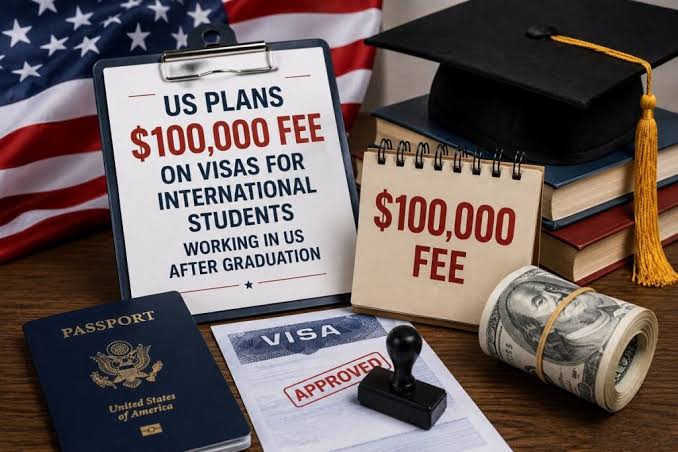
A proposed immigration policy under the Trump administration could dramatically change the path for international students hoping to remain in the United States after completing their studies. The plan would require some foreign graduates to pay a $100,000 fee to continue working in the country, creating widespread concern among students, universities and employers that rely on international talent.
The proposed fee targets the Optional Practical Training (OPT) program, which currently allows eligible international students on F-1 visas to gain temporary work experience related to their field of study after graduation. The program has been especially popular among students in science, technology, engineering and mathematics (STEM) fields, where graduates can receive extended work authorization.
Under the new proposal, foreign students seeking employment authorization after graduation would face a significant financial barrier before entering the U.S. workforce. Supporters of the plan argue that the measure could help prioritize American workers, reduce abuse of the immigration system and ensure that foreign workers provide greater economic value to the country.
The administration has argued that current immigration pathways allow companies to rely too heavily on foreign graduates instead of recruiting and training American workers. Officials supporting stricter requirements say the proposed fee would create a more selective system and encourage employers to consider domestic talent.
However, the proposal has drawn strong criticism from universities, technology companies and immigration advocates. They argue that international students contribute billions of dollars to the U.S. economy, support research programs and help fill important roles in industries facing skilled labor shortages.
Many education leaders warn that a $100,000 fee could discourage talented students from choosing American universities and push them toward competing destinations such as Canada, the United Kingdom and Australia. Universities depend heavily on international enrollment, particularly in graduate programs involving science, engineering and advanced research.
Business groups have also expressed concerns about the potential impact on industries that rely on highly skilled graduates. Technology companies, research institutions and healthcare organizations often recruit international students because of their specialized training and expertise.
For current and future international students, the proposed change creates uncertainty about the future of studying and working in the United States. Many students choose American universities not only for education but also for the opportunity to gain professional experience after graduation.
The proposal is part of a broader effort by the Trump administration to reshape U.S. immigration policy by increasing costs, strengthening eligibility requirements and focusing on programs that officials believe provide greater economic benefits to the country.
If implemented, the $100,000 fee would represent one of the most significant changes to the post-graduation work system for international students in decades. The final impact will depend on the details of the policy, legal challenges and how universities, employers and students respond in the coming months.








+ There are no comments
Add yours