







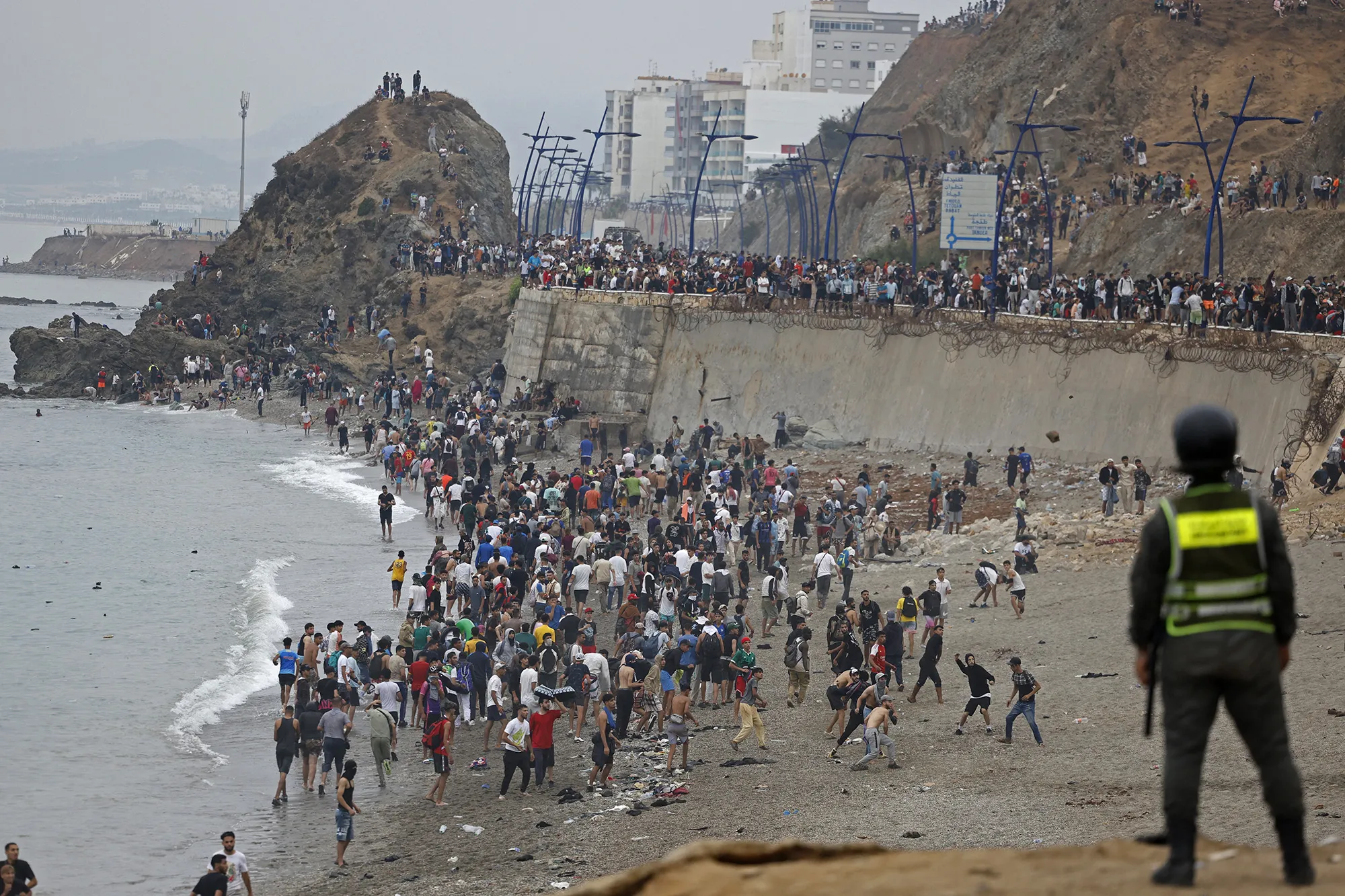
The European Union is once again facing a major political test as rising migration pressure on Spain’s borders has reignited a long-running debate over how the bloc should manage arrivals, protect its external borders, and share responsibility among member states. As Spain deals with increased numbers of migrants reaching its territories, European governments are once again finding themselves in a familiar situation: everyone agrees there is a problem, but agreeing on the solution is proving much harder.
Spain, located at the southwestern edge of Europe, has long been one of the main entry points for migrants seeking a safer future. Its proximity to North Africa makes its maritime borders, including routes toward the Canary Islands and other Spanish territories, particularly vulnerable to irregular migration flows. Local authorities and humanitarian organizations have warned that sudden increases in arrivals place pressure on housing, healthcare services, rescue operations, and immigration processing systems.
The latest situation has reopened disagreements among EU members over migration policies. Countries on Europe’s southern borders, including Spain, argue that frontline states should not be left to handle the majority of responsibility alone. They have called for stronger European support, increased funding, and a fairer system for distributing migrants among member states.
However, some northern and eastern European countries have expressed concerns about mandatory relocation programs and argue that stronger border controls should be the priority. The disagreement has created a political balancing act for EU leaders, who are trying to combine humanitarian responsibilities with public concerns about security, resources, and social integration.
Migration has become one of the most sensitive political issues across Europe, influencing elections and shaping public debates. Governments are under pressure from citizens who want better border management, while human rights groups continue to emphasize the need for safe treatment and legal protection for people fleeing conflict, poverty, and instability.
The debate has also produced moments of political irony. European leaders often spend hours discussing how to “share the burden,” but sometimes the biggest burden appears to be agreeing on who should share it first. EU meetings on migration have occasionally resembled a family discussion where everyone agrees the kitchen needs cleaning, but each person hopes someone else will pick up the mop.
Despite the disagreements, European officials recognize that migration is unlikely to disappear as a major issue. Conflicts, economic inequality, climate pressures, and political instability in parts of the world continue to drive people toward Europe. Analysts say the EU’s long-term challenge will be finding a balanced approach that protects borders while respecting humanitarian obligations.
As Spain continues to manage new arrivals, the migration debate is expected to remain at the center of European politics. The issue is not only about controlling borders but also about defining what kind of Europe the member states want to build: one based only on security, or one that combines security with cooperation and responsibility.






+ There are no comments
Add yours