






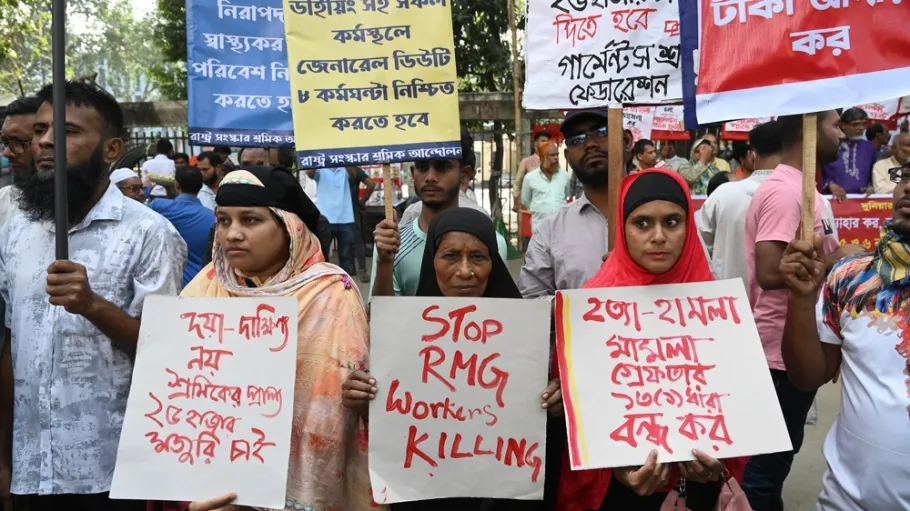
Bangladesh is preparing to establish a new wage board on Sunday to review salaries for garment workers after widespread protests forced dozens of factories to shut down and triggered violent clashes with police, raising fresh concerns about the stability of one of the country’s most important economic sectors.
The decision comes as thousands of garment workers demand a substantial increase in monthly minimum wages, calling for salaries to rise to 30,000 taka ($245), more than double the existing minimum of 12,500 taka. Workers argue that soaring food prices, housing costs, transportation expenses and healthcare bills have steadily eroded their purchasing power, making it increasingly difficult to meet basic household needs.
The garment industry is a cornerstone of Bangladesh’s economy, generating billions of dollars in export revenue and providing employment to millions of workers, particularly women. The sector is also a major supplier to international fashion retailers, making industrial stability essential for maintaining the country’s position in global clothing supply chains.
However, the latest unrest threatens to disrupt production schedules, delay shipments and increase operational uncertainty for manufacturers and international buyers. Factory closures could create additional financial pressure on businesses already navigating competitive pricing, rising production expenses and demanding delivery deadlines.
The establishment of a wage board is expected to provide a formal platform for negotiations between workers, factory owners and government representatives. Its recommendations could have significant implications for labour costs, factory profitability and Bangladesh’s competitiveness in the global apparel market.
For manufacturers, a substantial wage increase would raise production expenses, potentially forcing businesses to reconsider pricing strategies, improve operational efficiency or negotiate higher prices with international buyers. Smaller factories with limited financial flexibility could face particularly difficult adjustments.
International clothing brands will also be watching developments closely. Bangladesh’s appeal as a manufacturing destination has traditionally depended on its large workforce, established production infrastructure and competitive costs. Prolonged industrial unrest could encourage buyers to reconsider sourcing strategies and diversify production across other countries.
At the same time, workers argue that improved wages are essential to sustaining the industry’s workforce and ensuring that economic growth translates into better living standards.
The coming negotiations will therefore carry significant consequences beyond factory floors. They will test the government’s ability to balance workers’ demands for fair compensation with manufacturers’ concerns about rising costs and the country’s export competitiveness.
As Bangladesh moves to establish the wage board, the outcome could shape the future of its garment industry, influence international supply chains and determine whether the country can maintain industrial stability while addressing mounting economic pressures on its workforce.










+ There are no comments
Add yours