







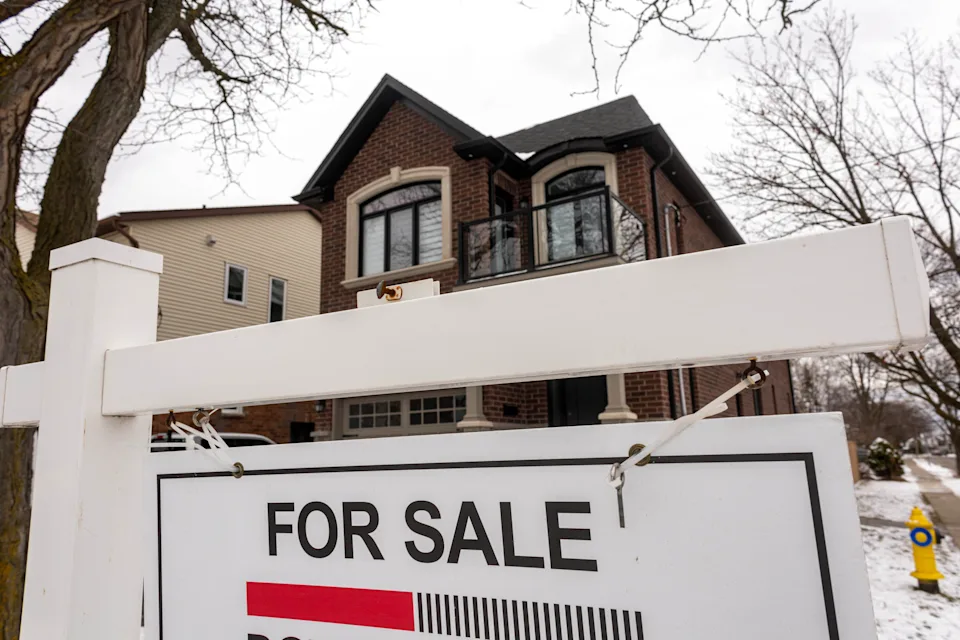
Canada’s housing market is facing renewed pressure as rising mortgage rates and expectations of higher borrowing costs discourage prospective buyers, extending a slowdown that is raising fresh concerns for homeowners, sellers and the wider property industry.
Home sales across Canada fell by 2.3 per cent in September compared with August, following a 0.7 per cent decline in the previous month, according to data released by the Canadian Real Estate Association on October 16. On an unadjusted annual basis, sales were down 7.7 per cent, indicating that the market remains weaker than it was a year earlier.
The slowdown comes as higher fixed mortgage rates make homeownership more expensive and financial markets anticipate a possible Bank of Canada interest-rate increase before the end of 2026. Although the central bank was not expected to raise rates at its October 28 policy announcement, markets were pricing in a potential quarter-point increase in December.
For prospective buyers, the changing outlook creates a difficult financial calculation. Higher monthly mortgage payments can reduce the amount households are able to borrow, forcing some to delay purchases, consider less expensive properties or remain in rental accommodation for longer.
Property prices are also showing signs of pressure. The Canadian Real Estate Association’s Home Price Index declined by 0.4 per cent in September from the previous month and stood 3.4 per cent below its level a year earlier. The figures suggest that sellers in parts of the market may have less room to maintain previous asking prices as demand weakens.
Newly listed properties fell by 1.8 per cent month over month in September, following an increase in August. Meanwhile, the sales-to-new-listings ratio slipped to 48.8 per cent, further below its long-term average of 54.7 per cent. The measure indicates that sales activity is relatively weak compared with the number of homes entering the market.
The combination of softer demand and falling prices could create opportunities for buyers who have sufficient savings and stable incomes. With less competition in some areas, purchasers may have greater scope to negotiate prices and conditions. However, those advantages can be offset by the cost of financing a property when mortgage rates are elevated.
For homeowners, the outlook is more complicated. Sellers who need to move may have to adjust expectations, while households renewing mortgages could face higher payments depending on their existing loan terms and the rates available when they refinance.
The market’s next phase will depend heavily on borrowing costs, household confidence, employment conditions and the balance between housing supply and demand. A decline in sales does not automatically mean a nationwide property crash, but sustained weakness could place further pressure on prices in vulnerable markets.
Canada’s latest figures highlight a broader challenge confronting housing markets: when financing becomes more expensive, even buyers who want to enter the market may struggle to make the numbers work. Until affordability improves or borrowing conditions become more favourable, the road to a sustained recovery is likely to remain uncertain.









+ There are no comments
Add yours