




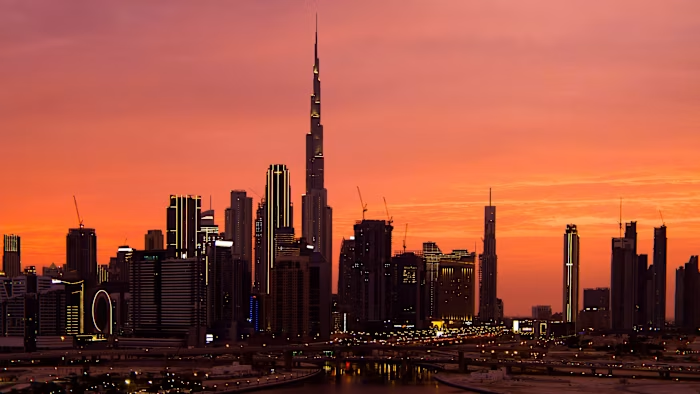
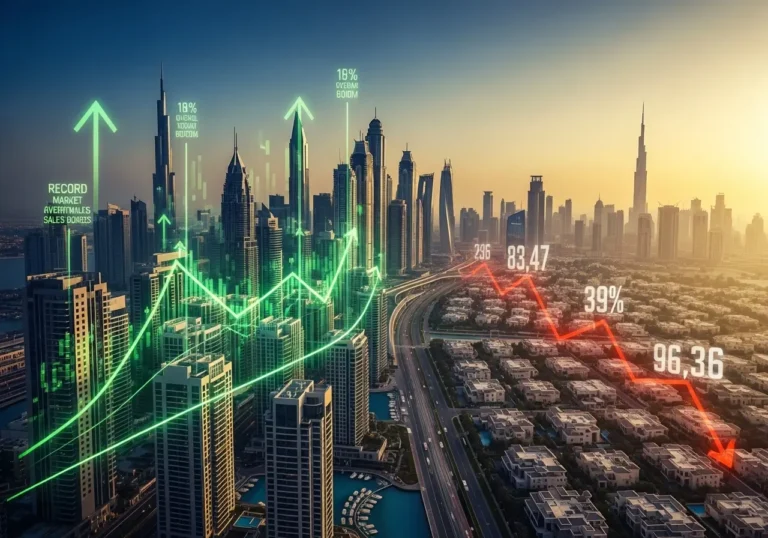
Dubai’s real estate market is entering a new phase as international property firms continue to pursue opportunities in the emirate, even as geopolitical uncertainty and a cooling market test investor confidence.
The Oppenheim Group, the luxury real estate brokerage made famous by Netflix’s Selling Sunset, has opened its first office outside North America in Dubai, marking a significant expansion into one of the world’s most closely watched property markets.
The move comes after regional conflict triggered a downturn in Dubai’s property activity earlier in 2026. Despite the uncertainty, the company believes the emirate continues to offer opportunities in the high-end residential sector, where demand from wealthy international buyers has helped sustain substantial transaction volumes.
Figures highlighted in the company’s expansion plans illustrate the scale of Dubai’s luxury market. During the first eight months of 2026, 1,314 residential properties in Dubai sold for more than 20 million dirhams, equivalent to approximately $5.45 million. In comparison, Los Angeles recorded 233 single-family home sales at prices high enough to trigger its mansion tax during the same period.
Although the figures cover different property categories and are not directly comparable, they underline Dubai’s importance as a destination for high-value property investment.
The brokerage’s new Dubai operation will be led by Omar Abaza, an Egyptian-American property professional with extensive experience in the US market. The firm has already assembled listings valued at more than 350 million dirhams, or around $95.3 million.
However, entering Dubai does not guarantee success. Competition among property brokers remains intense, and industry professionals say understanding local buyers, building trusted relationships and adapting to the emirate’s business culture will be essential.
The broader market is also undergoing a shift. Following years of strong demand and rising property values, buyers are increasingly attentive to pricing, market conditions and the long-term value of their investments. Geopolitical developments have added another layer of uncertainty, particularly for investors weighing whether to commit substantial capital to luxury homes.
For Dubai, the expansion highlights the continuing attraction of its property sector to international businesses, even during a period of adjustment. Yet the market’s next chapter may depend less on headline-grabbing transactions and more on whether investor confidence, sustainable demand and economic stability can withstand regional uncertainty.
The arrival of a globally recognised luxury brokerage is a vote of confidence in Dubai’s long-term potential. Whether that confidence translates into lasting growth will depend on how the market navigates the challenges ahead.


+ There are no comments
Add yours