







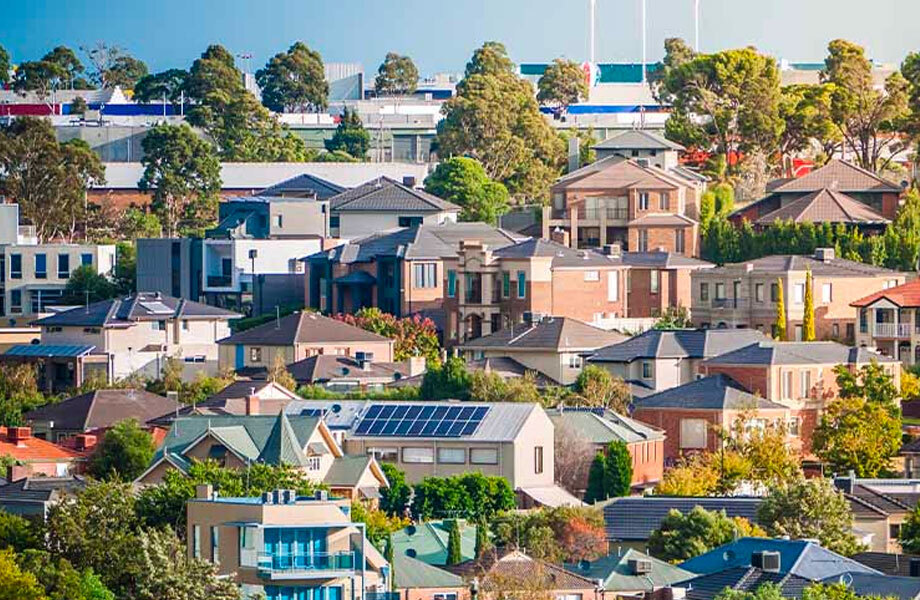
Melbourne’s falling house prices are failing to deliver the relief many homebuyers hoped for, as rising mortgage costs continue to push properties beyond the reach of ordinary households. A new analysis reveals that couples seeking to purchase a median-priced house in the Australian city now have access to significantly fewer affordable suburbs than they did a year ago.
According to research by financial comparison website Canstar, couples with incomes sufficient to service a 30-year mortgage on a typical Melbourne house can now afford homes in just 146 suburbs, down from 210 in October 2025. The decline means buyers have lost access to 64 suburbs in a single year, highlighting how higher borrowing costs can outweigh the benefits of softer property prices.
The analysis puts Melbourne’s median house value at approximately A$960,000, a price that remains a substantial financial commitment for households facing higher repayments and everyday living expenses.
The findings underline a growing problem in Australia’s housing market: affordability depends on more than the price of a property. Even when house values fall, rising interest rates can increase monthly repayments, reducing the amount buyers can safely borrow and narrowing their choices.
For first-time buyers, the pressure can be particularly severe. Many must balance mortgage repayments against rent, food, transport, utilities and other household expenses while trying to save enough for a deposit. A smaller selection of affordable suburbs can force prospective homeowners to compromise on location, commute times or property size.
Canstar’s analysis identified Melton, where the median house value was A$570,000, as Melbourne’s most affordable location for buyers in the study. Melton South followed at A$580,000, while Wyndham Vale recorded a median value of A$610,000.
These comparatively lower prices offer alternatives for households priced out of more expensive parts of the city. However, moving farther from employment centres can bring additional transport costs and longer commutes, meaning the cheapest property is not always the most affordable option in the long term.
The situation also raises broader questions about Australia’s housing supply and the ability of younger households to achieve homeownership. Limited affordable options can push more people towards renting, adding pressure to an already challenging rental market.
The figures illustrate the difficult balance facing policymakers: improving housing affordability requires not only measures that support construction and increase supply, but also a financial environment in which households can manage the cost of borrowing.
For Melbourne buyers, the message is clear. Lower house prices alone are not enough. Until borrowing becomes more manageable and affordable homes become easier to access, the dream of homeownership will remain out of reach for many working households.









+ There are no comments
Add yours