







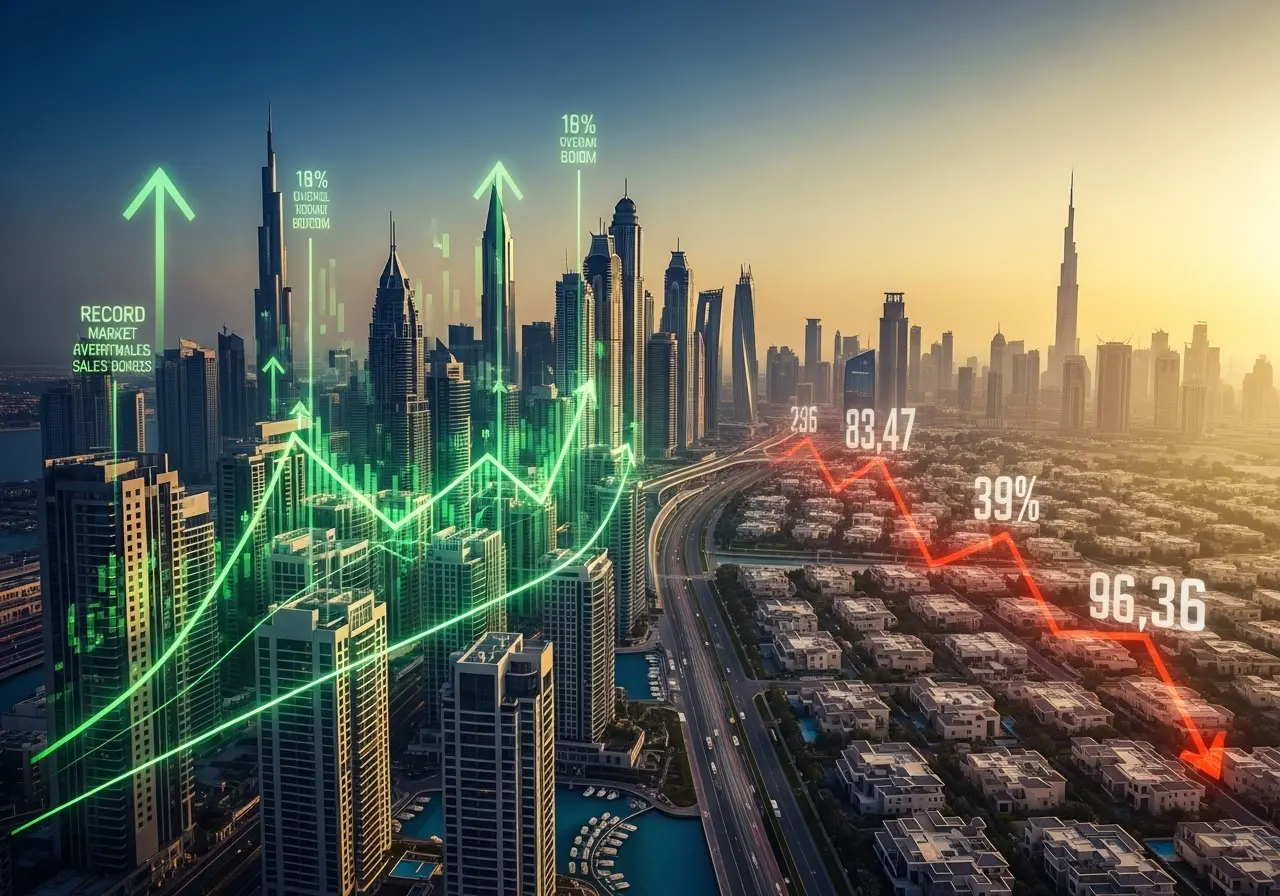
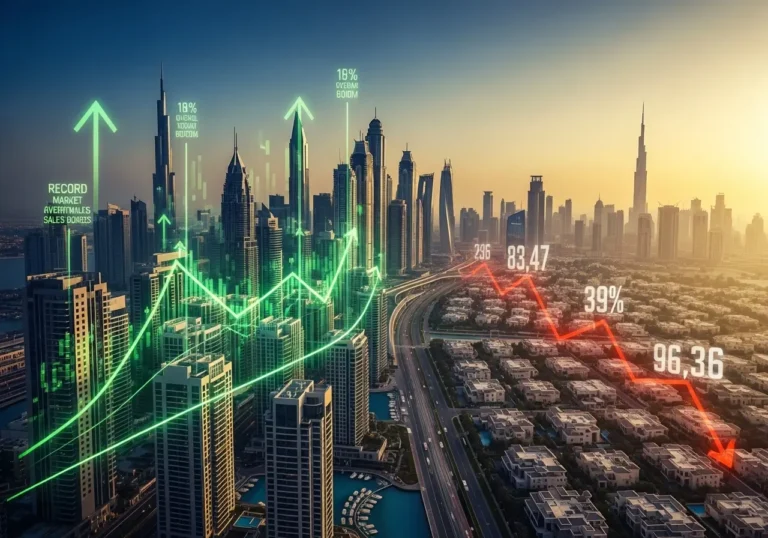
Dubai’s once-booming real estate market is showing signs of a sharp slowdown, with residential property sales plunging 47% in value during the third quarter of 2026 as regional uncertainty prompts buyers to reconsider major investment decisions.
The emirate recorded residential property transactions worth 72.6 billion dirhams ($19.7 billion) in the three months to the end of September, down 47% from the same period last year. The number of transactions fell 38% to approximately 34,000, highlighting a significant cooling in market activity.
The downturn marks a change in momentum for a market that has attracted international investors with its tax advantages, expanding infrastructure, luxury developments and reputation as a global business hub. Buyers from Europe, Asia, the Middle East and other regions have helped fuel demand for apartments, villas and off-plan developments in recent years.
However, the latest figures suggest that uncertainty surrounding regional tensions has made some buyers more cautious. Property purchases often involve lengthy negotiations and registration procedures, meaning the latest transaction figures reflect a mixture of decisions made before and after geopolitical tensions intensified.
Despite the decline, Dubai’s property market has not come to a standstill. Off-plan developments continued to account for a substantial share of activity, representing about 65% of residential sales value and 72% of purchases during the quarter.
The market is also facing a growing supply challenge. Thousands of residential units are under construction or planned for delivery in the coming years, raising questions about whether future demand will be sufficient to absorb the additional homes. Analysts have warned that apartments could face greater price pressure than villas as new supply enters the market.
For international investors, the slowdown presents both risks and potential opportunities. Some may delay purchases while waiting for greater economic and geopolitical clarity, while others could look for attractive entry prices if sellers become more flexible.
Nevertheless, a fall in sales does not automatically mean property prices will collapse. Transaction volumes, sales values and actual property prices measure different aspects of the market, and their movements can diverge.
Dubai’s long-term prospects will depend on regional stability, employment growth, population expansion, investor confidence and the pace at which new homes are delivered.
For now, the sharp fall in sales serves as a warning that even one of the world’s most closely watched property markets is vulnerable to geopolitical shocks. Whether the slowdown proves temporary or signals a longer adjustment will depend on how quickly confidence returns and how effectively the market absorbs its expanding supply.





+ There are no comments
Add yours