






In a striking shift that has captured international attention, Burkina Faso is placing young women’s scientific talent at the centre of national recognition, introducing a competition celebrating achievement in mathematics, physics and chemistry just months after suspending beauty pageants nationwide.
The initiative, known as HAKILI Mousso, meaning “Female Intelligence,” brought together 84 young women from across the West African country to demonstrate their academic abilities. The competition culminated in an awards ceremony in September 2026, where outstanding participants received prizes, scholarships and other forms of support intended to encourage their educational and professional ambitions.
The programme was launched as part of a broader effort to promote female participation in scientific fields and challenge stereotypes that can discourage girls from pursuing careers in science, technology and engineering. By giving talented students a national platform, the government hopes to demonstrate that intellectual achievement deserves recognition and investment.
The competition rewarded excellence across three subjects. Adjaratou Bama topped mathematics with a score of 14.25 out of 20, Aminata Traoré led physics with 15 out of 20, and Inès Marie Fabiolas Nikiéma achieved the highest chemistry score, earning 18.73 out of 20. The first-place winners received two million West African CFA francs each, alongside a laptop and a motorcycle. Other high-performing candidates also received prizes and educational support.
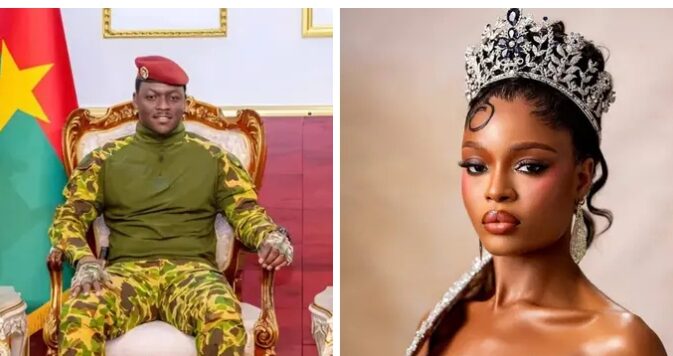
President Ibrahim Traoré met the finalists and encouraged them to believe in their abilities, pursue ambitious goals and contribute to their country’s development. The initiative reflects growing recognition that expanding access to scientific education can help build the skilled workforce needed for research, technology and economic progress.
The competition follows Burkina Faso’s June 2026 suspension of beauty pageants while authorities reviewed regulations governing such events. Officials said the review was intended to ensure that competitions reflected the country’s cultural identity, social values and human dignity. The government has also indicated that beauty contests could return in a revised format, meaning the science competition is not necessarily a permanent replacement.
The move has nevertheless prompted a wider debate about women’s empowerment. Supporters argue that celebrating academic excellence can inspire more girls to enter scientific careers, while critics question whether promoting science should be linked to restricting beauty competitions. For many, the two pursuits need not be mutually exclusive.
Ultimately, HAKILI Mousso’s lasting significance will depend on what happens after the awards ceremony. Scholarships, quality science education, mentorship and access to employment opportunities will be essential if recognition is to translate into lasting progress.
Burkina Faso’s initiative sends a powerful message about the potential of young women. Its greatest achievement, however, may be measured not simply by the competition’s winners, but by how many girls it inspires to imagine a future in science.







+ There are no comments
Add yours