






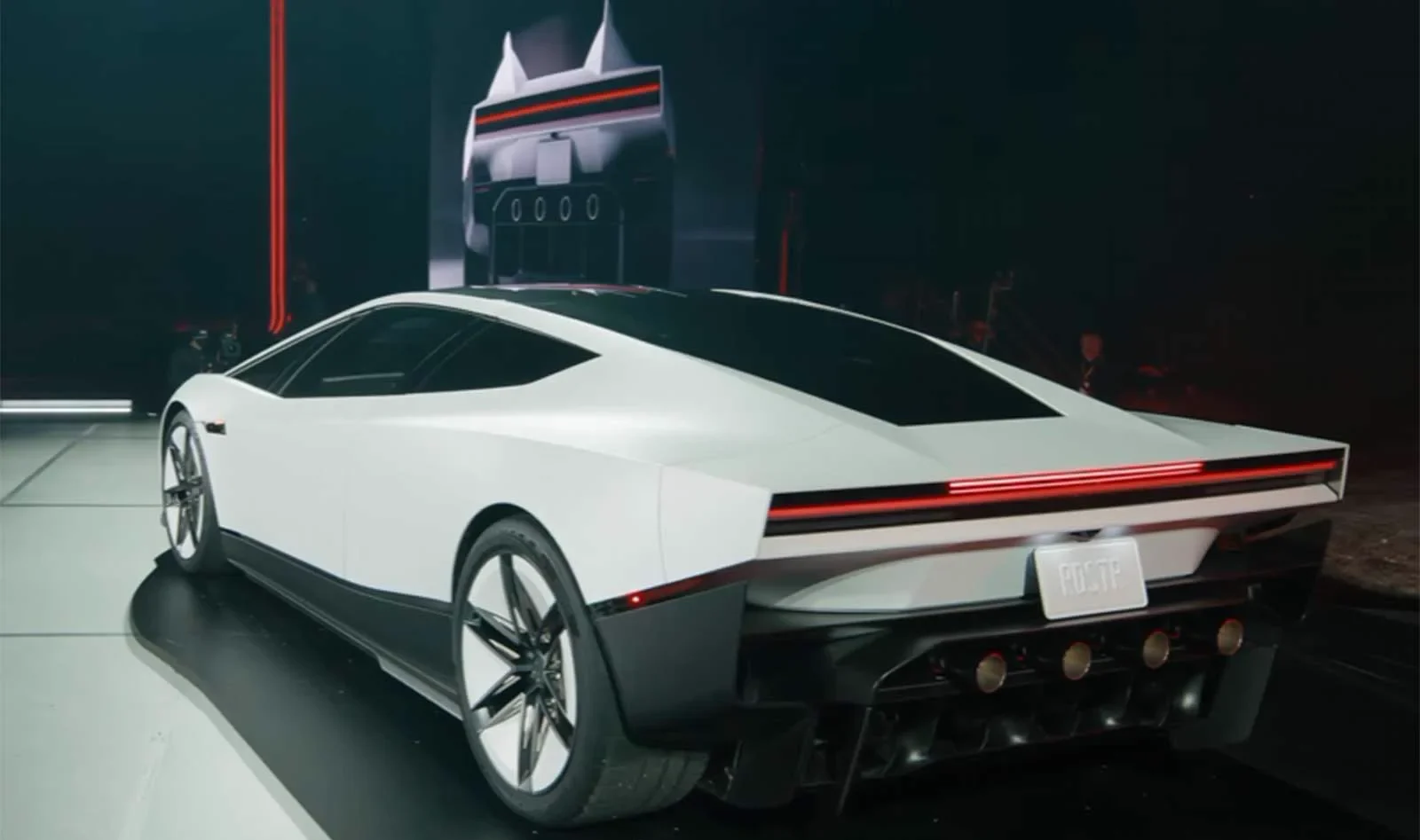
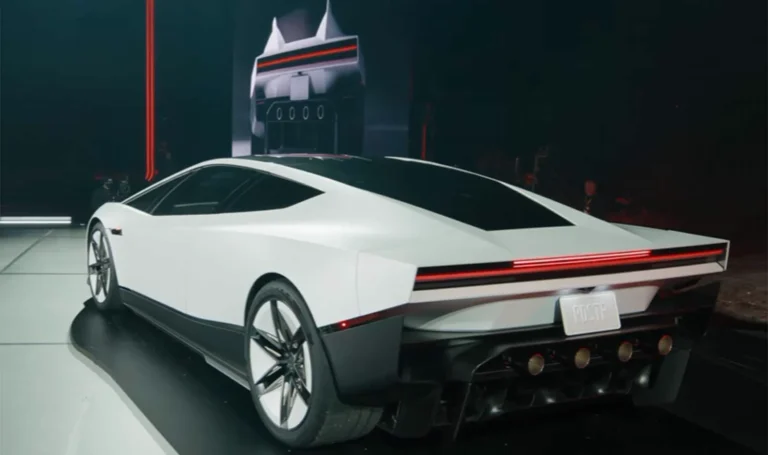
Tesla has unveiled a redesigned Roadster featuring rocket-style thrusters developed in collaboration with Elon Musk’s SpaceX, presenting an extraordinary vision of the electric sports car that appears to blur the boundaries between automotive engineering and science fiction. However, despite the dramatic demonstrations, customers will have to wait until 2028 for production to begin.
The white, two-seat vehicle was revealed at an event on Thursday, October 15, where Tesla demonstrated a series of unusual manoeuvres designed to showcase the car’s capabilities. In one demonstration, the Roadster travelled upside down along a ramp using a suction system before rotating through the air and landing with the assistance of its built-in thrusters. Later, the vehicle appeared to jump over a truck and other cars, twisting in mid-air during the manoeuvre.
The spectacle immediately set the new Roadster apart from conventional electric sports cars, reinforcing Musk’s ambition to make Tesla synonymous not only with electric mobility but also with technology that challenges established expectations.
Developed with SpaceX, the rocket company also led by Musk, the vehicle incorporates propulsion technology that could potentially provide extraordinary acceleration and manoeuvrability. However, the demonstration leaves important engineering and safety questions unanswered, including how the thrusters would function in ordinary driving conditions and what restrictions would be necessary to operate such a system safely.
Tesla has said the Roadster will reach a top speed exceeding 230 miles per hour and offer a driving range of more than 300 miles. The company has not yet disclosed its price, leaving prospective buyers without a clear indication of how much the highly anticipated vehicle will cost.
The announcement also revives a project that has experienced years of delays. Tesla first presented the next-generation Roadster in 2017, initially generating considerable excitement among electric-car enthusiasts. Production has repeatedly been postponed, making the latest commitment to a 2028 start an important milestone for a vehicle that has become one of the company’s most closely watched unfinished projects.
The unveiling has also prompted speculation about Tesla’s broader corporate strategy. Some observers have suggested that the collaboration could help promote closer ties between Tesla and SpaceX, particularly as Musk’s businesses continue to develop technologies that overlap across transportation, energy and aerospace. However, the demonstration itself does not establish that a merger between the companies is planned.
Beyond the dramatic presentation, the Roadster faces the challenge of turning spectacular technology into a commercially viable vehicle. Rocket-style propulsion introduces additional questions involving weight, energy requirements, reliability, maintenance and regulatory approval. Any system capable of lifting or rotating a car would also require stringent safeguards to protect occupants and people nearby.
For Tesla, the stakes extend beyond a single sports car. The company operates in an increasingly competitive electric-vehicle market in which manufacturers are under pressure to deliver compelling products, improve efficiency and justify premium prices. A successful Roadster could strengthen Tesla’s reputation for technological experimentation, while further delays could intensify questions about its ability to turn ambitious promises into production-ready vehicles.
For now, the redesigned Roadster remains a dramatic demonstration of Musk’s vision rather than a car available to ordinary customers. Its eventual success will depend not only on its ability to perform extraordinary manoeuvres, but also on whether Tesla can deliver the promised performance, safety and reliability when production finally begins.
If the company meets its latest deadline, the Roadster could become one of the most unconventional electric sports cars ever brought to market. Until then, the world will be watching to see whether Tesla’s flying-car spectacle can become a practical automotive reality.








+ There are no comments
Add yours