






Ukraine’s dependence on Elon Musk’s Starlink satellite network has highlighted how internet connectivity is reshaping modern warfare, with restrictions affecting drone operations and raising concerns about the strategic power of private technology companies.
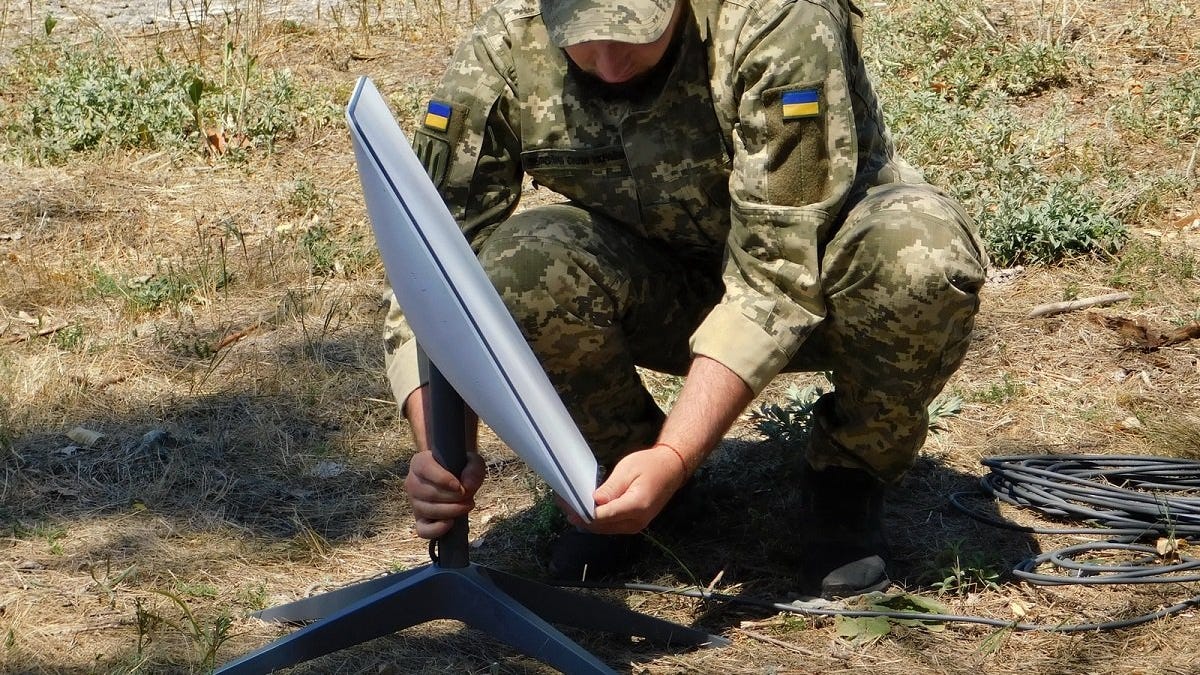
Ukraine’s war against Russia is increasingly being fought not only with missiles, artillery and ground forces, but also through satellite communications and remotely operated drones. At the centre of this technological transformation is Starlink, the satellite internet service operated by Elon Musk’s SpaceX, which has become a critical communications tool for Ukrainian forces.
Unlike conventional internet networks that depend on ground-based cables and mobile towers, Starlink uses satellites orbiting Earth to provide connectivity across remote and conflict-affected areas. This capability allows Ukrainian troops to exchange messages, transmit video footage and coordinate military operations even when conventional communications infrastructure has been damaged or destroyed.
Starlink has also become important for drone warfare. Reliable internet connectivity allows operators to receive real-time information and maintain contact with drones over considerable distances. This helps military units coordinate surveillance, assess battlefield developments and respond more quickly to changing conditions.
However, recent speed restrictions affecting drones connected to Starlink have raised concerns in Kyiv. Ukrainian officials have reported disruptions to certain missions following the introduction of a speed limit of approximately 100 miles per hour (160km/h), according to reports cited by the BBC.
The restrictions could create particular difficulties for Ukrainian drone interceptors designed to pursue fast-moving Russian attack drones. Some Russian Shahed-type drones can travel at speeds exceeding 198 miles per hour, potentially placing them beyond the effective capabilities of systems affected by the limit.
George Barros of the Institute for the Study of War has described Starlink as a backbone of Ukrainian military communications, connecting drones, artillery units and command posts. Electronic warfare expert Tom Whittington has also highlighted the network’s ability to transmit large amounts of information without relying on conventional telecommunications infrastructure.
The dispute has drawn attention to the influence private technology companies can exert over military operations. Although Musk has distinguished the commercial Starlink service from Starshield, a separate military-oriented system developed for the US government, both rely on SpaceX satellite technology.
Musk has stated that Starlink is intended for civilian or defensive use and has suggested that restrictions involving Starshield fall under US government control. Ukrainian officials have questioned the circumstances surrounding the latest limitations, amid wider political tensions between Kyiv and Washington.
With Russia continuing its invasion, Ukraine faces the challenge of maintaining reliable battlefield communications while exploring alternative technologies. The controversy demonstrates that satellite internet is no longer merely a convenience: it has become a strategic asset capable of influencing military effectiveness, national security and the balance of power in modern conflicts.










+ There are no comments
Add yours