





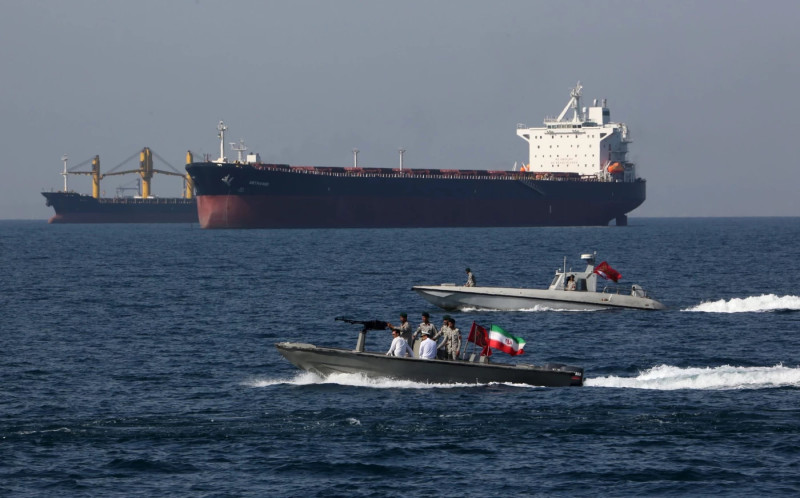
A new reported attack on a vessel in the Strait of Hormuz has intensified concerns over the security of one of the world’s most important energy routes, raising fresh fears that growing regional tensions could disrupt global oil supplies.
The British navy-affiliated United Kingdom Maritime Trade Operations (UKMTO) said on Sunday that it had received a report of a projectile striking a vessel as it was traveling through the Strait of Hormuz. The extent of the damage and the condition of the crew were not immediately known.
The report came as concerns over the security of energy infrastructure in the region were already increasing following the shutdown of a major Saudi oil pipeline after a drone attack. The developments have added to uncertainty surrounding oil shipments and the wider impact of escalating tensions involving Iran and other regional actors.
The Strait of Hormuz is a critical passage for global energy markets, connecting the Persian Gulf with the Gulf of Oman and the Arabian Sea. Large volumes of oil and other energy products pass through the waterway, meaning any prolonged disruption could have consequences far beyond the Middle East.
The latest maritime incident has therefore attracted close attention from governments, shipping companies and energy traders. Any sustained threat to commercial vessels could force shipping operators to reconsider routes, increase insurance costs and potentially contribute to higher energy prices.
The situation has also created a difficult challenge for U.S. President Donald Trump as Washington faces growing pressure over the security of regional shipping and energy infrastructure. According to sources cited by Reuters, Saudi Crown Prince Mohammed bin Salman has asked Trump for U.S. military assistance, highlighting the seriousness of the security concerns facing the kingdom.
The reported attack on the vessel came alongside a broader escalation in regional activity, including a renewed Houthi offensive that has added another layer of uncertainty to maritime security. The combination of threats to shipping and attacks on energy infrastructure has raised concerns that the conflict could increasingly affect international trade and energy markets.
Saudi Arabia’s decision to shut down its East-West oil pipeline following the drone attack is particularly significant because the route provides an alternative to shipping some Saudi crude through the Strait of Hormuz. Any disruption to major energy infrastructure can quickly become a concern for global markets, especially when maritime routes are also facing security threats.
Oil markets have closely watched developments around the Strait of Hormuz because even the perception of a serious threat can influence prices. Traders may factor in the possibility of supply disruptions, higher transportation costs and increased geopolitical risk.
For shipping companies, the security situation presents a growing operational challenge. Commercial vessels passing through the region must assess the risk of attacks while governments and maritime agencies continue to issue warnings about potential threats.
The latest incident also underscores how quickly regional military tensions can spill into the global economy. The Strait of Hormuz is not only strategically important to countries in the Middle East but is also essential to international energy trade. A prolonged closure or significant reduction in shipping through the waterway could place additional pressure on oil supplies and prices around the world.
As authorities work to determine what happened to the vessel and assess the broader security situation, international attention is likely to remain focused on the Strait of Hormuz. Further attacks or disruptions could increase pressure on the United States and regional governments to strengthen maritime security and protect critical energy infrastructure.
For now, uncertainty remains high. The reported projectile strike, the shutdown of Saudi Arabia’s key oil pipeline and renewed regional attacks have combined to create a potentially dangerous situation for global energy markets. Any further escalation could have consequences not only for Middle Eastern security but also for oil prices, shipping costs and economies that depend heavily on uninterrupted energy supplies.










+ There are no comments
Add yours