







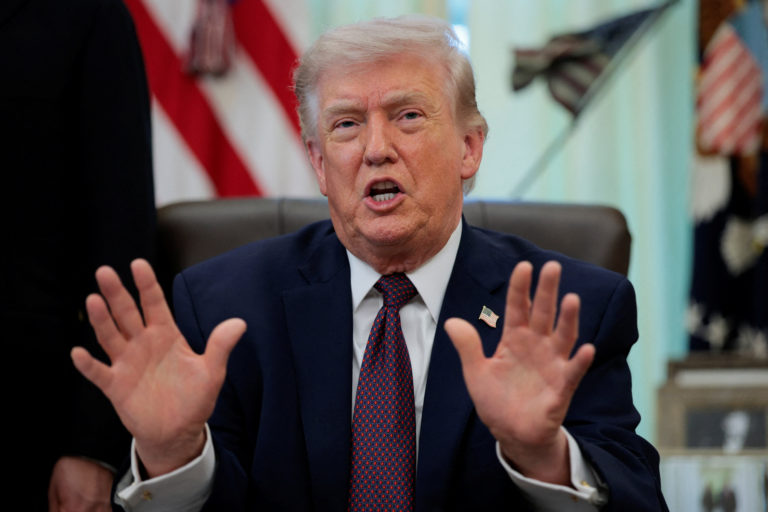
U.S. President Donald Trump’s approval rating has fallen to 33%, marking the lowest level of his current presidency, according to a Reuters/Ipsos poll released on August 17. The survey highlights growing public dissatisfaction with Trump’s performance and increasing concern over the United States’ military involvement in Iran.
The poll found that 64% of Americans disapproved of Trump’s performance in the White House, while only 33% approved. Trump’s approval rating declined from 35% in an earlier poll conducted this month. The latest figure also matches the lowest approval rating recorded during his first presidency, which was reached in December 2017.
The survey comes as the conflict involving the United States and Iran continues to dominate political debate in Washington. Public expectations about the duration of U.S. involvement appear particularly negative. Around 80% of respondents said they expected American involvement in Iran to continue for an extended period, suggesting widespread concern that the conflict could become prolonged.
The findings could present a significant political challenge for Trump as his administration faces questions about the costs and consequences of its Iran policy. Concerns over military operations, economic pressures and the potential impact of the conflict on American households could further influence public opinion.
Trump has continued to defend his administration’s approach, but the decline in approval indicates that a growing share of Americans are dissatisfied with the direction of the White House. The poll also underscores the difficulty presidents often face when military conflicts become prolonged and uncertain.
The Reuters/Ipsos findings provide an important snapshot of public sentiment at a politically sensitive moment. With most Americans expecting the Iran conflict to last longer and Trump’s overall approval falling to 33%, the president could face increasing pressure to demonstrate that his policies are producing results while limiting the broader costs of continued U.S. involvement.
The latest numbers will also be closely watched by political leaders and strategists as they assess the public mood and the potential impact of foreign policy on the broader political landscape.










+ There are no comments
Add yours