





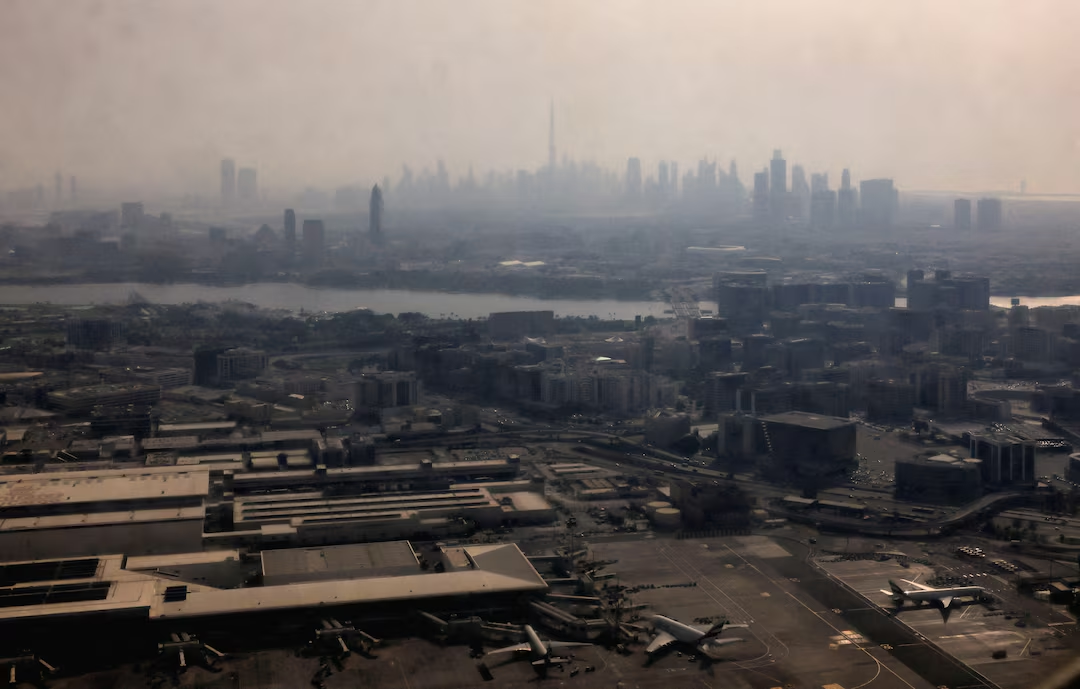
One of the world’s busiest international aviation hubs is facing a major setback as regional conflict, airspace restrictions and flight disruptions drive millions of travellers away, raising fresh concerns about the future of global air connectivity.
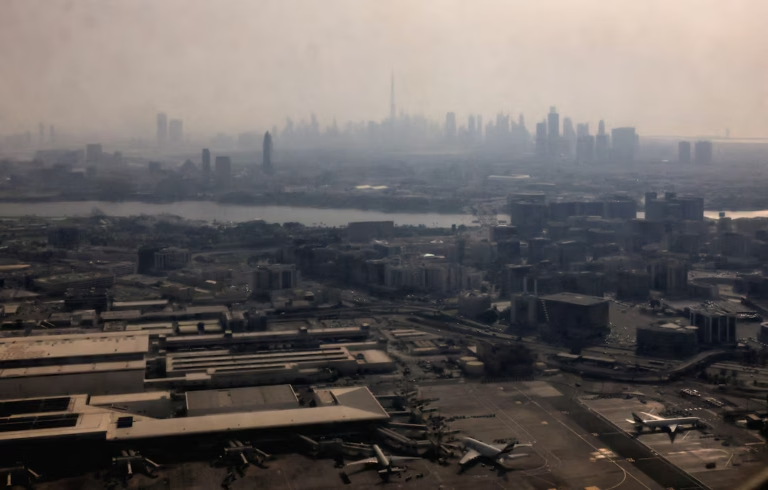
Dubai International Airport, one of the most important gateways connecting Europe, Asia, Africa and the Americas, has recorded a dramatic decline in passenger numbers as the ongoing Middle East conflict continues to shake the aviation industry. The airport handled 50.4 million passengers during the first nine months of 2026, representing a 28.1% drop compared with the same period last year, according to figures released by its operator, Dubai Airports, on Tuesday.
The decline highlights the growing impact of geopolitical instability on international tourism and aviation. Since the conflict erupted in February, several countries across the Middle East have faced airspace restrictions and temporary closures, forcing airlines to cancel flights, change routes and adjust their operating schedules. The disruption has affected not only regional travellers but also passengers using Gulf airports as connecting points for journeys between distant continents.
The pressure has been particularly visible during the third quarter of the year. Dubai International Airport welcomed 18.8 million passengers between July and September, marking a 22.1% decline compared with the same period in 2025. August remained the busiest month of the quarter, recording 6.6 million passengers, suggesting that travel demand has not disappeared despite the difficult circumstances.
The airport’s operational figures reveal the wider scale of the disruption. Aircraft movements fell 27.6% to 243,000 during the first nine months, while cargo volumes declined 23.2% to approximately 1.215 million tonnes. The figures demonstrate how the conflict has affected both passenger transportation and the movement of goods through one of the world’s major aviation and logistics centres.
Dubai’s importance to international travel makes the downturn particularly significant. The airport connects passengers to 235 destinations across 101 countries through 57 airlines. India remained its largest country market during the third quarter, followed by Saudi Arabia and the United Kingdom. London, Mumbai and New Delhi were among its leading city destinations.
Despite the difficult situation, signs of recovery are beginning to emerge. Several international airlines have started restoring services to Dubai as regional operations gradually improve. British Airways has resumed flights between London Heathrow and Dubai, while Lufthansa Group is scheduled to restart Dubai services on November 25. Other carriers are also working to rebuild their regional networks.
Dubai Airports expects the airport to welcome more than 70 million passengers during 2026, significantly below the 95.2 million recorded in 2025. The airport’s ambition to reach 100 million annual passengers has also been pushed back to 2027.
Meanwhile, airport authorities are accelerating investments in artificial intelligence, predictive analytics and biometric technology to improve passenger movement and increase operational capacity without expanding existing facilities. Despite reduced traffic, operational performance has remained strong, with 99.9% of passengers waiting less than 10 minutes at departure passport control during the third quarter.
For international travellers, the situation highlights how quickly geopolitical tensions can reshape familiar travel routes. Airlines are being forced to reconsider schedules, passengers are facing fewer convenient connections, and tourism businesses across the region are dealing with growing uncertainty.
Dubai’s aviation industry has built its reputation on connecting the world. Its latest passenger figures demonstrate the enormous challenges facing that ambition, but the gradual return of international airlines offers a reason for cautious optimism.
As the Middle East continues to navigate an uncertain security environment, the recovery of Dubai’s airport could become an important indicator of whether international travel across the region is finally returning to normal.






+ There are no comments
Add yours