



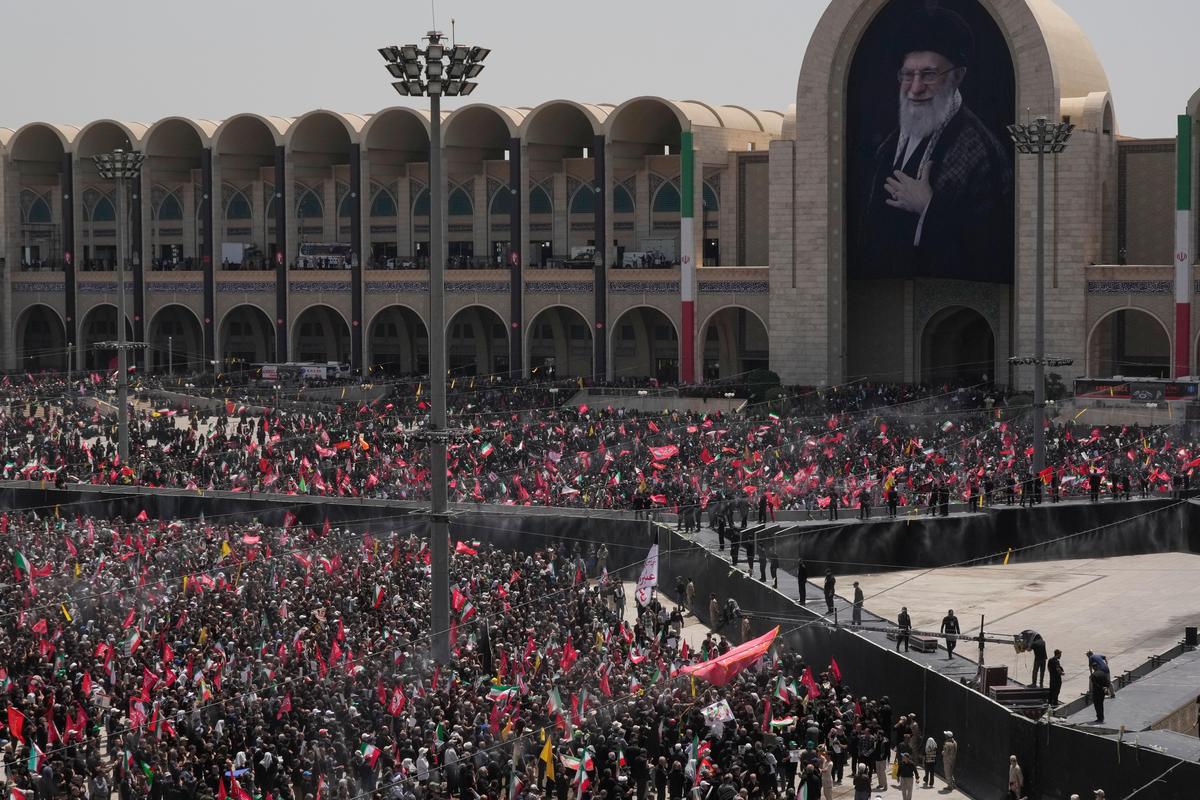
Huge crowds have gathered in Tehran as Iran launched large-scale funeral ceremonies for Supreme Leader Ayatollah Ali Khamenei, marking one of the most significant public mourning events in the country’s modern history amid ongoing regional tensions following the West Asia conflict.
The ceremonies began at the Grand Mosalla complex in Tehran, where thousands of mourners, many dressed in black and carrying Iranian flags and religious banners, assembled to pay their respects. The atmosphere was highly charged, with chants of grief, religious slogans, and calls for retaliation echoing through the capital as the nation enters several days of official mourning.
State media reported that the funeral processions are expected to continue across multiple cities in Iran, forming part of a coordinated national observance that will extend over several days. Authorities have implemented strict security measures across Tehran, including road closures, restricted access to key areas, and heightened military and police presence to manage the massive turnout.
The funeral has also become a focal point for political expression, with crowds voicing support for Iran’s leadership and condemning its adversaries in the recent conflict. Officials described the gathering as both a farewell to a long-serving leader and a demonstration of national unity during a period of heightened regional instability.
International observers note that the scale of participation reflects both the enduring influence of Khamenei’s leadership and the deep polarization surrounding his legacy. While state organizers have emphasized unity and resilience, analysts point out that the events are also unfolding against a backdrop of economic strain and geopolitical pressure on Iran.
The ceremonies are expected to continue over the coming days, with processions planned through several major cities before the final burial rites. Authorities have urged citizens to cooperate with security arrangements as millions are anticipated to take part in public mourning rituals.
As Tehran remains the center of attention, the funeral has underscored the intersection of politics, religion, and national identity in Iran, with the unfolding events shaping both domestic sentiment and international reactions during a volatile moment in West Asia.



+ There are no comments
Add yours