







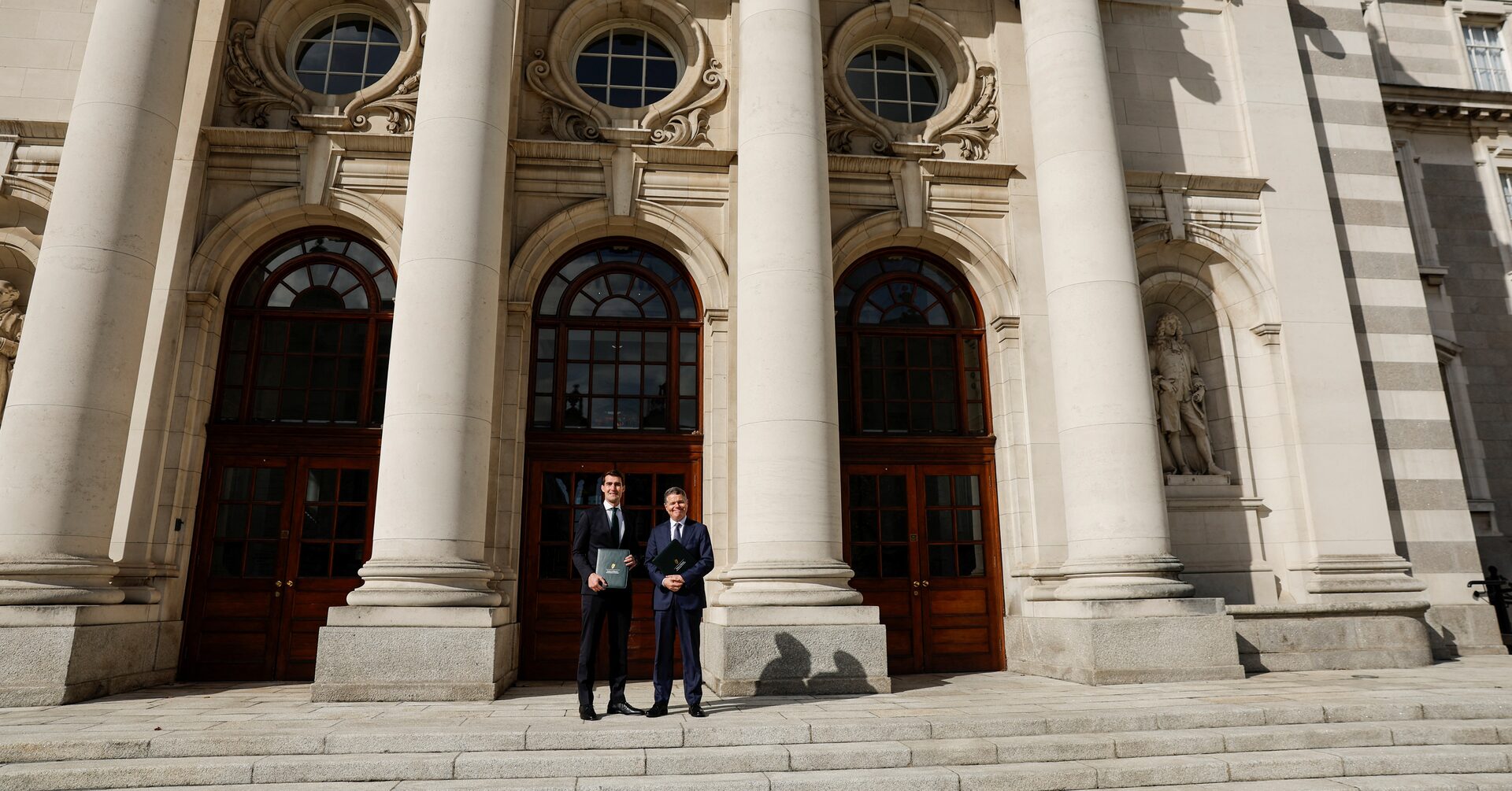
Despite forecasting a €6.7 billion budget surplus, Ireland is taking a cautious approach to public spending as concerns grow over its heavy reliance on multinational corporations and the long-term stability of its economic success.
Ireland is enjoying a financial position that many governments around the world would envy. With a projected budget surplus of €6.7 billion in 2026, the country has billions of euros in additional public revenue. Yet, rather than opening the spending taps, the government is taking a more cautious approach, seeking to protect the economy from potential shocks and avoid repeating mistakes made during previous financial downturns.
Taoiseach Micheál Martin faces a difficult balancing act. Ireland has become one of Europe’s most attractive destinations for international businesses, with major multinational corporations including Apple, Microsoft, Meta and Salesforce establishing significant European operations in the country. A competitive corporate tax environment has helped attract these companies, generating substantial tax revenues and strengthening government finances.
However, this financial success also carries risks. A significant portion of Ireland’s corporate tax income comes from a relatively small number of multinational companies. Any changes in international tax policies, corporate investment decisions or global economic conditions could affect government revenues and put pressure on public finances.
This dependence has raised concerns about what economists describe as the resource curse. Traditionally associated with countries rich in oil, gas or valuable natural resources, the term describes how an economy can become overly dependent on a concentrated source of wealth while other productive industries struggle to develop.
Ireland’s situation is different, but some of the underlying risks are similar. Multinational companies generate enormous profits through intellectual property, pharmaceutical manufacturing, aircraft leasing and other international operations. Much of this activity can make the country’s economic performance appear stronger than the underlying domestic economy.
The difference becomes clear when examining Ireland’s economic indicators. According to the figures highlighted in Reuters Breakingviews’ analysis, the country’s gross domestic product expanded by 16.6% year-on-year in the first quarter of 2025. However, Modified Domestic Demand, a measure designed to provide a clearer picture of domestic economic activity, increased by only 3.2%.
This gap highlights the unusual structure of Ireland’s economy, where international corporate activity can significantly influence headline growth figures without producing an equivalent increase in everyday domestic economic activity.
The government therefore faces pressure to ensure that its financial windfall benefits ordinary households and strengthens the country’s long-term economic foundations. Housing shortages, healthcare demands, transport networks and electricity infrastructure require substantial investment. At the same time, excessive public spending could fuel inflation, increase construction costs and make the economy more vulnerable if corporate tax revenues suddenly decline.
Ireland’s challenge is not simply how to manage a budget surplus, but how to transform temporary financial advantages into lasting economic stability.
The country’s experience also offers an important lesson for other nations competing to attract international investment. Generous tax policies and foreign corporate activity can generate extraordinary wealth, but relying too heavily on a handful of global businesses can create vulnerabilities.
For Micheál Martin’s government, the priority is finding the right balance between investing in the country’s future and protecting its financial position. Ireland may have billions in surplus revenue today, but ensuring that prosperity survives tomorrow could prove to be the much harder task.









+ There are no comments
Add yours