






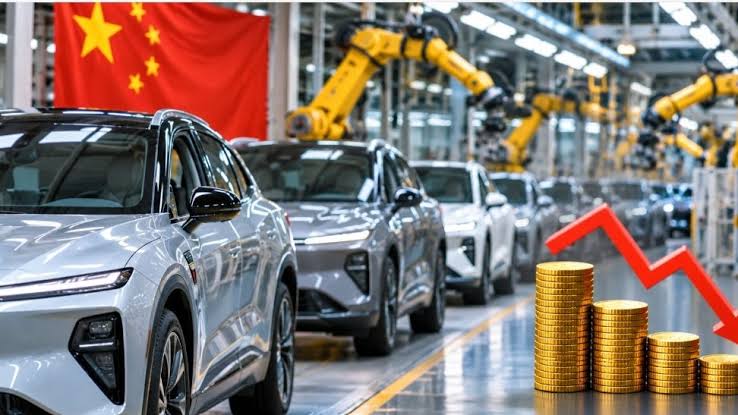
As industrial production slows, investment plunges and households tighten their spending, the world’s second-largest economy faces mounting pressure, with consequences that could shake global markets and international trade.
China’s economic engine is showing worrying signs of losing momentum, raising fresh concerns about the future of the world’s second-largest economy and its influence on global growth. Disappointing economic figures for October have exposed mounting pressure across factories, businesses and households, intensifying fears that China’s recovery could be losing strength at a critical moment for the global economy.
Industrial production growth slowed to 4.8% in October, while retail sales increased by just 0.4%, revealing the weakness of domestic demand. Even more concerning, fixed-asset investment fell 8.1% during the first ten months of the year, while property investment plunged 21.6%, highlighting the continuing struggle of China’s troubled real estate sector.
The numbers represent more than a temporary setback. They point to deeper challenges facing an economy that has powered global manufacturing, international trade and commodity demand for decades.
China’s factories remain central to global supply chains, producing everything from smartphones and electric vehicles to industrial machinery and consumer electronics. However, weaker industrial momentum could create difficulties for manufacturers, suppliers and exporters worldwide. Countries dependent on Chinese demand may face reduced export opportunities, while commodity-producing nations could feel pressure from changing demand for oil, copper, iron ore and other industrial materials.
The property sector remains one of the biggest obstacles to recovery. Years of financial difficulties among developers, declining property values and cautious homebuyers have weakened confidence in a market that once played a major role in China’s economic expansion. The sharp decline in property investment suggests that the crisis continues to weigh heavily on construction, employment and household wealth.
Consumer confidence is another major concern. With retail sales barely growing, Chinese households appear reluctant to increase spending amid uncertainty over employment, income and future economic conditions. Weak domestic consumption also complicates Beijing’s efforts to transform the country into an economy driven more by household demand rather than exports and investment.
Policymakers now face an increasingly difficult balancing act: stimulating economic activity, restoring business confidence and supporting struggling industries without creating additional financial risks.
For global investors, the warning signs are difficult to ignore. China’s economic strength has enormous influence over international markets, supply chains and business confidence.
The question is no longer simply how quickly China can recover, but whether its traditional growth model can deliver the strength the world has come to depend on. If the slowdown deepens, its consequences could reach far beyond China’s borders, reshaping the global economic landscape.








+ There are no comments
Add yours