






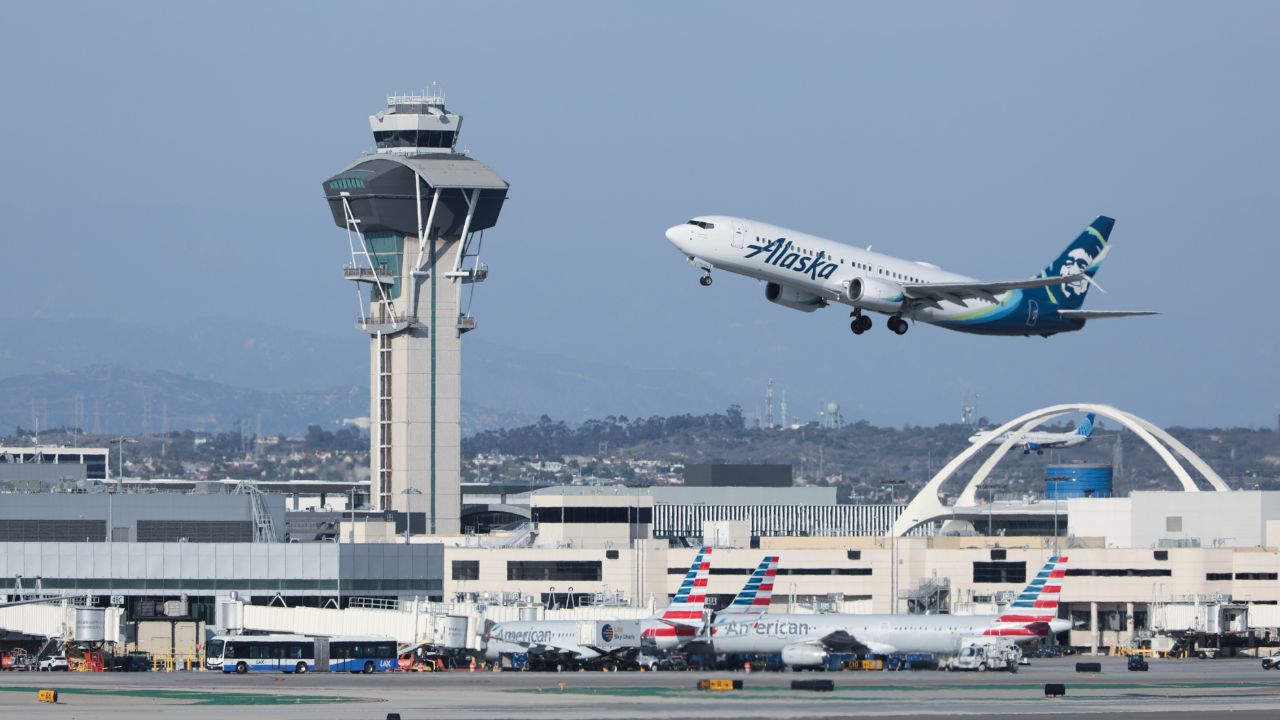
The Trump administration has dramatically increased its demand for aviation funding to $50 billion following a nationwide air traffic control communications failure that brought departures across the United States to a standstill, disrupted thousands of flights and left passengers stranded at airports across the country.
The funding push, announced late Friday, came as the scale of the disruption exposed serious vulnerabilities in America’s aging aviation infrastructure and intensified pressure on Congress to approve an ambitious modernization programme.
Transportation Secretary Sean Duffy and the White House had initially urged lawmakers to provide an additional $30.1 billion to upgrade the country’s airports and air traffic control network. However, following Friday’s communications breakdown, the administration raised its request to $50 billion, describing the situation as an urgent national infrastructure crisis.
The Federal Aviation Administration (FAA) ordered an extraordinary nationwide ground stop on Friday after communications problems affected air traffic control facilities. The restriction prevented departing aircraft from taking off, although planes already in the air were permitted to land. The disruption triggered widespread confusion, delayed travel plans and created enormous pressure on airlines attempting to manage operations.
Flight-tracking services reported thousands of disrupted journeys, with cancellations and delays spreading across major American airports. According to FlightRadar24, more than 4,700 flights were cancelled and approximately 10,000 delayed on Friday, while further cancellations threatened Saturday’s schedules.
Speaking at the White House, Duffy pointed to outdated technological infrastructure, including aging switches, routers and telecommunications equipment, as central factors behind the breakdown. He warned that the country could no longer depend on systems that were increasingly struggling to handle the demands of modern aviation.
The administration’s funding proposal reflects the enormous scale of the challenge. The earlier $30.1 billion request included $10.1 billion for air traffic control modernization, including a common automation platform, updated controller workstations and cloud computing infrastructure. Another $2 billion was earmarked for replacing and improving FAA control towers, while $18 billion was intended for airport-related improvements, including the modernization or replacement of aging terminals.
The latest crisis has also renewed concerns about the reliability of equipment that supports one of the world’s busiest and most complex aviation networks. Some FAA facilities continue to depend on decades-old technology, including legacy communications systems and outdated computer equipment. The agency has previously acknowledged that it still relies on obsolete components that are increasingly difficult to maintain or replace.
Congress had already approved $12.5 billion in July 2025 for air traffic control improvements and additional controller recruitment. However, the latest disruption has strengthened the administration’s argument that existing investments are insufficient to address the scale of the problem.
The incident also raises difficult questions about aviation safety, government preparedness and the consequences of delaying critical infrastructure upgrades. While officials have not established evidence of a cyberattack, investigations into the communications failure remain important to understanding precisely what went wrong.
For millions of Americans who depend on air travel for business, family commitments and international connections, Friday’s shutdown was a powerful reminder of how quickly modern transportation can be brought to a halt by failures in invisible technological systems.
The immediate challenge now lies in restoring normal operations and preventing another nationwide disruption. The longer-term battle will be political and financial, as the White House seeks congressional approval for billions of additional dollars.
What began as a communications failure has rapidly become a major test of America’s aviation infrastructure. With the Trump administration demanding $50 billion, lawmakers face growing pressure to decide whether the country can afford such an enormous investment — or the potentially greater cost of allowing its aging air traffic control system to fail again.









+ There are no comments
Add yours