



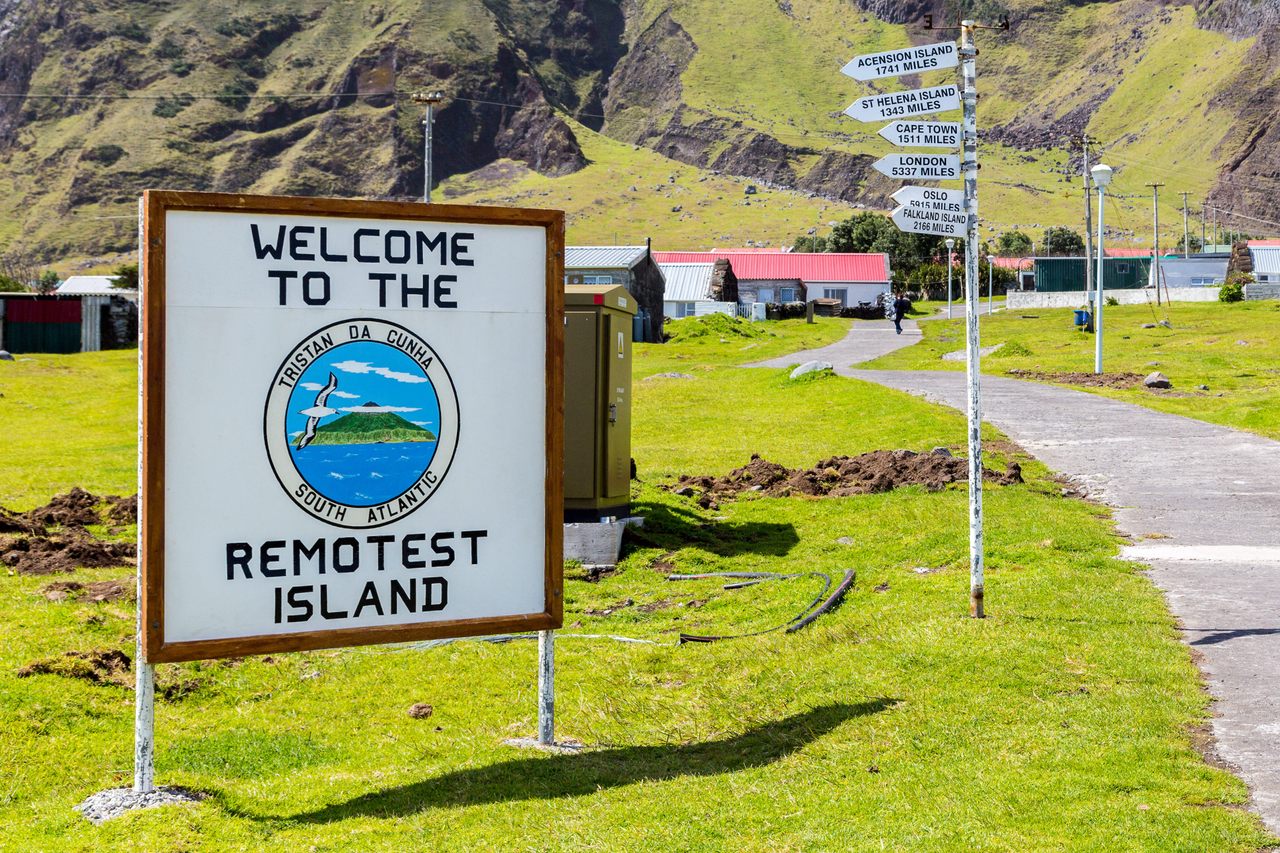
Far from crowded cities, busy airports and modern tourist hotspots, a tiny volcanic island in the South Atlantic Ocean offers one of the world’s most extraordinary travel experiences, where isolation, wild beauty and a remarkable community come together.
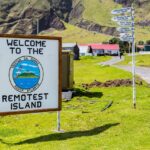
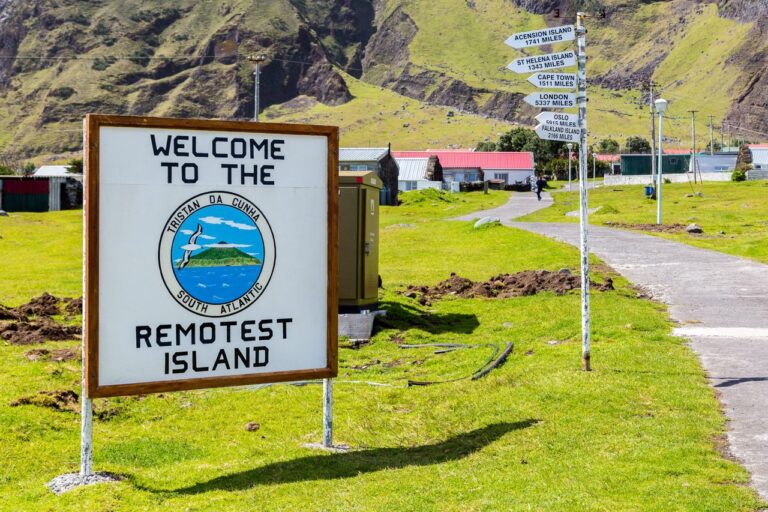
Imagine living in a place where the nearest inhabited island is hundreds of kilometres away, where there are no airports, and where reaching the outside world requires a long journey across unpredictable ocean waters. Welcome to Tristan da Cunha, a remote volcanic island widely recognised as the most isolated inhabited archipelago on Earth.
Located in the South Atlantic Ocean, approximately 2,400 kilometres from Saint Helena, Tristan da Cunha belongs to a British Overseas Territory. Its extraordinary location makes it one of the most difficult destinations in the world to reach, but for adventurous travellers, that isolation is precisely what makes it so fascinating.
The island’s dramatic landscape immediately captures the imagination. Rising from the deep blue Atlantic, its volcanic mountains create a spectacular backdrop of green slopes, rugged cliffs and mist-covered peaks. At the centre stands Queen Mary’s Peak, a towering volcanic summit reaching approximately 2,062 metres above sea level. On clear days, its impressive silhouette dominates the island, while changing weather frequently wraps the mountain in clouds.
Unlike conventional holiday destinations, Tristan da Cunha has no commercial airport. Visitors must travel by sea, usually from Cape Town, South Africa, aboard fishing vessels or specialist passenger ships. The voyage generally takes around six days, depending on weather and sea conditions. Even reaching the island is an adventure, as powerful Atlantic swells can make the journey challenging.
The island’s only permanent settlement, Edinburgh of the Seven Seas, is home to a small community whose residents have built a remarkable life in one of the most remote corners of the planet. Locally known simply as the Settlement, it features modest homes, a school, a hospital, a post office and a small harbour. Daily life revolves around community connections, fishing, farming and the rhythms of the surrounding natural environment.
For nature lovers, the island offers an extraordinary opportunity to experience wildlife in a relatively untouched setting. Its surrounding waters support seals, dolphins, whales and numerous seabirds. The nearby islands also provide important habitats for penguins and albatrosses, making the archipelago particularly attractive to wildlife enthusiasts and photographers.
One of the most fascinating experiences is exploring the island’s rugged walking trails. Adventurers can discover green valleys, volcanic formations, dramatic coastal scenery and remote landscapes that remain largely beyond the reach of mass tourism. However, climbing Queen Mary’s Peak requires careful planning, suitable conditions and local guidance.
The island also has a remarkable history. Discovered by Portuguese explorer Tristão da Cunha in 1506, it later became home to a small permanent population. In 1961, a volcanic eruption forced the entire community to evacuate to Britain. Most residents eventually returned in 1963, demonstrating their extraordinary attachment to their isolated homeland.
Travelling to Tristan da Cunha requires advance arrangements, permission to visit and considerable flexibility because sailing schedules depend heavily on weather and vessel availability. It is not a destination for spontaneous holidays, but rather an expedition for those willing to embrace the unexpected.
In an age when almost every corner of the world seems connected by roads, flights and digital networks, Tristan da Cunha stands apart. Its greatest attraction is not luxury, entertainment or crowded tourist attractions, but the rare opportunity to experience life at nature’s own pace.
For travellers dreaming of going beyond the ordinary, this lonely island offers something extraordinary: a journey to a place where the world feels wonderfully far away.



+ There are no comments
Add yours