






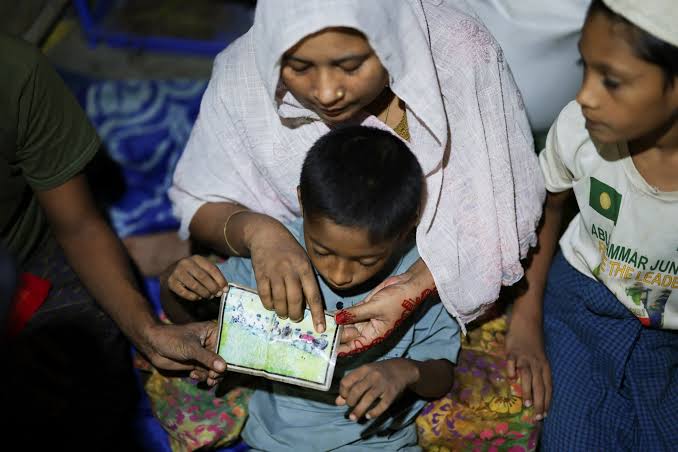
The long-awaited ruling could mark a major moment in international justice, offering hope to more than one million Rohingya refugees who fled violence in Myanmar and remain displaced in Bangladesh.
The world is watching as the United Nations’ highest court prepares to deliver a landmark judgment in a case accusing Myanmar of committing genocide against its Rohingya minority. The decision, expected on Thursday at the International Court of Justice (ICJ) in The Hague, could become a defining moment in the international effort to hold governments accountable for alleged atrocities against vulnerable populations.
The case focuses on allegations that Myanmar’s military carried out acts of genocide against the Rohingya, a predominantly Muslim minority group, during a brutal military crackdown in 2017. Hundreds of thousands of Rohingya fled across the border into Bangladesh, escaping widespread violence, destruction and persecution. Many have remained in refugee camps ever since, unable to return safely to their homeland.
In Bangladesh, approximately 1.2 million Rohingya refugees are living in the sprawling camps of Cox’s Bazar. For these displaced communities, the court’s judgment represents more than a legal development. It carries the possibility of international recognition, accountability and renewed attention to their decades-long struggle for safety and basic rights.
The court is scheduled to begin reading its decision at 10 a.m. local time in The Hague, with proceedings expected to last up to 90 minutes. The judgment will address the legal responsibility of Myanmar under the 1948 Genocide Convention, an international treaty established in the aftermath of the Second World War to prevent and punish genocide.
The proceedings began after The Gambia brought the case against Myanmar in 2019, alleging violations of the Genocide Convention. The case has attracted international attention because of its potential implications for how the international community addresses allegations of genocide and enforces international law.
Beyond Myanmar, the ruling is also expected to be closely examined by governments, legal experts and human rights organisations following other international cases involving allegations of genocide, including South Africa’s case against Israel.
However, the court’s decision alone will not immediately resolve the Rohingya refugee crisis. Questions surrounding safe repatriation, citizenship, security and the future of displaced families remain deeply complicated. For thousands of families who have spent years in overcrowded camps, a legal judgment is only one part of a much longer struggle.
As the judges prepare to announce their decision, the Rohingya community faces a moment of international significance. Whatever the outcome, the ruling will contribute to the continuing global debate over justice, human rights and the responsibility of states to protect civilian populations from mass atrocities.








+ There are no comments
Add yours