






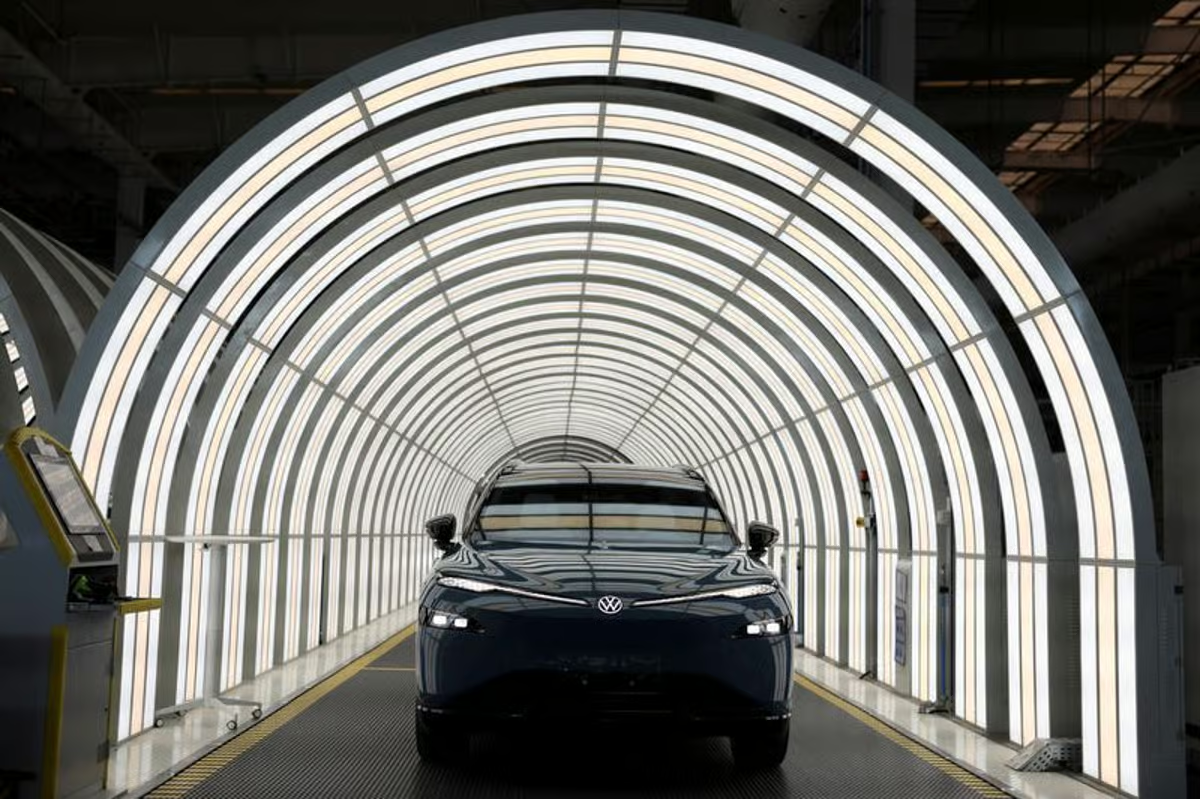
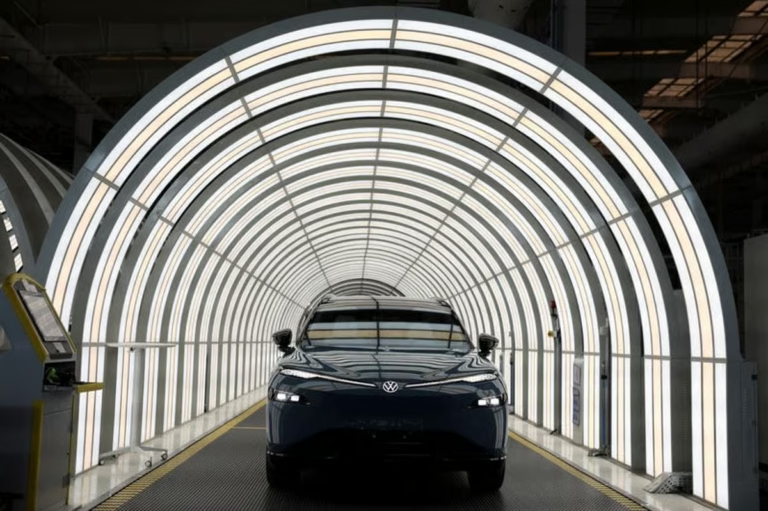
Volkswagen’s ambitious attempt to revive its struggling Chinese business through a strategic partnership with electric-vehicle maker Xpeng is facing a major setback, as disappointing sales of its first jointly developed electric SUV expose the challenges confronting the German automotive giant in the world’s largest car market.
The ID. UNYX 08, launched in April 2026, has struggled to attract buyers despite Volkswagen’s efforts to combine its engineering expertise with Chinese technology and faster vehicle-development processes. According to automotive consultancy ThinkerCar data cited by Reuters, the electric SUV sold an average of just 267 vehicles per month between April and August, dramatically below Volkswagen’s original target of 3,622 monthly sales for this year.
The weak performance highlights a deeper problem for Volkswagen: its established reputation and global manufacturing strength are no longer enough to guarantee success in China’s rapidly evolving electric-vehicle market.
For decades, Volkswagen was one of China’s dominant automakers, building a powerful position through joint ventures, a broad dealership network and strong consumer recognition. However, the market has transformed as domestic manufacturers such as BYD, Xiaomi and Geely have introduced technologically advanced electric vehicles at competitive prices, putting pressure on foreign brands that have struggled to match the pace of innovation.
China’s growing importance to Volkswagen makes the reversal particularly damaging. The country once generated nearly half of the group’s profits, but its contribution has fallen to approximately 10%, according to Reuters. The deterioration has become a central challenge in the company’s wider restructuring efforts.
Volkswagen turned to Xpeng in 2023 in an attempt to close the technology gap and accelerate the development of vehicles designed specifically for Chinese consumers. The partnership was intended to shorten development timelines, strengthen digital features and make the company more competitive against domestic electric-vehicle manufacturers.
Although the collaboration helped deliver a new electric-vehicle architecture within approximately 18 months, commercial success has proved more difficult to achieve. Access to local technology has not automatically translated into the pricing, product appeal or market reach needed to attract customers.
The ID. UNYX 08 entered a fiercely competitive market at a price of approximately $34,260. Comparable Chinese electric SUVs offered attractive technology packages, advanced driver-assistance systems and fast-charging capabilities, making it harder for Volkswagen to justify its pricing to increasingly demanding buyers.
ThinkerCar data cited by Reuters show that Xiaomi sold nearly 57,000 YU7 vehicles between April and August, while Zeekr sold more than 21,000 units of its 7X model. Volkswagen, by comparison, sold approximately 1,300 ID. UNYX 08 vehicles during the same period.
The figures illustrate how quickly consumer preferences have shifted towards domestic brands that can combine software, connectivity, performance and competitive pricing. For many Chinese buyers, the badge on a vehicle is no longer the decisive factor it once was.
Volkswagen’s distribution strategy has also created difficulties. Rather than relying primarily on its extensive existing dealership network, the company initially sold the ID. UNYX 08 through a smaller network operated by Volkswagen Anhui, its electric-vehicle-focused venture.
That approach limited the model’s visibility and accessibility compared with competitors that benefit from broader sales networks and established customer relationships. Volkswagen has since expanded its network to 166 outlets and begun cooperating with selected FAW-Volkswagen dealerships in an effort to reach more buyers.
The company has also revised its expectations. Planning documents reviewed by Reuters indicate that Volkswagen reduced its 2026 sales forecast for the ID. UNYX 08 by more than 60% early this year, from an original target of 32,600 vehicles to 12,300. The SUV has also been advertised at a discount of approximately 17% from its launch price.
Despite the disappointing debut, Volkswagen is preparing to introduce another model developed with Xpeng. The ID. UNYX 09 sedan is scheduled to reach showrooms this month, with company planning documents projecting ambitious future sales.
Its performance will be closely watched as a test of whether Volkswagen can apply the lessons from the SUV’s launch and build products that better match Chinese consumers’ expectations.
The broader challenge extends beyond one model or partnership. Volkswagen has struggled to meet earlier electric-vehicle ambitions in China as local competitors have expanded their market share and compressed product-development cycles. The company’s share of China’s passenger-car market fell to 10% during the first eight months of 2026, compared with approximately 20% in 2019, according to figures cited by Reuters.
Volkswagen executives have acknowledged the need to align production capacity with market realities and eliminate unnecessary duplication across the company’s Chinese operations. The automaker faces pressure to improve efficiency while investing in technologies and products capable of competing with faster-moving domestic rivals.
For global automakers, Volkswagen’s experience offers a significant business lesson: partnerships can provide access to technology and local expertise, but they cannot guarantee commercial success without the right product, price, distribution strategy and understanding of customers.
Volkswagen’s alliance with Xpeng remains an important part of its China strategy, but the disappointing sales of the ID. UNYX 08 demonstrate that the road to recovery will be more difficult than initially anticipated. In a market where innovation moves rapidly and consumer loyalty can shift quickly, the German automaker must prove that it can turn technological cooperation into vehicles that buyers genuinely want.
The stakes are considerable. Success in China could strengthen Volkswagen’s competitiveness in the global electric-vehicle transition, while continued setbacks could deepen the pressure on its finances, production strategy and long-term position in the world’s largest automotive market.







+ There are no comments
Add yours