
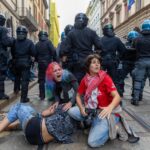




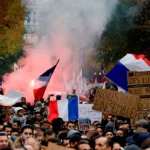
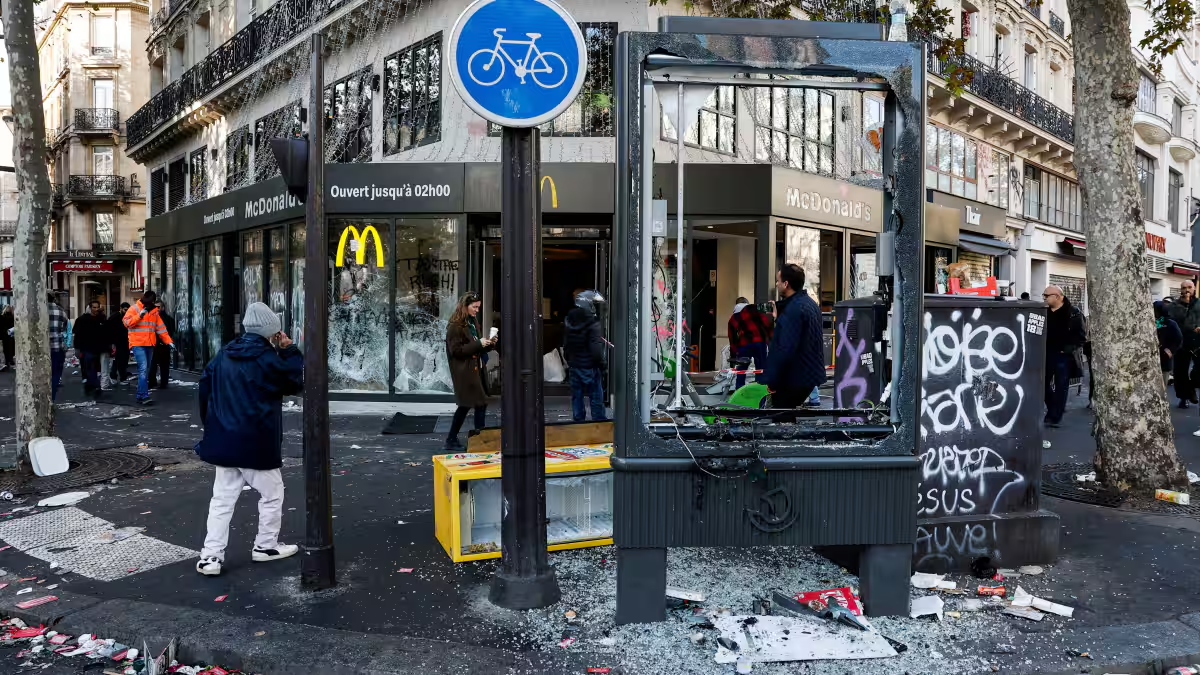
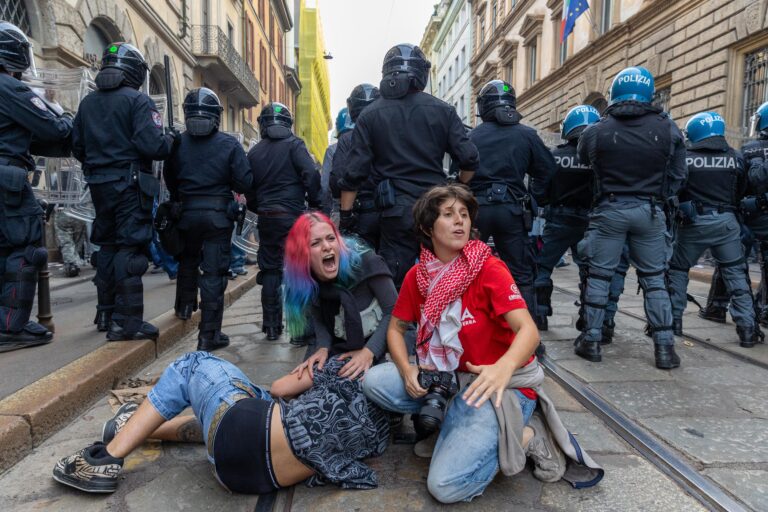
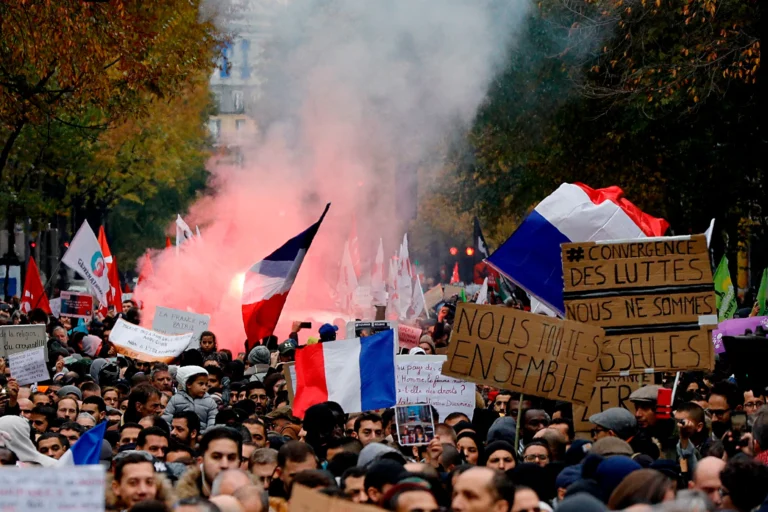
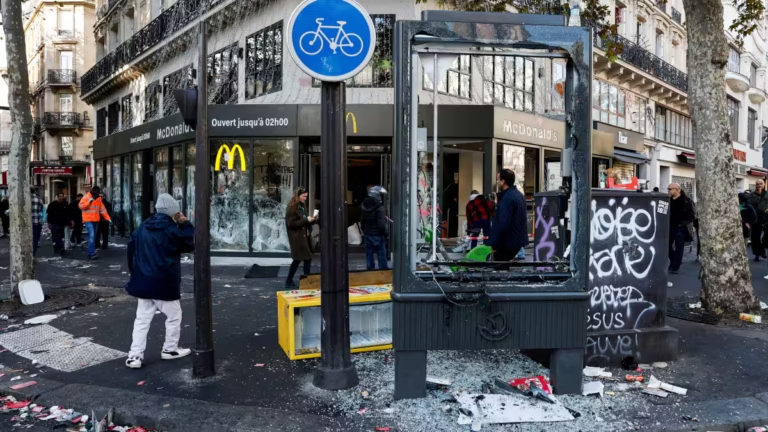
France has imposed overnight curfews across parts of Paris and several other major cities after a weekend of violent riots, looting and clashes between demonstrators and police, intensifying a national crisis that began with student protests and has expanded into a broader confrontation over public services, government policy and the country’s political future.
Authorities have tightened security in the French capital and introduced restrictions in cities including Marseille, Bordeaux, Nice, Lyon and Lille as the government struggles to restore order following weeks of mounting unrest. The measures represent a significant escalation in the official response to demonstrations that have drawn students, trade unions and a growing range of protest groups onto the streets.
In Paris, police announced an overnight curfew from 23:00 to 06:00 local time in Place de la République, a prominent gathering point for demonstrators, and the Les Halles shopping district. Authorities have also prohibited unauthorised gatherings in several other parts of the city centre, seeking to prevent further violence and damage to commercial areas.
Restrictions elsewhere vary by location, with some municipalities limiting the movement of young people and others prohibiting certain public gatherings. Following an emergency meeting on Monday, the prime minister said local mayors would be empowered to introduce curfews wherever they considered them necessary.
The measures follow a weekend of disorder that exposed the growing difficulties facing French authorities as demonstrations spread beyond their original demands. What began last month as a student movement calling for improvements in school conditions has developed into a wider protest involving workers, trade unions and groups expressing broader dissatisfaction with government decisions and public services.
The scale of the unrest has placed intense pressure on the government, particularly the Interior Ministry, which is responsible for maintaining public order. Interior Minister Laurent Nuñez has faced sharp criticism from opposition politicians over the authorities’ preparedness for the violence. President Emmanuel Macron has rejected calls for his resignation, but the minister’s admission that police had “lost control” in some cities has intensified questions about the government’s handling of the crisis.
According to officials, more than 2,500 people have been arrested since the unrest escalated. Approximately 1,000 police officers have also been injured, while the Agence France-Presse news agency reported that one demonstrator lost a hand after a police crowd-control grenade exploded. The figures underline the human cost of the confrontation and the increasingly dangerous conditions faced by both demonstrators and security personnel.
The deployment of additional restrictions presents a difficult challenge for the government. Authorities must prevent further violence and protect residents, businesses and public infrastructure while avoiding actions that could deepen public anger or turn local confrontations into a more extensive national crisis.
For residents and businesses, the consequences extend beyond the immediate clashes. Curfews and gathering bans can disrupt transport, shopping, hospitality and everyday activities, while images of street violence can affect confidence among visitors and international investors. The duration and geographic scope of the restrictions will therefore be closely watched by communities and businesses attempting to assess the risks.
The political implications could prove equally significant. Opposition parties have criticised the government’s preparedness, while the participation of trade unions and different protest groups suggests that the unrest is no longer confined to a single issue. Bringing together groups with different grievances can make negotiations more complicated, particularly when demands extend beyond the original concerns raised by students.
The crisis has also raised questions about the relationship between public order, political accountability and the right to demonstrate. French authorities face pressure to restore stability, but their response will be scrutinised for its proportionality, effectiveness and impact on civil liberties.
With local officials now able to impose additional curfews, the coming days will be critical in determining whether the restrictions help contain the violence or whether demonstrations continue to spread. The government’s next steps, including its willingness to address protesters’ concerns, could shape the trajectory of the unrest.
For now, France faces a serious test of its ability to manage a rapidly widening protest movement while maintaining public safety and political stability. The curfews may provide authorities with a temporary means of limiting disorder, but a lasting resolution will depend on more than restrictions alone.
As the country confronts mounting pressure from the streets and the political establishment, the central question remains whether the government can restore calm while responding to the grievances that have brought thousands of people into the streets.


+ There are no comments
Add yours