


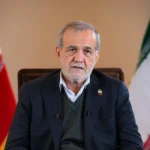

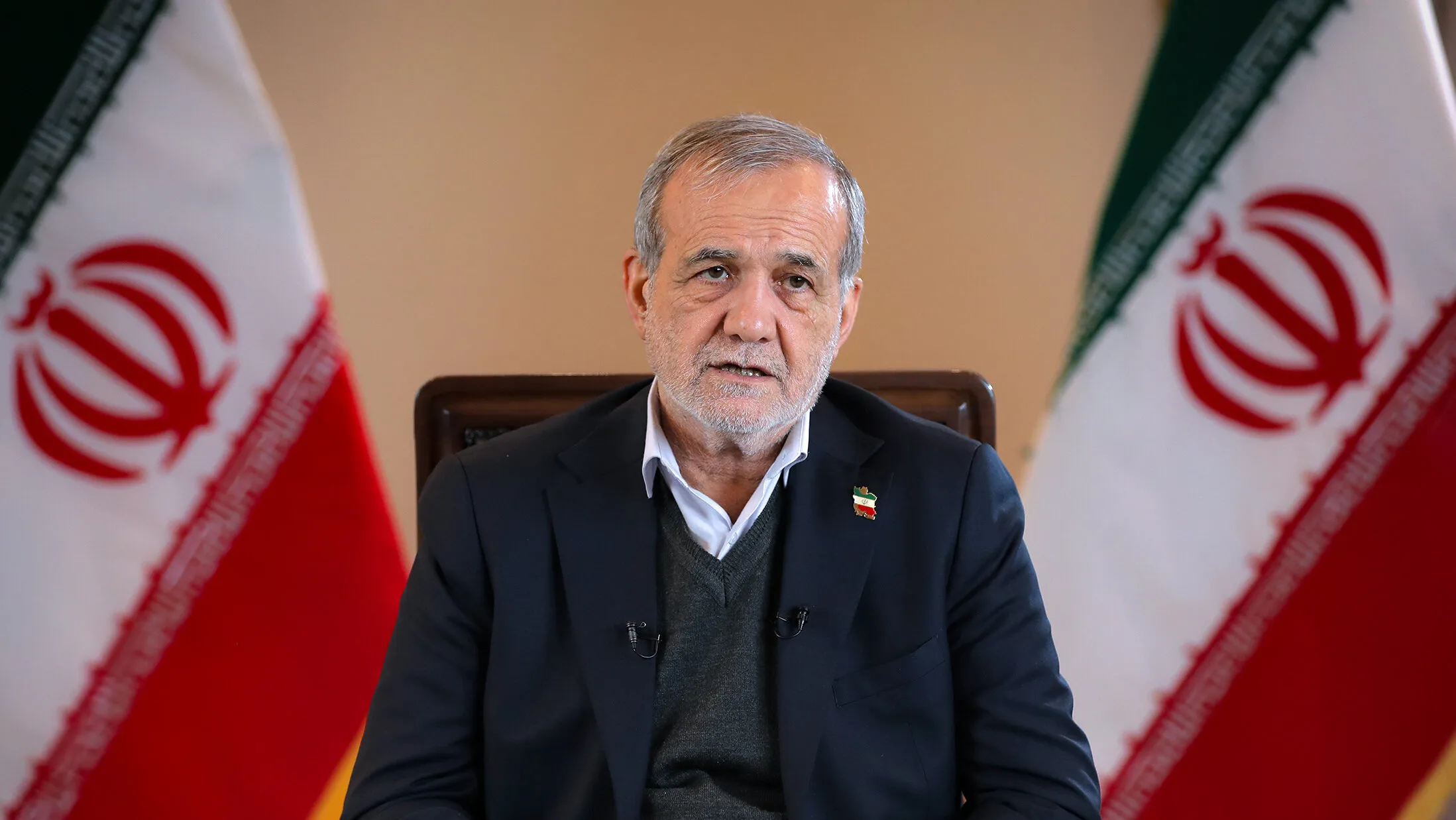
Masoud Pezeshkian’s rise to the presidency is a story that began far from the corridors of political power. Before becoming the face of Iran on the world stage, Pezeshkian was a doctor, a heart surgeon, a university administrator and a parliamentarian whose political career was shaped by war, personal tragedy, public service and repeated calls for better governance.
That background has become central to the way Pezeshkian presents his leadership. Rather than building his political identity solely around ideology, he has frequently emphasized expertise, public welfare, dialogue and the need to address Iran’s economic and social pressures.
Born in Mahabad in 1954, Pezeshkian entered medicine after completing his military service in southeastern Iran. During the Iran-Iraq War, he worked with medical teams treating wounded soldiers. He later specialized in cardiac surgery and rose through the medical establishment, eventually becoming head of Tabriz University of Medical Sciences.
His transition from medicine to government came in the late 1990s. He served as deputy health minister under President Mohammad Khatami and later became health minister. During his time at the Health Ministry, he worked on expanding health-insurance access in rural areas, with the U.S. Institute of Peace noting that coverage was extended to nearly 25 million people in rural areas while the ministry’s budget was substantially increased.
That experience helped establish a central theme in Pezeshkian’s political identity: the idea that government should be measured not only by political power but also by its ability to deliver services and respond to ordinary citizens.
In 2006, he entered parliament representing Tabriz and was subsequently reelected several times. He later became first deputy speaker of parliament. Throughout his parliamentary career, he criticized restrictions on political competition and raised concerns about the treatment of protesters, including during the 2009 post-election unrest.
His political evolution has also included difficult contradictions. Pezeshkian has acknowledged that some of his earlier positions, including his approach to enforcing Iran’s dress rules, differed from views he expressed later. In 2022, after the death of Mahsa Amini in police custody, he publicly criticized the treatment of women and questioned the use of force. These positions helped distinguish him from more hard-line political figures during the 2024 presidential campaign.
Pezeshkian eventually emerged as the reformist candidate in Iran’s 2024 snap presidential election following the death of President Ebrahim Raisi. He defeated conservative candidate Saeed Jalili in the runoff and became Iran’s ninth president. Analysts noted that his election reflected both public demand for change and the complicated constraints imposed by Iran’s political system, where the presidency operates alongside powerful unelected institutions.
For Pezeshkian, governance has therefore been less about promising a complete transformation of Iran and more about arguing for practical change within the existing political structure. His campaign emphasized economic management, engagement with the outside world and greater personal freedoms. But analysts have also pointed out that the president does not control every major lever of Iranian policy, limiting how quickly or extensively reforms can be implemented.
That tension is now at the heart of his presidency.
Iran faces enormous economic and geopolitical pressures, including sanctions, conflict, disruption to trade and energy flows, and continuing tensions with the United States and its allies. For a government trying to maintain domestic stability while protecting national sovereignty, economic management and foreign policy have become deeply connected.
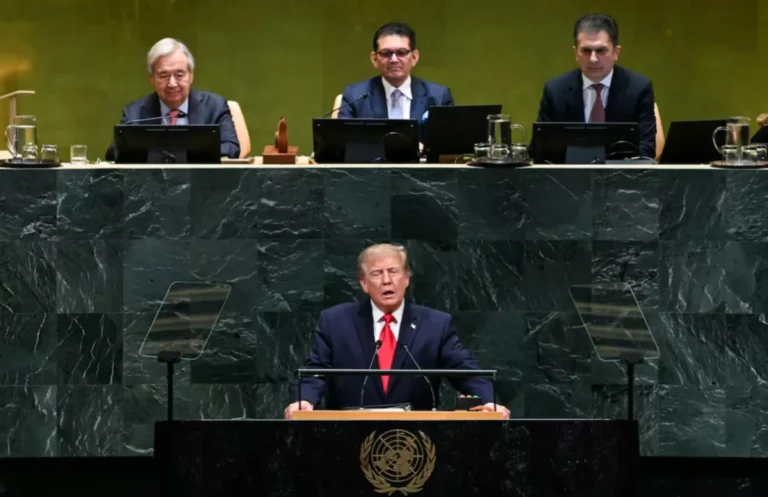
Pezeshkian has increasingly framed diplomacy as part of that challenge. His message at the United Nations on September 23, 2026, reflected the approach he has taken since entering the presidency: Iran, he argued, is prepared for dialogue and negotiations, but not under what he describes as threats or coercion. He said Iran would not “bow our head or bend at the knee” while maintaining that Tehran was ready for diplomacy without the “language of force.”
The significance of that message extends beyond the confrontation with Washington. For Pezeshkian, diplomacy is also connected to Iran’s economic future. A reduction in international tensions could affect trade, investment, energy markets and the country’s ability to engage with the global economy. At the same time, any major diplomatic agreement would have to navigate Iran’s broader political structure and the competing interests of powerful institutions inside the country.
This makes Pezeshkian’s leadership journey particularly unusual. He entered politics after years in medicine, built his reputation through parliament and government service, and reached the presidency promising a more pragmatic approach to some of Iran’s most difficult problems.
Yet his presidency is not simply a story of reform versus conservatism. It is a story of how much change a president can achieve while operating inside a complex political system, under economic pressure and amid international confrontation.
His leadership will ultimately be judged through the realities facing ordinary Iranians: economic stability, access to public services, employment, social confidence and the government’s ability to manage relations with the outside world without further isolating the country.
At the United Nations, Pezeshkian presented himself as a leader willing to defend Iran’s sovereignty while leaving the door open to negotiation. That combination resistance abroad and calls for practical governance at home has become one of the defining features of his political identity.
For a former heart surgeon who entered public life through medicine rather than traditional political power, the challenge now is considerably larger: whether his approach can translate from a philosophy of public service into measurable progress for a country navigating economic strain, political constraints and one of the most difficult geopolitical environments in the world.

+ There are no comments
Add yours