







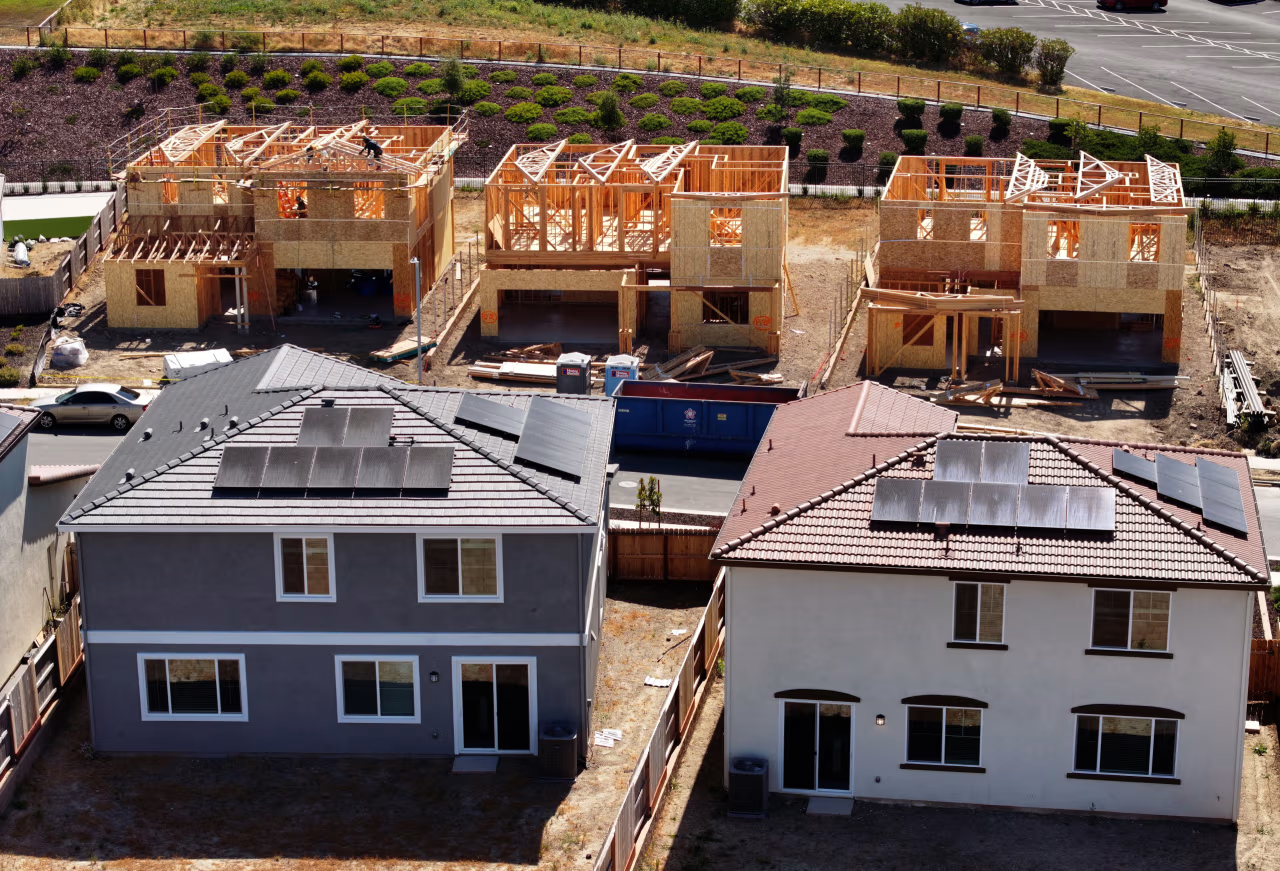
The U.S. housing market is facing renewed pressure as homebuilder confidence has fallen to its lowest level in a year, with rising mortgage rates, expensive construction costs and cautious buyers creating a difficult environment for new-home sales.
The National Association of Home Builders/Wells Fargo Housing Market Index dropped three points to 32 in September, marking its weakest reading in 12 months. The latest decline highlights the growing affordability challenges facing both builders and prospective homebuyers across the United States.
Higher mortgage rates have emerged as one of the biggest obstacles for the housing market. Recent increases in borrowing costs have made monthly mortgage payments more expensive, forcing many potential buyers to reconsider whether they can afford to purchase a home at current prices.
Mortgage rates have climbed alongside higher Treasury yields, adding pressure to a market that was already struggling with affordability. The 30-year mortgage rate recently moved above 7%, further increasing the financial burden for households looking to buy newly constructed homes.
The weakness is also visible in builder expectations. The September survey showed declines in measures covering current sales conditions and expectations for sales over the next six months, while buyer traffic remained weak. The index has remained below the 50-point level associated with generally positive builder sentiment for an extended period.
As buyers become more cautious, homebuilders are increasingly turning to discounts and incentives to keep properties moving. In September, 38% of builders reported cutting home prices, compared with 35% in August. Meanwhile, 66% said they were offering sales incentives, according to the latest industry data.
Those incentives can include mortgage-rate buydowns, assistance with closing costs, upgrades and other concessions designed to make new homes more affordable. For buyers who can qualify for financing, such offers can reduce the immediate cost of purchasing a property.
However, builders are also dealing with rising expenses. Construction materials, land and labor remain costly, making it difficult for companies to reduce home prices substantially without putting additional pressure on their margins.
Labor shortages are another challenge for the industry. Builders have reported difficulties finding enough workers, while changes in immigration enforcement have added uncertainty to the construction workforce. These pressures can increase the cost and time required to complete new homes.
The result is a difficult balance for the industry. Builders need to attract buyers at a time when affordability is weakening, but they must also manage elevated costs associated with producing new homes.
For potential buyers, the changing market presents a mixed picture. Greater willingness among builders to offer discounts and incentives could create opportunities for some households. At the same time, high mortgage rates can offset those savings by increasing the long-term cost of financing a home.
The situation is particularly significant because housing affordability remains a major issue in the United States. Even when home prices stabilize or builders offer incentives, high borrowing costs can keep monthly payments beyond the reach of many households.
The broader housing market is also showing signs of softer demand. Existing-home activity has remained under pressure, while buyers continue to face a combination of elevated prices and expensive financing. This has contributed to a market in which sellers and builders increasingly have to compete for a smaller pool of active buyers.
The latest builder-confidence figures therefore provide another indication that the U.S. housing market has not yet fully overcome its affordability problems.
Interest-rate policy will remain an important factor in determining what happens next. Mortgage rates do not move directly with the Federal Reserve’s benchmark rate, but expectations for monetary policy can influence Treasury yields, which in turn affect mortgage borrowing costs.
The recent rise in mortgage rates has made it more difficult for builders to generate strong demand, even as housing shortages continue to support underlying long-term demand in many parts of the country.
Regional conditions also vary considerably. Some markets have stronger employment and population growth, while others are experiencing more significant increases in inventory or slower sales. As a result, the national decline in builder confidence does not necessarily mean every local housing market is experiencing the same conditions.
Still, the September data underline the central challenge facing the U.S. housing industry: buyers need more affordable financing and homes, while builders are dealing with high costs and weaker demand.
With builder confidence at 32, more companies cutting prices and a growing share offering incentives, the new-home market is entering the latter part of 2026 under considerable pressure.
The direction of mortgage rates, construction costs and buyer demand will be closely watched in the coming months. If financing costs remain elevated, builders may continue using discounts and incentives to attract buyers. If borrowing costs eventually ease, demand could respond, but the current data show that affordability remains a major barrier for the U.S. housing market.









+ There are no comments
Add yours