








US President Donald Trump has threatened the European Union with potentially heavy tariffs and wider trade restrictions after Brussels opened the door to a new relationship with Canada, adding another layer of tension to an already strained transatlantic trade environment.
Trump’s warning came after European Commission President Ursula von der Leyen proposed making Canada the European Union’s first associate member. The idea would deepen cooperation between Canada and the 27-member bloc at a time when Canada’s relationship with the United States has become increasingly difficult.
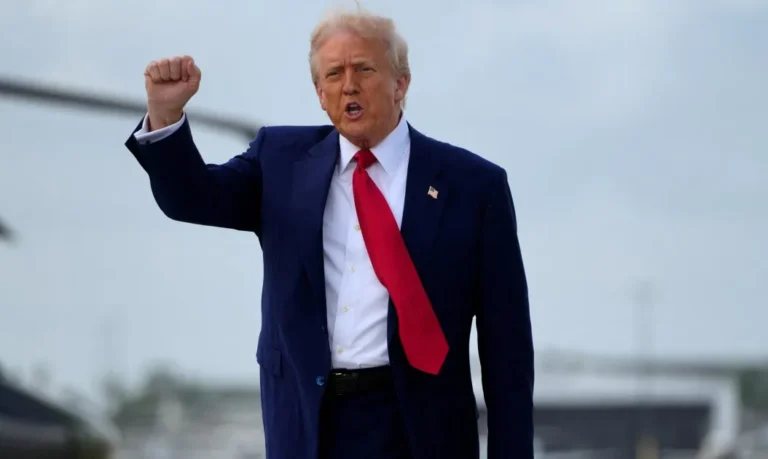
Speaking to reporters on Wednesday, Trump described the proposal as “laughable” and said he could consider it a hostile act if he believed the European initiative was directed against the United States. He warned that Washington could respond with what he called very serious tariffs or potentially restrict trade with Europe in a number of areas.
The comments represent a significant escalation because the dispute is no longer limited to US-Canada trade relations. Trump’s warning directly links Canada’s efforts to strengthen its European partnerships with the broader commercial relationship between Washington and Brussels.
The European proposal was presented by von der Leyen during her annual State of the Union address to the European Parliament. Canadian Prime Minister Mark Carney was present as Europe signalled its willingness to build a closer strategic relationship with Ottawa.
Under the proposal, Canada would not become a full EU member. Instead, associate membership would provide a framework for closer cooperation with the bloc. Discussions are expected to cover areas including trade, defence, technology and energy, reflecting the increasingly strategic nature of the relationship between Canada and Europe.
The proposal is also significant because the EU does not currently have a formal associate-membership model of this kind. Any arrangement would therefore require further negotiations and agreement among EU member states. The details of the proposed relationship are expected to be discussed further at a Canada-EU summit in October.
For Canada, closer ties with Europe come as its economic relationship with the United States faces growing uncertainty. The US remains Canada’s dominant export market, but Ottawa has increasingly looked at ways to diversify its economic and strategic partnerships.
Carney has promoted stronger links with Europe as part of that effort, including cooperation in areas extending beyond traditional trade. Canada has already joined the EU’s €150 billion SAFE defence initiative, providing another area of growing cooperation between Ottawa and Brussels.
The Canadian government has also been seeking stronger economic connections outside the United States as trade disputes with Washington continue. The proposed European relationship could therefore give Canada additional avenues for cooperation at a time when its traditional dependence on the US market is under pressure.
Trump, however, has repeatedly used tariffs as a tool in negotiations with trading partners. His latest warning suggests that Washington is closely watching attempts by Canada and Europe to strengthen their economic and strategic relationship.
The US president has not said that tariffs will definitely be imposed. His warning was conditional on whether he considers the European move hostile toward the United States. That leaves open the possibility of further negotiations before any new trade measures are introduced.
The dispute also comes against a wider backdrop of disagreements between Washington and its European allies over trade, defence and strategic priorities. European governments have increasingly discussed strengthening their ability to cooperate with partners outside the traditional US-led framework, while Washington has pressed allies to consider American economic and security interests.
For the EU, closer relations with Canada could offer another way to strengthen cooperation with a major democratic partner outside the bloc. Canada and European countries already have extensive economic, political and security connections, and officials have described the potential relationship as part of a broader effort to strengthen partnerships among like-minded countries.
The proposal could nevertheless face complicated negotiations inside Europe. Because associate membership would represent a new form of relationship for the EU, member states would need to agree on its structure, rights and obligations.
For Canada, the negotiations could also become an important test of how far it can deepen its relationship with Europe without creating additional friction with its largest trading partner.
The immediate issue is therefore larger than the question of Canadian associate membership alone. It has become part of a wider debate over trade diversification, defence cooperation and the changing balance of relationships between North America and Europe.
Trump’s latest warning puts that debate under additional pressure. If the EU and Canada continue toward a closer partnership, Washington will have to decide how far it is prepared to use tariffs or other trade restrictions in response.
For now, no new tariffs on the EU have been announced as a direct result of the proposal. The next stage is expected to involve further discussions between Canada and the EU, while governments on both sides of the Atlantic watch closely for the direction of US policy.
The dispute illustrates how economic and geopolitical relationships are increasingly becoming intertwined. Canada’s attempt to strengthen its European ties is being viewed in Washington not simply as a trade decision, while Europe’s outreach to Canada is unfolding against a backdrop of changing alliances and growing uncertainty over the future of transatlantic relations.









+ There are no comments
Add yours