






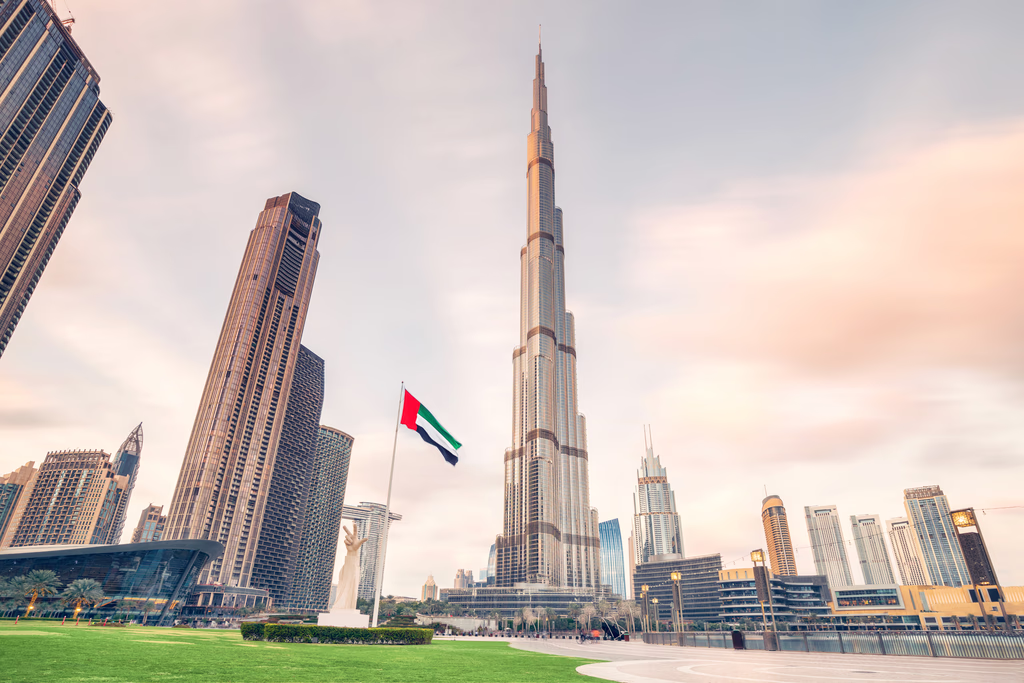
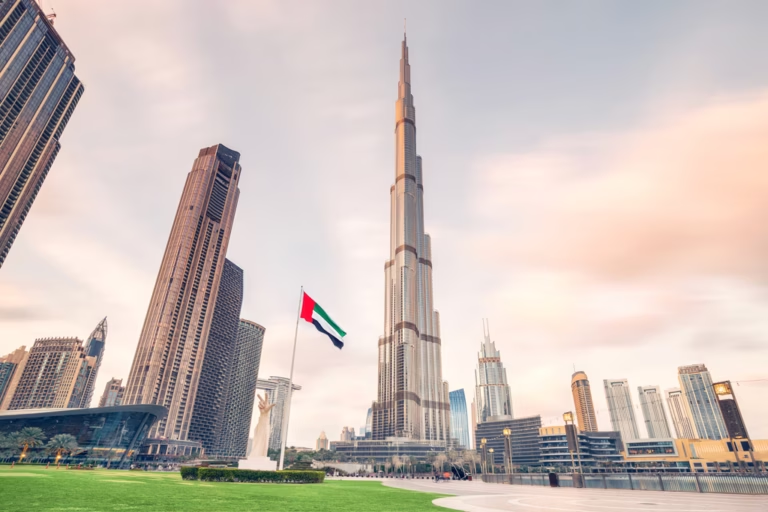
The UAE real estate market is entering a more selective phase in 2026, with Dubai continuing to attract substantial property demand while buyers and investors are becoming increasingly sensitive to pricing, market conditions and long-term value.
A market review released on September 16 highlights a shift in Dubai’s residential sector away from the rapid price appreciation seen in recent years toward a market where buyers are taking a closer look at entry prices and individual property fundamentals. At the same time, transaction activity remains substantial, underscoring the depth of Dubai’s residential market.
Dubai recorded about 205,400 residential sales worth AED 544.2 billion in 2025, according to figures cited in the latest review from Knight Frank. Residential transaction volume increased 18% from the previous year, while the total value of transactions rose 25%.
The figures underline the scale of Dubai’s property market, even as conditions become more complex for buyers, sellers and developers. Instead of a market driven primarily by rapid price increases, the latest environment is placing greater emphasis on location, property quality, pricing and the ability of individual projects to maintain demand.
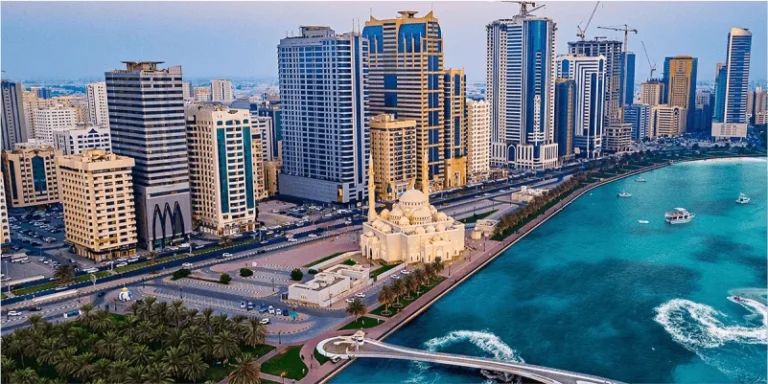
The changing market dynamics are also being reflected across the wider UAE. Abu Dhabi has continued to strengthen its position as a major real estate and investment destination, while Ras Al Khaimah has attracted growing attention from investors and developers.
Dubai remains one of the region’s most internationally connected property markets, supported by its large expatriate population, tourism sector, business environment and established ecosystem of developers, brokers and investors. The emirate’s residential sector also offers a broad range of properties, from luxury villas and branded residences to apartments and new master-planned communities.
However, the latest market conditions suggest that buyers are becoming more selective when assessing new opportunities. This could increase the importance of realistic pricing and project quality as developers bring additional residential supply to the market.
The supply pipeline is another factor likely to remain important for the UAE real estate sector. Dubai has a significant number of residential units scheduled for delivery, giving buyers more options while increasing competition among developers for demand.
For investors, this means that headline price growth may become less important than factors such as rental income, location, infrastructure, developer reputation and the potential long-term demand for a property.
Abu Dhabi is also emerging as an important part of the UAE’s changing real estate landscape. The capital has attracted increased attention from international investors, supported by economic diversification, major development projects and growing demand for residential and commercial properties.
The growing importance of Abu Dhabi means the UAE property story is becoming less concentrated around Dubai. Investors are increasingly able to consider different markets and property segments depending on their objectives.
Meanwhile, the broader regional environment remains an important consideration for the Gulf property market. Financial markets across the region have experienced increased volatility amid geopolitical uncertainty, with Dubai’s stock market also affected by recent regional developments.
Despite these challenges, the UAE real estate market continues to show significant activity. The latest data suggests that the market is not simply moving from growth to decline, but is instead evolving into a more mature environment where buyers are paying greater attention to value and individual investment fundamentals.
For Dubai, the next phase of the property cycle could therefore be defined by greater differentiation between projects and locations. Properties with strong connectivity, established communities, attractive amenities and competitive pricing may continue to receive attention, while less differentiated developments could face greater pressure to attract buyers.
The UAE’s continued ability to attract international investors will also remain an important factor. Dubai and Abu Dhabi have established themselves as major global destinations for property investment, while emerging markets such as Ras Al Khaimah are expanding the range of opportunities available across the country.
As the UAE real estate market moves through the remainder of 2026, buyers and investors are likely to focus increasingly on affordability, rental potential, project quality and long-term value rather than simply following broader market growth.
The latest market assessment therefore points to a UAE property sector that remains active but is becoming more selective. Dubai continues to play a central role, while Abu Dhabi and other emirates are gaining greater prominence, creating a more diversified real estate landscape across the country.





+ There are no comments
Add yours