







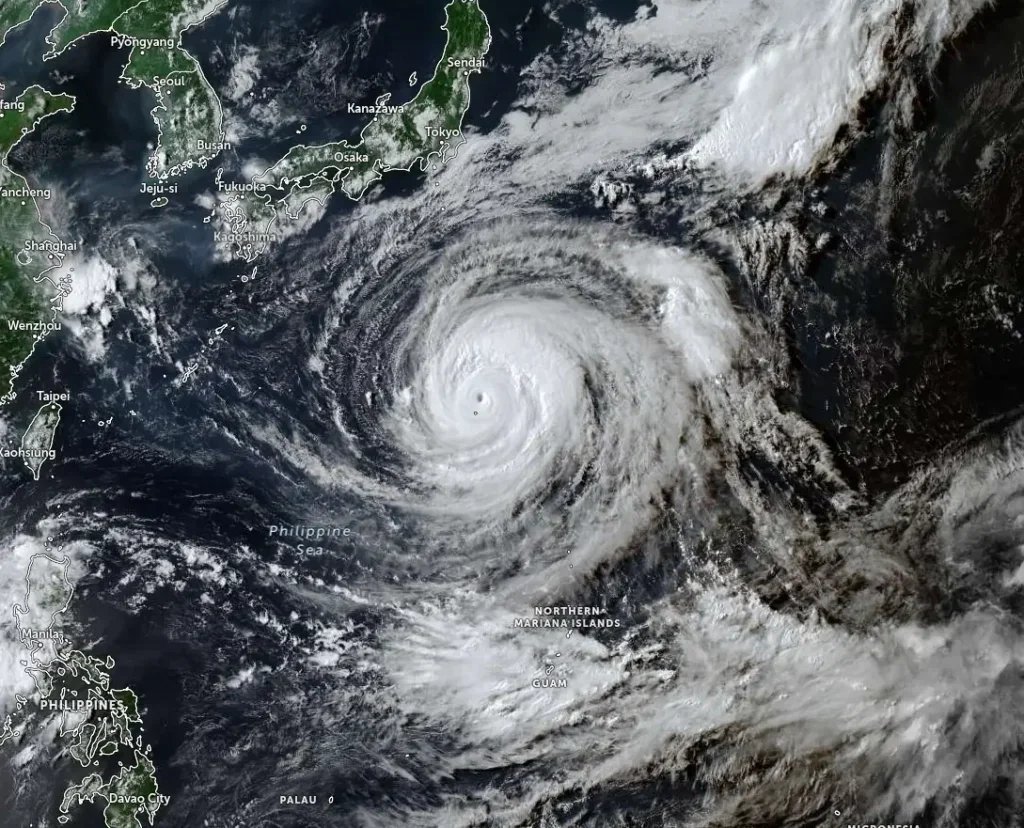
Typhoon Dolphin struck Japan’s southern Okinawa prefecture on Saturday, bringing powerful winds, heavy rain and widespread disruption as China prepared for the storm’s expected arrival along its eastern coast.
The typhoon injured five people in Okinawa and cut electricity to around 14,000 buildings, according to local authorities. Three of those injured were elderly people who fell because of the strong winds, although none of the injuries was considered life-threatening.
The storm was moving northwest after passing near Okinawa, with maximum sustained winds of about 162 kilometres per hour and gusts reaching 216 kilometres per hour. Authorities warned that Okinawa and nearby islands could continue to experience dangerous weather as the system moves toward the Asian mainland.
The impact has also been felt across transportation networks. Airlines in Japan cancelled flights serving the affected region, while authorities in Taiwan reported dozens of international flight cancellations because of the approaching storm.
China has taken extensive precautionary measures ahead of the typhoon’s expected landfall between Sunday and Monday. Zhejiang province raised its coastal typhoon alert to the highest level, suspended port operations and halted 162 passenger ferry routes. Authorities also cleared vessels from Shanghai’s Yangshan port as they prepared for worsening conditions.
Forecasters expect Typhoon Dolphin to bring strong winds and intense rainfall to eastern China through August 12. Parts of eastern Zhejiang could receive more than 600 millimetres of rain, raising concerns about flooding and other storm-related damage. The storm is also expected to affect areas around Shanghai and neighbouring provinces.
Authorities in China have been preparing transportation and infrastructure for the storm, including the suspension of some railway services in the Yangtze River Delta. Ningbo Lishe International Airport also announced plans to halt operations temporarily.
The typhoon has created an additional complication in the Taiwan Strait, where China ordered vessels to follow traffic-control instructions because of the storm. Taiwan criticised the move, saying Beijing has no authority to restrict access to international waters.
As Dolphin moves toward China, authorities across the region are racing to protect residents, secure infrastructure and limit disruption. The storm’s progress is being closely monitored as heavy rain and powerful winds threaten to affect millions across East Asia.






+ There are no comments
Add yours