







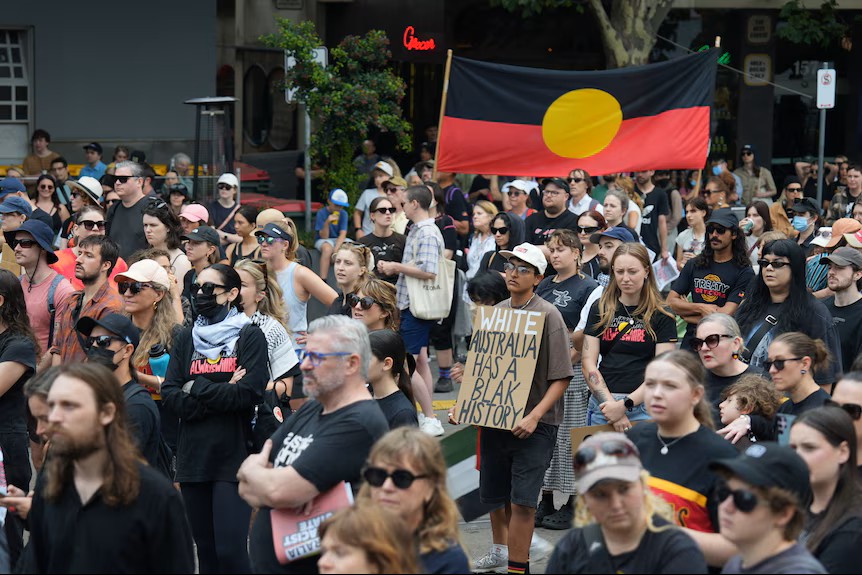
Tens of thousands of Australians took to the streets in major cities across the country on Invasion Day, marking the anniversary of the arrival of the First Fleet while calling attention to ongoing social and political issues. The demonstrations, some of the largest in recent years, underscored deep divisions over national identity, Indigenous rights, and government policies.
Protesters carried banners demanding recognition for Indigenous Australians, better land rights, and action on social inequalities that continue to affect Aboriginal and Torres Strait Islander communities. Many speakers at rallies emphasized that Invasion Day is a reminder of the historical and ongoing injustices faced by the nation’s First Peoples.
Police forces were deployed across urban centers, including Sydney, Melbourne, and Brisbane, to manage the crowds and maintain public order. While most demonstrations remained peaceful, there were reports of minor clashes and arrests in some locations. Authorities emphasized the importance of exercising restraint and protecting both protesters and bystanders during the events.
Political leaders faced renewed scrutiny as public debate over Australia Day intensified. Critics argue that celebrating the day without acknowledging its impact on Indigenous communities perpetuates systemic inequality and erodes national cohesion. Meanwhile, government officials defended Australia Day as an opportunity to celebrate the country’s achievements, calling for inclusive dialogue and reconciliation.
The protests have sparked international attention, with human rights organizations and global media highlighting the demonstrations as a significant expression of Indigenous voices and political activism. Analysts say that the scale of participation reflects growing frustration with slow progress on Indigenous affairs, as well as broader discontent with the political system.
Economists and social commentators also note the economic impact of the rallies, with some city streets closed for hours, affecting businesses and public transport. However, most participants argue that the symbolic importance of the protests outweighs short-term disruptions.
As the day concluded, organizers called for continued advocacy, urging policymakers to address systemic inequalities and to rethink the way Australia commemorates its history. The events across the country serve as a reminder that political engagement and public protest remain powerful tools in shaping national conversations and challenging government policies.
The 2026 Invasion Day protests illustrate how deeply intertwined politics, history, and social justice remain in Australia, signaling that debates over identity, reconciliation, and national values are far from settled.








+ There are no comments
Add yours