






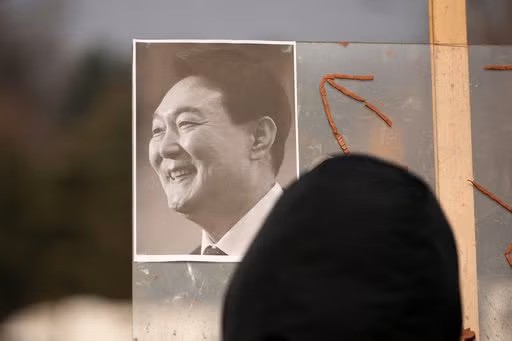
Former South Korean president Yoon Suk Yeol was sentenced to five years in prison on Friday in a landmark ruling tied to his controversial attempt to impose martial law, marking a dramatic fall for a leader once at the center of the country’s political life.
The Seoul Central District Court found Yoon guilty of charges including obstruction of official duties and abuse of power, concluding that he acted unlawfully during the events surrounding his brief declaration of martial law in late 2024. The court ruled that Yoon failed to follow constitutional and legal procedures, and that his actions undermined democratic order and public trust in state institutions.
The sentencing is the first criminal verdict related to the martial law crisis, which triggered mass protests across South Korea and eventually led to Yoon’s impeachment and removal from office. Prosecutors argued that Yoon deliberately bypassed legal safeguards and sought to use state power to suppress political opposition, while defense lawyers claimed his actions were taken under extreme circumstances to preserve national stability.
In its decision, the court stated that no president stands above the law and emphasized that the misuse of emergency powers poses a serious threat to democracy. Judges acknowledged Yoon’s former status as head of state but said this could not justify leniency given the gravity of the offenses.
Yoon, who attended the sentencing, remained largely expressionless as the verdict was read. His legal team immediately announced plans to appeal, arguing that the ruling was politically motivated and failed to fully consider the security challenges facing the country at the time.
Public reaction has been sharply divided. Supporters of the ruling hailed it as a victory for the rule of law and democratic accountability, while Yoon’s backers condemned the sentence as excessive and warned it could deepen political polarization.
The case is expected to have lasting implications for South Korean politics, setting a precedent for how future leaders may be held criminally responsible for actions taken while in office.






+ There are no comments
Add yours