






Former U.S. President Donald Trump has warned that countries resisting American control over Greenland could face punitive tariffs, a statement that has stirred international concern and revived debate over sovereignty and power politics in the Arctic.
Speaking at a public event, Trump said the United States has major strategic and economic interests in Greenland and suggested that trade penalties could be used against nations that oppose U.S. ambitions regarding the island. While he did not name specific countries, the remarks were widely seen as directed at Denmark, which governs the semi-autonomous territory, and its international partners.
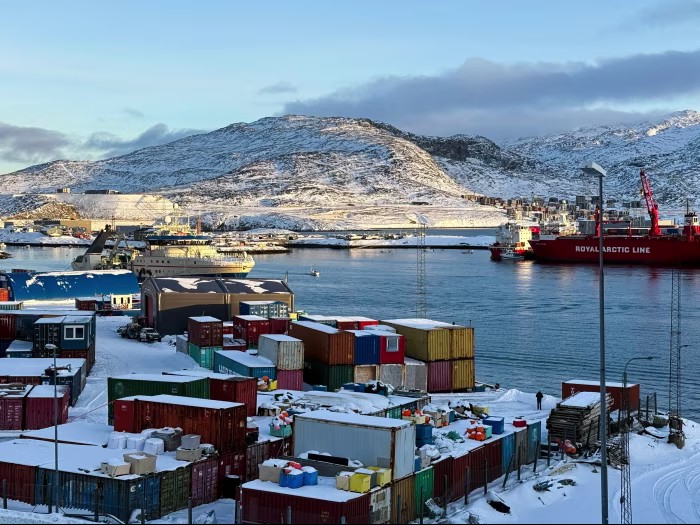
Greenland occupies a strategically crucial position between North America and Europe and has grown in importance as melting ice opens new shipping routes and access to valuable natural resources, including rare earth minerals. The United States already operates a major military base on the island, but the latest comments point to a far more assertive approach toward expanding U.S. influence.
Officials in Denmark rejected any suggestion that Greenland’s status could be negotiated through external pressure, stressing that decisions about the island’s future rest solely with the people of Greenland. Leaders in Nuuk have repeatedly stated that while they welcome foreign investment and cooperation, Greenland is not for sale and remains committed to self-rule.
The issue first drew global attention in 2019 when Trump floated the idea of the United States purchasing Greenland, a proposal that was quickly dismissed by Danish authorities. His renewed remarks signal that economic tools such as tariffs remain central to his broader foreign policy outlook, which favors leverage over traditional diplomacy.
Analysts warn that using trade sanctions to pursue territorial or strategic goals could strain relations with allies and disrupt global markets. Critics argue such threats undermine international norms and risk escalating geopolitical tensions in an already sensitive region.
Supporters counter that growing competition in the Arctic, particularly from Russia and China, makes a stronger U.S. stance necessary. The comments have added fresh uncertainty to Arctic geopolitics, with governments closely watching whether the rhetoric will translate into concrete policy actions.







+ There are no comments
Add yours