






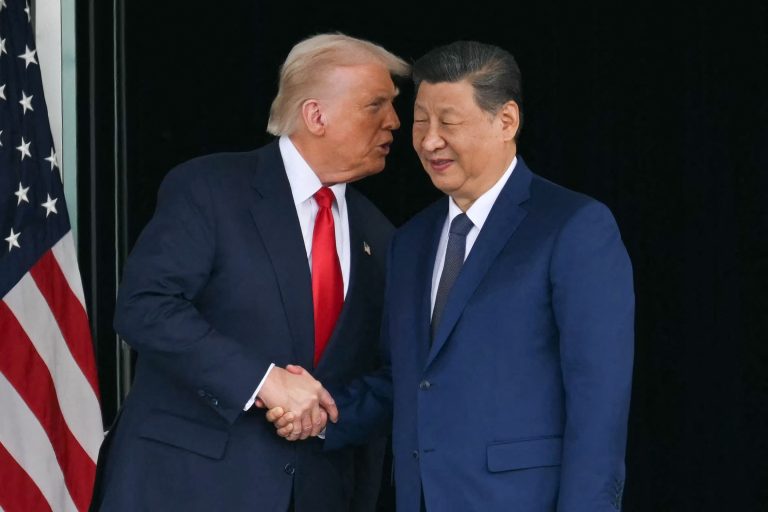
In the historic city of Asia‑Pacific Economic Cooperation 2025 (APEC) in Gyeongju, South Korea, the dynamics of global trade and multilateral cooperation took centre stage as U.S. President Donald Trump and Chinese President Xi Jinping met in a high-stakes sideline encounter while the rest of the region watched, negotiated and positioned themselves for the next phase of regional economic integration.
The summit underscored a paradox: while the spotlight shone on a bilateral power play between the U.S. and China, Asia-Pacific business and governmental leaders signalled confidence that broader multilateral frameworks remain viable and vital.
The Surprise Headliner: Trump and Xi
President Trump’s arrival in South Korea for his Asia tour garnered massive attention, but perhaps not for the expected reasons. Europe’s largest-market trade forum ended up being overshadowed by his early departure following a deal with Xi. Reports indicate that Trump left the summit grounds early after clinching a trade truce, effectively handing the stage to Xi.
Meanwhile, Xi remained in Gyeongju through the two-day summit and used the forum to deliver a robust defence of free trade and multilateralism. In his speech to APEC, he asserted that “changes unseen in a century are accelerating across the world” and urged nations to “pull together” in the face of turbulence.
The symbolism was unmistakable. A U.S. president with a track record of bilateral trade deals and scepticism towards large multilateral forums arrived, quickly negotiated his primary objectives, and departed, while China’s leader stayed on, addressing the full APEC gathering and positioning his country as a champion of multilateral trade frameworks.
What the Deal Means — And What It Doesn’t
On the sideline, the Trump-Xi meeting yielded some concrete movement: the U.S. reportedly agreed to reduce certain tariffs on China, while China committed to lift export controls on rare earths and resume substantial U.S. soybean purchases.
These moves had a calming effect on markets and signalled relief that the trade war between the world’s two largest economies might be entering a more stable phase. But many analysts caution against over-optimism. The agreements were narrow in scope and lacked the architecture of a broader treaty or binding multilateral framework.
Asia’s Business Leaders Remain Optimistic about Multilateralism
Despite the bilateral drama, there is noticeable optimism among Asia-Pacific business leaders that multilateralism remains not only relevant but essential. For example, an APEC official remarked that all 21 APEC member economies are actively working toward a joint declaration and remain committed to making this forum a “vital” space for dialogue.
From the joint statement issued at the end of the summit:
“We reaffirm our shared recognition that robust trade and investment are vital to the growth and prosperity of the Asia-Pacific region.”
Although the statement carefully avoided language directly referencing “free and open trade” in stronger terms, it nonetheless echoed the core tenets of multilateral economic cooperation: transparency, non-discrimination, predictability.
In remarks at the summit, Xi spelled out a five-point plan to build “an inclusive open Asia-Pacific economy for all,” signalling Beijing’s intent to deepen regional integration rather than retreat behind national or bilateral walls.
Why Multilateralism Still Matters — Particularly for Asia
There are several reasons why multilateral trade and economic frameworks retain appeal in the Asia-Pacific region:
Scale and interconnected supply chains: Asia’s supply chains are highly interdependent. Countries across East Asia, Southeast Asia and the Pacific rely on multiple links—China, Korea, Japan, Southeast Asian hubs—to deliver goods and services. Disrupting one bilateral link can ripple through many economies.
Investment flows: Foreign direct investment (FDI) and portfolio flows increasingly cross borders within Asia and between Asia and the rest of the globe. A predictable, rules-based multilateral system helps reduce uncertainty and risk for companies.
Risk diversification: When major powers rely on bilateral deals, smaller and medium-sized economies may feel squeezed or forced into asymmetric arrangements. A multilateral framework offers smaller players some collective voice and structural stability.
Technological and sustainability cooperation: Issues like artificial intelligence, digital trade, green technologies and climate-friendly supply chains demand multilateral coordination. Many APEC economies are emphasising these areas. For instance, South Korea pressed during the summit for coordinated AI and demographic strategies.
Where the Friction Lies
That said, the current environment is far from ideal for multilateral consensus. Some of the friction-points to watch:
U.S. scepticism of large forums: The U.S.’s posture under Trump tends toward bilateral rather than multilateral deal-making. The skipping of the full APEC summit by Trump sent symbolic signals about the U.S.’s commitment to multilateral forums.
China asserting leadership: While China’s push for multilateralism is welcome, other players worry about Beijing’s influence and whether multilateral frameworks may skew toward Chinese norms and interests, raising concerns about balanced governance.
Divergent national interests: Among APEC member economies, interests vary widely. Some economies may prioritise protection of domestic industry, others push for liberalisation; some align with the U.S., others more with China. Achieving consensus in this environment is inherently tougher.
Non-binding nature of many agreements: Many multilateral forums, including APEC, issue declarations that are not legally binding. This means implementation depends heavily on domestic politics and follow-through, which can be inconsistent.
What to Look Out For Next
In the coming months, several indicators will affect how multilateralism in Asia evolves:
Implementation of the joint declarations: The real test will be whether APEC member states follow through on the Gyeongju joint statement and the Putrajaya Vision 2040, which calls for a trade environment that is “free, open, fair, non-discriminatory, transparent and predictable.”
Bilateral vs regional deals: Will more countries prefer bilateral trade arrangements (e.g., U.S.-individual economies, China-individual economies) or push for deeper regional frameworks (ASEAN + , RCEP expansions, APEC working groups)?
Supply chain resilience efforts: With concerns about decoupling (particularly between U.S. and China) and disruptions caused by geopolitics, how will Asia-Pacific economies collaborate to ensure stability, rather than fragmenting into competing blocs?
Green and digital economy cooperation: Will Asia-Pacific nations use multilateral platforms to address emerging issues like digital trade rules, green transitions and sustainability supply chains? The tone from Gyeongju suggests yes, but the proof will be action.
U.S. and China engagement: Both superpowers play essential roles. Trump’s approach and China’s positioning will continue to shape the contours of multilateralism. If one or both pull back from regional frameworks, the burden will shift to middle powers and regional players.
Conclusion
APEC 2025 in Gyeongju served as a reminder: the world of Asia-Pacific trade is shifting. On one hand, the bilateral dynamic between the U.S. and China grabbed headlines. On the other, Asia’s broader trade architecture—its multilateral endeavours—is proving resilient. Business leaders across the region appear confident that even if power centres shift, the fundamental logic of multilateral trade, investment and cooperation remains intact.
While President Trump may have taken the limelight (and then exited stage early), the summit underscored that what matters most to Asia’s growth engine is not just drama, but durability: the ability to negotiate, collaborate and thrive through many partners, not just one. As China re-positions itself as a defender of open markets and many Asian economies pledge to keep investing in multilateral frameworks, one message is clear: multilateralism may not be dead after all — in fact, it may just be the main course for Asia’s next decade.
If you like, I can pull together 10 key points from the summit (for instance from business leader reaction across Asia) and implications for Indian companies — would that be helpful?











+ There are no comments
Add yours