






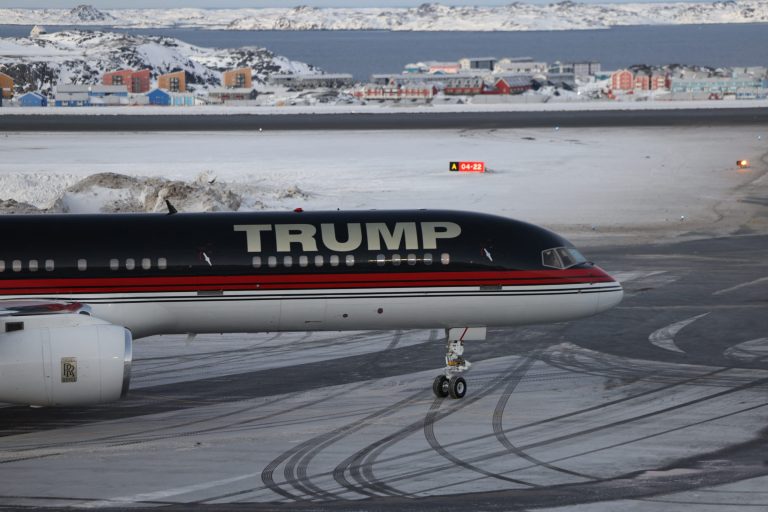
Drilling ambitions meet a climate-ban backdrop
A Texas-based firm is moving ahead with plans to explore oil in Greenland, even though the Greenlandic government has officially ended all new oil and gas licences. In July 2021, the autonomous government announced it would “cease issuing new licences for oil and gas exploration … for the sake of our nature, for the sake of our fisheries, for the sake of our tourism industry, and to focus our business on sustainable potentials.”
Yet, in September 2025, reports describe a merger forming a U.S. public company dedicated to hydrocarbon work in Greenland’s Jameson Land Basin. The Fortune article from October 2025 explicitly highlights a Texas company planning to drill in Greenland despite the ban.
Thus, we have a clash: a local policy banning new exploration for climate/environmental reasons, and external commercial interests that appear willing to press ahead.
The players and the terrain
Greenland
Greenland is an autonomous territory within the Kingdom of Denmark. It has substantial potential hydrocarbon resources beneath its ice-covered landscape and offshore areas. Studies have long pointed to large but technically challenging reserves.
However, in 2021 the government declared that the economic and environmental costs made future oil development no longer viable. It argued that the fossil-fuel path wasn’t the future and shifted focus to sustainable business.
The Texas company / U.S. interest
While the exact name of the Texas firm is not always front-and-centre in all articles, the structure of interest is clear: a U.S. public company (via a merger) now holds significant on-shore licences in Greenland’s Jameson Land Basin.
The October 2025 Fortune article offers the most recent framing: a Texas-based company plans to drill, even though Greenland has the ban.
Donald Trump and annexation talk
Donald Trump has in past years made headlines for his interest in acquiring Greenland from Denmark, presenting it both as a strategic and resource-rich territory. His slogan “drill, baby, drill” captures the fossil-fuel friendly posture of his administration. The story of Greenland and drilling thus intersects with his geopolitical and resource ambitions.
Why drill Greenland? The resource case
There are several drivers behind the push:
Resource potential: Greenland has been estimated to have very large undiscovered oil and gas resources – though challenging to access.
Arctic opening: Climate change is reducing ice cover, making access to Arctic regions somewhat easier. The melting sheets are seen by some as opening new frontiers.
Strategic value: Access to Arctic resources, shipping lanes and critical-minerals adds geopolitical allure.
Economic interest: For a commercial drilling company, the “next frontier” may promise big upside — albeit with big risk. The merger forming Greenland Energy cites billions-of-barrels potential in Jameson Land.
The policy and ban context
The Greenland government’s 2021 decision was rooted in both economic and environmental reasoning: extraction cost too much, climate concerns too pressing.
Analyses of Arctic energy policy note that Greenland is among regions where hydrocarbon exploration has been explicitly banned or heavily restricted in favor of sustainable pathways.
From an investor’s standpoint, frontier Arctic drilling remains high-risk: remote location, extreme weather, icebergs, high infrastructure cost.
So: On one hand, there’s a government saying “no more new drilling licences”; on the other hand, there are firms saying “we see the potential and we’re moving.”
The clash: drilling ambition vs climate & policy
Here are the key tensions:
Legality vs ambition: If Greenland has banned future licences, what legal basis does a U.S. firm have to proceed? The company’s push may involve existing licences or ones that pre-date the ban, or may test regulatory limits.
Environmental risk: Drilling in the Arctic carries elevated environmental risk — oil spills in ice-covered seas, difficult logistics, ecosystem sensitivity. Greenland’s policy explicitly notes these concerns.
Climate contradiction: Pursuing new fossil-fuel extraction when the global consensus is shifting toward phase-out of new hydrocarbon infrastructure brings reputational risk as well as alignment risk with climate targets.
Geopolitics & sovereignty: Greenland’s autonomy, its ties to Denmark, U.S. ambitions (via Trump’s past talk of “annexing” Greenland) feed into a larger strategic chessboard: Arctic, China/Russia presence, shipping lanes, minerals. For a U.S. firm to press into Greenland feels both commercial and strategic.
Economic questions: Even with promising geology, cost and market factors matter. Some commentators argue that many Arctic plays are uneconomic relative to other global opportunities.
What this could mean
For Greenland: If a foreign company pushes ahead, Greenland may face pressure to revisit its ban or face legal/contractual challenges. But revisiting the ban carries political cost: the ban was presented as part of climate leadership and economic prudence.
For climate & environment: A successful drilling project would signal that frontier fossil-fuel expansion is still alive, complicating climate mitigation efforts. It may also increase local environmental risk in a fragile Arctic environment.
For the U.S. and Arctic policy: The move may amplify U.S. strategic presence in Greenland/Arctic, aligning commercial energy interests with geopolitical aims. But it may also strain relations with Denmark and Greenlandic authorities if perceived as over-reach.
For investors: If the project succeeds, it could open a new frontier. But if it fails (due to cost, environment, regulation), it could become a cautionary tale about high-risk Arctic drilling.
Challenges ahead
Regulatory uncertainty: With the official ban, whether licences exist, how they are interpreted and enforced becomes a question.
Environmental hurdles: Harsh conditions, ice, remote infrastructure raise cost and risk.
Market risks: With global pressure to transition away from fossil fuels, long-term demand may shrink, or regulation may make extraction unviable.
Political sovereignty issues: Greenlanders and Danish authorities may resist external drilling efforts that seem inconsistent with the ban or local sentiment.
Public & investor backlash: With climate concerns high, drilling in the Arctic may encounter activist, shareholder or community resistance.
Why now?
Several reasons converge:
Retreating ice means previously inaccessible regions are more reachable, prompting investors to reconsider long-dormant plays.
Strategic competition in the Arctic (Russia, China) increases the value of resource-rich territories.
A U.S. firm from Texas (where drilling culture is strong) may see an opportunity to be first-mover in a frontier region, hoping for high returns.
Domestic U.S. politics: With figures like Trump pushing drilling, companies may feel a more favourable policy climate, making high-risk bets more palatable.
Implications for India / broader global context
Although this story is far from India, there are lessons and linkages:
It underscores how fossil-fuel frontier plays still exist even as many nations commit to net zero — so for global climate policy the “frontier risk” remains.
For nations with Arctic or remote resources, it shows a tension between sovereignty/local climate policy vs external investor interest.
For emerging economies: the narrative of “resource frontier = wealth” is challenged by high cost, climate risk and regulatory backlash — a cautionary tale.
It also illustrates how powerful states (via companies) may engage in resource diplomacy in remote regions, which has implications for global governance.
What to watch
Will the Greenland authorities enforce the ban, renegotiate licences or carve exceptions?
Will the U.S. company proceed with a well, what timeline and cost will it announce?
Will local communities in Greenland push back or demand stronger oversight?
What will be the response from Denmark (which retains responsibility for foreign policy and defence in Greenland)?
How will climate/regulatory risks evolve — will insurance, financing, or regulation derail the project?
Will this catalyse a broader trend of Arctic drilling efforts, or will it remain isolated?
Conclusion
The story of a Texas oil firm planning to drill in Greenland despite an official ban combines several threads: frontier resource ambition; climate policy; Arctic geopolitics; and the shifting economics of fossil fuels. It is emblematic of the tension between the drag of the fossil-fuel age and the push toward a low-carbon future.
Whether the drilling goes ahead, is delayed, or is blocked will send signals far beyond the Arctic about how the next chapter of resource development plays out.
For now, the stage is set — but the outcome remains uncertain.














+ There are no comments
Add yours