


Quick Summary
Federal investigators are now probing a structure described as an “elevated stand” or tree platform located near Palm Beach International Airport (PBIA) — one of the airports used by former President Donald Trump. The stand sits within the line of sight of where his airplane, Air Force One, typically arrives and where he disembarks. The discovery, made by the United States Secret Service (USSS) ahead of a scheduled arrival, has now triggered an active investigation by the Federal Bureau of Investigation (FBI).
What Was Found and Why It’s Concerning
During advance security sweeps prior to a visit by Trump, USSS agents discovered what appeared to be a tree-mounted or elevated stand positioned such that it overlooks or has line of sight to the area where Air Force One lands or taxis.
The location is significant: due to construction or reconfiguration at the airport, Air Force One has been kept in an area more exposed than usual, reportedly about 200 yards from the suspicious stand.
No individuals were found at the scene when the stand was discovered, and at first glance there was no ammunition, weapons or explosives found.
The stand may have been there for months — law-enforcement sources indicate it appears to have been established sometime prior to the discovery.
Official Statements and the FBI’s Role
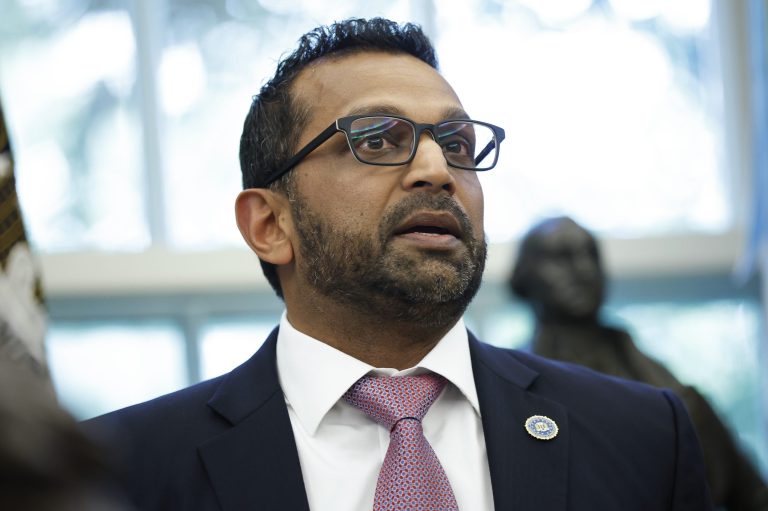
FBI Director Kash Patel publicly confirmed that the FBI has taken the lead on the investigation, and that they are deploying data analytics (including cell-phone tracking) and collecting evidence at the scene.
The USSS affirmed that the discovery “underscores the importance of our layered security measures” and that while there has been no impact to the aircraft’s movements, the stand warranted investigation.
Local authorities in Palm Beach County are cooperating with federal agencies. A road (Southern Boulevard) was closed for a period while investigators assessed the site.
Possible Explanations and Context
Investigators are entertaining a range of scenarios:
Hunting or recreational use: Some sources suggest the platform could simply have been used for hunting, monitoring wildlife (e.g., invasive iguanas) or other legal outdoor activity. Law-enforcement cautions that the structure on its face may seem benign.
Potential threat scenario: Given the stand’s vantage point and proximity to a U.S. Government aircraft used by a former President, security officials consider the possibility that it was placed deliberately to observe or even stage a threat. The elevated platform and line of sight raise serious red flags.
Construction / airport logistics changes: Because Air Force One’s location on the airfield had shifted due to ongoing construction, the protective perimeter and usual sight-lines may have changed, creating a window of vulnerability.
Security Implications
Presidential aircraft and motorcade movements are among the most secure operations in the U.S. If a structure with potential line-of-sight to a landing or taxiing zone goes undetected, it challenges assumptions about perimeter control, surveillance, and threat detection.
The incident underscores how nontraditional threats (e.g., elevated platforms, unattended structures) can introduce vulnerabilities. Security planning must anticipate not just weapons but vantage points, observation posts, and “unremarkable” installations.
The fact no weapons or people were found suggests this may have been in place for reconnaissance or passive observation — which typically must be detected before an active threat emerges.
The cooperation between USSS, FBI and local law enforcement highlights the cross-agency nature of threats to high-value targets and the need for unified intelligence and physical security operations.
Why the Story Matters for Public Awareness
On the political dimension, the target (Air Force One when used by Trump) is high-profile; any security incident or exposed vulnerability becomes a matter of public concern.
For the aviation community, it raises questions about how general-aviation airports, fixed-base operators (FBOs), and public-use airports manage elevated security when presidential or VIP aircraft utilize the facility.
For citizens it serves as a reminder: national-security incidents often begin at the observational or reconnaissance stage long before an active attack. Awareness and vigilance at the local level can matter.
For policy and budget makers, incidents like this could influence decisions about funding for perimeter monitoring, sensor systems, vegetative or terrain concealment detection, and coordination with local jurisdictions.
What We Still Don’t Know
Who built the stand, when exactly it was installed, and for what purpose.
Whether the stand was equipped with any surveillance tools (cameras, optics) or if any attempt was made to liaise with other threats.
What the mobility or permanence of the structure is — whether it can be removed quickly, camouflaged, or repositioned.
Whether the discovery will lead to charges or merely a security mitigation action and removal of the structure.
How many similar vantage-points exist around other airports and presidential aircraft locations — i.e., whether this is an isolated incident or emblematic of a broader vulnerability.
What Comes Next
Investigators will continue forensic examination of the site: tree stand materials, access routes, cell-phone or electronic footprints, surveillance footage, and any local address or property links.
Airport security protocols will likely be reviewed and enhanced. This may include more frequent sweeps of surrounding vegetation, aerial or drone monitoring of vantage points, and coordination with local landowners or public-use areas near aircraft operations zones.
Stakeholders (airport authorities, the Secret Service, FBI) might issue updated guidance on identifying suspicious elevated structures, especially near VIP or government aircraft operations.
Politically, this incident may surface in debates around presidential security, federal agency oversight, and airport/aviation security funding.
Final Word
The discovery of a seemingly innocuous stand near a high-value aircraft operations zone may at first glance sound odd or even mundane. But in the realm of national security, observation points matter. The fact that the FBI and Secret Service are taking this seriously reflects how an elevated platform, once unnoticed, can become a critical security concern.
As the investigation progresses, one clear message emerges: secure zones are not just about fences and armed guards — they’re about what you don’t see — vantage points, observation posts, concealed routes — and staying ahead of what might seem harmless but could be a prelude to something much more dangerous.










+ There are no comments
Add yours