






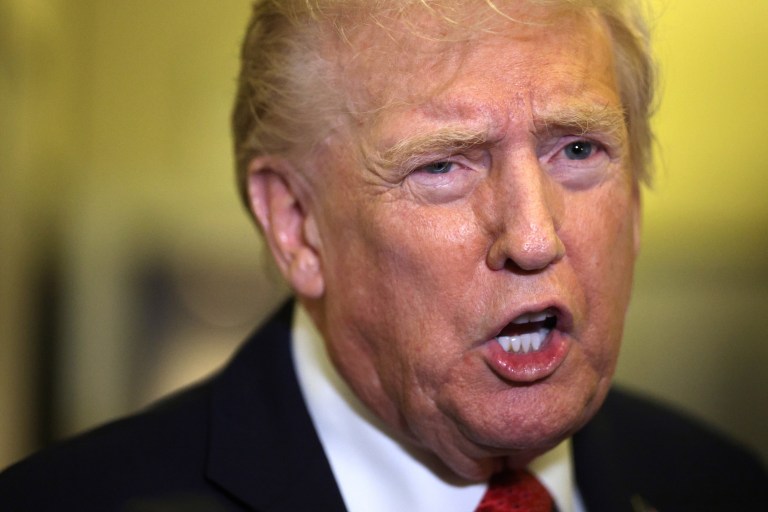
The headlines suggest a shift in mood: markets are reacting positively to signs that the aggressive tariff strategy under Trump may be losing steam, and traders are interpreting it as good news. There are several interlinked reasons why this is happening.
1. Tariffs Raise Costs, Drive Uncertainty — Relief = Market Breather
Trump’s broad tariff push has imposed added costs on U.S. companies, raised inflationary pressure and introduced substantial uncertainty into supply‐chains. For example:
A detailed study by the Tax Foundation estimated that threatened and implemented U.S. tariffs impacted US exports to the tune of $223 billion (based on 2024 values) when fully enforced.
According to analysis, U.S. firms and consumers bear a large share of the tariff burden — not just foreign exporters.
One review noted that trade war anxiety from the U.S.–China dispute was already hurting global equity valuations.
When traders glimpse a path away from that escalation, it reduces one of the major overhangs on valuations.
2. Valuations Already Stretched — Less Drag from Policy Risk
Equity markets in the U.S. have been trading at historically elevated multiples in many sectors. Some of the risk to future returns stems not from business fundamentals, but from policy and macro uncertainty. With tariffs being one such policy risk, a softening provides relief — and the potential for higher forward earnings or lower discount rates.
3. Global Trade Friction Undermines Growth — Relief Means more Upside
Tariffs are not just a cost issue—they can slow global growth by disrupting trade flows, supply chains and corporate investment. Slower growth tends to suppress earnings, which are the lifeblood of equity markets. If the tariff war loses steam, the “growth headwind” might ease, which is bullish from a trader’s perspective.
4. Sentiment and Trigger Mechanics
Markets are very sensitive to expectations. Traders often act ahead of structural changes — if they believe the tariff approach may be scaled back, you see advance buying. Indeed, recent market moves show this:
The major U.S. indices climbed sharply when signs emerged of trade-tension easing between the U.S. and China.
Global stocks rose when rumours circulated that Trump’s threats of sweeping tariffs (e.g., 100% tariffs on Chinese goods) were “not sustainable”.
Thus, traders are effectively “rewarding” the possibility of a tariff-war pivot.
What Are the Key Signals That Traders Are Banking On?
Here are some of the actions and rhetoric from Washington and global capitals that have particularly caught traders’ attention:
Trump himself admitted that some of the tariff threats “are not sustainable”.
Reports that major global companies are facing high costs due to tariffs, but that the outlook is starting to stabilise.
Market metrics: as trade tensions seemed to ease, the U.S. stock market approached new highs, and global equities participated.
Traders are essentially saying: if policy risk drops, then valuations become more credible, and earnings growth becomes more reliable.
Why This Could Matter — But Also Why Caution Is Warranted
The Opportunity
If tariffs are rolled back (or at least scaled back), companies that were under margin pressure may see relief.
Supply chains may normalise, cost inflation may moderate, and consumer demand may stabilise.
Global trade flows may improve — benefiting export-oriented companies and sectors.
The “one less risk” narrative may reduce the discount rate that investors apply, thus supporting higher valuations.
The Risks & Watch-Points
False hope: If markets assume a tariff de-escalation but it doesn’t fully materialise, we could see disappointment.
Lagged effects: Even if tariffs ease, the damage to supply chains, investment decisions and consumer sentiment may take time to reverse.
Other policy risks: Tariffs are just one variable. There are interest-rate, inflation, geopolitical and earnings-cycle risks too.
Valuation stretch: As one analysis pointed out, the U.S. equity market was already trading at high forward price-to-earnings multiples, so there has to be actual earnings upside to justify further gains.
SEO Keywords & Structure Suggestions
To maximise reach for the article, you might want to include keywords like:
“Trump tariff war markets reaction”
“stock traders delighted tariff resolution”
“how tariffs impact stock market”
“US-China trade war stocks relief”
“tariff de-escalation equity rally”
You can structure the article with sub-headings (like above) and use bullet points and numbered lists for readability. Use internal links if you cover related topics like “impact of tariffs on supply chains”, “global trade risk” or “equity valuation and policy risk”.
Conclusion
In sum, the reason stock traders appear “delighted” at the prospect of Trump losing—or at least scaling back—his tariff war is straightforward: reducing policy risk and cost pressure is bullish for equities. While there are still several caveats and uncertainties, the markets are forward-looking and tend to reward the expectation of clearer, more supportive economic policy. For investors and market observers, this shift in tone may warrant monitoring: it could mark one more tailwind for equities, albeit not a guarantee of sustained upside.













+ There are no comments
Add yours