






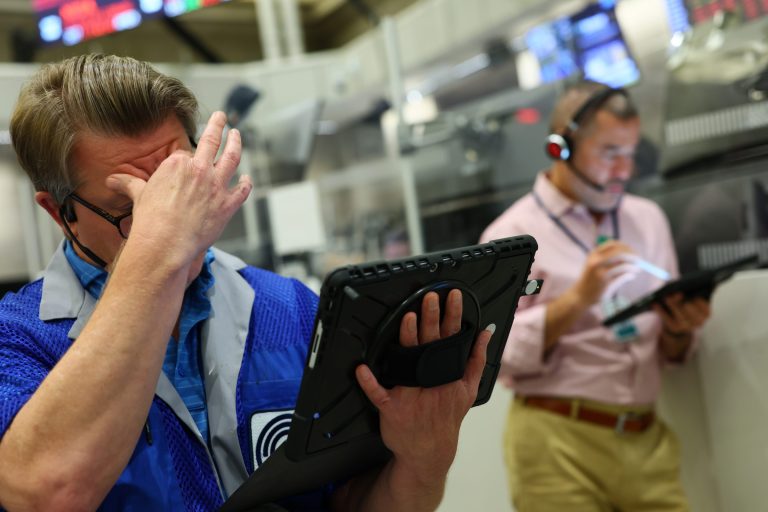
Wall Street’s Reality Check: Dow Futures Bounce as Recession Fears Rattle Investors
After months of seemingly unstoppable growth, U.S. markets finally woke up to the sound of recession alarm bells ringing loud and clear. But in a dramatic turn of events, Dow futures reversed higher early Monday morning—just hours after nosediving on fresh economic warnings. The shift has reignited debate over whether Wall Street has been living in a dream of a gravity-defying economy, one that may now be losing altitude.
For investors, policymakers, and analysts alike, the volatile swing served as a wake-up call: the economy’s resilience has limits—and the market may be pushing them.
The Week Begins With Whiplash
Futures tied to the Dow Jones Industrial Average, which had fallen by over 300 points overnight, reversed course and rose by 0.4% by mid-morning, indicating a turbulent but positive open. Similar rebounds were observed in S&P 500 and Nasdaq futures, though both remained highly sensitive to incoming data.
The initial drop was fueled by troubling signs:
Weakening consumer spending figures released Friday suggested household resilience is eroding.
Bond yields dipped sharply, reflecting increased investor appetite for safe-haven assets—often a sign of growing recession fears.
A surprise contraction in manufacturing activity, as reported by the latest ISM index, showed the sector remains under serious strain.
The yield curve inversion, a classic recession indicator, deepened to its widest margin in two decades.
And yet, by Monday morning, futures staged a surprising comeback—thanks in part to bargain hunting, hopes of a Fed pivot, and optimism about upcoming earnings from tech giants.
The Dream of a Gravity-Defying Economy Is Cracking
For months, U.S. markets have soared on hopes that the Federal Reserve would navigate a “soft landing”—curbing inflation without tipping the economy into recession. Stocks surged, tech rallied, and job reports kept delivering upbeat surprises. Pundits declared that America’s economy was defying gravity.
But cracks are now clearly visible beneath the surface:
Credit card delinquencies have risen sharply in Q2, hitting their highest level since 2009.
Small business optimism has slipped for four consecutive months, as rising costs and weakening demand weigh on outlooks.
Corporate earnings guidance is becoming increasingly cautious, with several major players flagging “macroeconomic headwinds.”
These signs have many wondering: has Wall Street been too optimistic for too long?
The Fed Factor: Policy Pivots or Painful Pause?
At the center of the volatility is the Federal Reserve, which now faces a high-stakes balancing act. With inflation still hovering above its 2% target and unemployment historically low, the Fed has little room to cut rates without risking an inflation rebound.
However, with economic data turning south, expectations are shifting. Traders are increasingly betting that the Fed could begin cutting rates earlier than expected in 2026—even as early as Q2—if the economy continues to show signs of softening.
“We’re at a critical inflection point,” says Dana Cormack, Chief Market Strategist at Skyline Capital. “If the Fed moves too slowly, they risk triggering a hard landing. If they pivot too soon, inflation could reignite. Either way, volatility is the name of the game.”
Sectors in Focus: Winners and Losers
As futures reverse higher, investors are recalibrating their positions across sectors:
Tech Stocks: Apple, Microsoft, and Alphabet futures saw modest gains, driven by expectations of resilient earnings and lower interest rate sensitivity.
Financials: Banks are under pressure as recession fears raise concerns about loan defaults and shrinking margins.
Consumer Discretionary: Particularly vulnerable, as consumers begin pulling back on spending, with stocks like Target and Nike down in pre-market trading.
Energy: Crude prices fell sharply overnight on fears of slowing global demand, dragging down oil majors and related ETFs.
The rebound in futures may reflect short-term optimism—but long-term outlooks remain deeply uncertain.
Investor Sentiment: Cautiously Opportunistic
Despite the flashing warning signs, not everyone is panicking. Some investors see the pullback as a healthy correction—a breather after an extended rally.
“We’ve been due for a reality check,” says Michael Burns, a portfolio manager at Sterling Ridge Investments. “This doesn’t necessarily mean a full-blown recession, but it does mean investors need to be more selective and strategic.”
Defensive sectors like healthcare, utilities, and consumer staples are drawing renewed interest. Meanwhile, gold and bonds are seeing strong inflows as investors hedge against market turmoil.
What to Watch Next
The rest of the week promises more volatility and potentially more clarity. Key data and events on the radar include:
Consumer Price Index (CPI) inflation data, due Thursday
Big Tech earnings reports, including Apple and Amazon
Jobless claims and payroll figures, offering a window into labor market strength
Comments from Fed Chair Jerome Powell, who is scheduled to speak Friday
All eyes will be on whether the economy can show signs of stabilization—or whether more shocks lie ahead.
Conclusion: Hope Meets Hard Reality on Wall Street
The sharp reversal in Dow futures suggests that, while recession fears may have jolted Wall Street awake, the market remains deeply conflicted. Bulls see opportunity, while bears warn of systemic risks. And caught in the middle are millions of retail and institutional investors trying to navigate one of the most uncertain economic climates in recent history.
The days of gravity-defying optimism may be over—but that doesn’t mean the sky is falling just yet.
As always, in markets as in life, expect the unexpected.














+ There are no comments
Add yours