







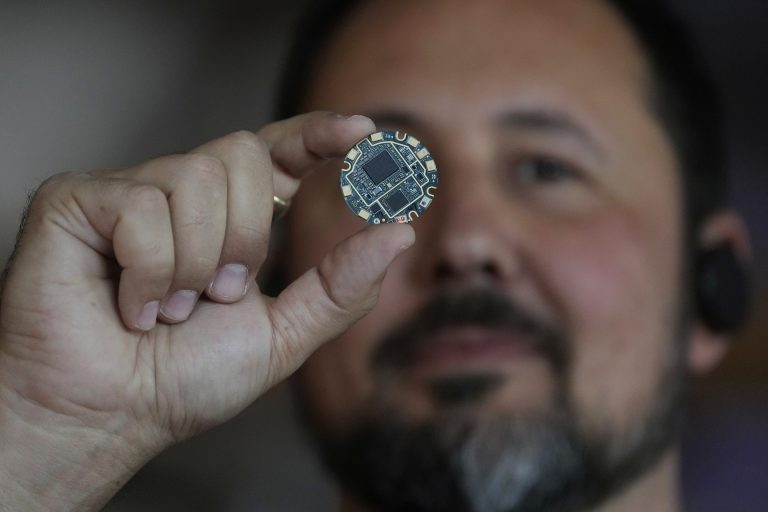
A little-known technologist who recently made headlines for reportedly showing OpenAI CEO Sam Altman and former Apple design chief Jony Ive an early concept sketch of a next-generation AI-powered device is now embroiled in a high-stakes legal battle. His former employer has filed a lawsuit, claiming that the idea — along with crucial intellectual property — was stolen during his tenure at their company.
The legal action, which has sent ripples through Silicon Valley and the tech innovation space, centers around allegations that the technologist took proprietary concepts, product designs, and development plans from his former workplace to pitch to high-profile figures in the AI and hardware industries. While the court documents remain partially sealed, insiders familiar with the case confirm that the lawsuit accuses the technie of breaching contractual obligations, misappropriating trade secrets, and violating non-disclosure agreements.
The AI Device That Sparked Industry Buzz
The unnamed technologist captured attention earlier this year when reports emerged that he had shown Sam Altman and Jony Ive — two of the most influential minds in artificial intelligence and industrial design — a rough prototype drawing of what he claimed could be the “next big thing” in consumer AI. Described as a sleek, screenless AI-powered personal assistant device, the concept was said to integrate voice interfaces, ambient computing, and seamless connectivity in a form factor unlike anything on the market.
Insiders say that both Altman and Ive were intrigued enough to discuss the potential of the product further, sparking speculation about a possible collaboration on a future AI hardware startup. The buzz only grew after it was revealed that OpenAI and Jony Ive’s design firm, LoveFrom, were already in talks about creating a consumer-grade AI product — one that could redefine human-device interaction.
However, the spotlight quickly turned sour when the technologist’s former employer stepped in with a lawsuit.
Lawsuit Details: Theft of IP or Misunderstood Innovation?
The former employer, a mid-sized tech company specializing in AI and edge computing, alleges that the concept shown to Altman and Ive was not the brainchild of the individual alone — but rather a product of collaborative development during his time at the firm. According to the legal complaint, the technologist had access to confidential product roadmaps, early hardware mockups, and machine learning integration models that were under active development by a team of engineers and designers.
“We are deeply disappointed by the actions of our former employee, who took advantage of his role to claim ownership over something that was created through months of team collaboration and company resources,” said a company spokesperson. “Our priority is to protect the intellectual property that rightfully belongs to our organization and the people who helped build it.”
The lawsuit seeks damages for breach of contract and demands a full injunction to prevent the technologist from profiting or further promoting the AI device concept to investors, media, or potential collaborators.
Tech Industry Divided Over Ethics and IP Boundaries
The situation has sparked intense debate within the tech community about innovation ethics, intellectual property, and the line between inspiration and theft. Some argue that the technologist may have been merely exercising his creative freedom to explore an idea that wasn’t fully supported or prioritized by his former employer. Others believe the case reflects a growing trend of employees leveraging insider knowledge to leap into entrepreneurial opportunities — a move that blurs legal boundaries.
“It’s a classic case of Silicon Valley gray zones,” said one startup founder. “Was it an idea he sketched on a napkin after work — or a direct extension of something his company was actively working on? That distinction will likely determine the outcome of the lawsuit.”
Tech law experts say the case could set a precedent in how courts interpret intellectual ownership of early-stage ideas in fast-paced sectors like AI and consumer electronics.
OpenAI and LoveFrom Stay Silent
Neither OpenAI nor Jony Ive’s LoveFrom has commented publicly on the lawsuit or their current relationship with the technologist. A source close to the matter says both parties were unaware of the legal dispute when the initial concept sketch was shown and are now re-evaluating any potential involvement.
“Both Sam Altman and Jony Ive are extremely careful about who they work with,” said the source. “The last thing either of them wants is to get entangled in a messy IP fight.”
OpenAI has been actively exploring consumer-facing applications of AI beyond chatbots and APIs, and Jony Ive has been reportedly exploring next-generation hardware solutions that move away from traditional screens and apps — making the reported AI device pitch particularly timely.
What Happens Next?
The lawsuit is still in its early stages, and legal experts predict a drawn-out battle that could take months, if not years, to resolve. Depending on the outcome, the technologist could either emerge vindicated and ready to launch a groundbreaking AI product — or be barred from pursuing the idea altogether and face significant financial penalties.
In the meantime, the story serves as a cautionary tale for innovators and entrepreneurs working in emerging tech spaces. As the race to build the next era of AI-powered devices accelerates, so too does the risk of intellectual property disputes, non-compete violations, and ethical gray areas.
Final Thoughts
The case of the technologist who pitched a futuristic AI device to two of the world’s most influential tech leaders — only to be sued by his former employer — highlights the delicate balance between innovation and integrity. In a world where a single idea can be worth billions, the battle over who owns that idea has never been more intense.
Whether he is a visionary wronged by a rigid system or someone who crossed ethical lines in pursuit of personal glory, one thing is clear: the tech world will be watching this lawsuit closely, and its outcome may shape the future of how innovation is protected — and pursued.












+ There are no comments
Add yours