







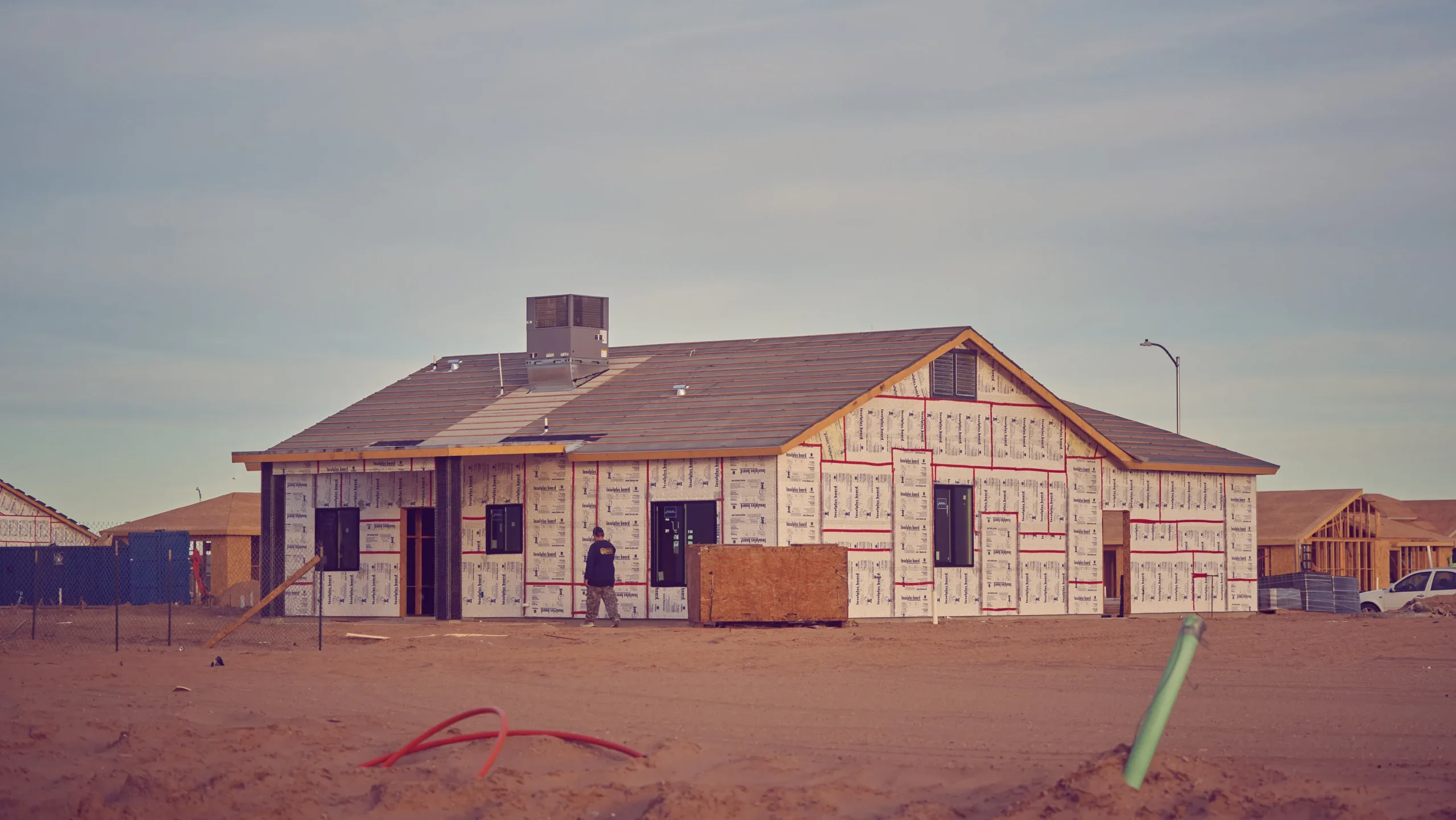
With high mortgage rates, rising construction costs and cautious buyers slowing the new-home market, American builders are turning to renovations, home extensions and repair projects to keep their businesses alive.
America’s housing industry is facing a difficult period as home builders struggle with declining demand, expensive construction materials and increasingly cautious buyers. Once focused on developing multimillion-dollar properties, some smaller construction companies are now shifting their attention towards replacing windows, repairing roofs, upgrading kitchens and renovating existing homes to maintain their businesses.
The changing strategy reflects a significant transformation in the American property market, where building new homes has become increasingly challenging and homeowners are choosing to improve their existing properties instead of moving.
According to a November 23 report by The Wall Street Journal, higher mortgage rates have discouraged prospective buyers from purchasing new properties, while rising construction costs have made large residential developments more expensive. Builders are also facing pressure to offer financial incentives to attract customers, reducing their ability to maintain healthy profit margins.
For smaller construction businesses, the consequences have been particularly difficult.
North Carolina builder Bruce Rogers, who previously specialised in developing luxury coastal homes worth more than $1 million, has increasingly turned to smaller renovation projects. His company, Crystal Coast Construction Unlimited, is now handling work such as replacing residential decks, windows and exterior siding.
One planned $2.5 million custom-home project was cancelled after prospective customers became concerned about higher mortgage rates and the possibility of additional construction costs. The company has since increased its focus on remodeling and repair services.
Other businesses are experiencing similar changes. Diamond Custom Homes in Naples, Florida, has seen remodeling grow from approximately one-third of its business to the majority of its work. Meanwhile, New Jersey-based White Maple Construction has found that homeowners increasingly prefer large property extensions rather than purchasing new houses.
The reasons behind this shift are closely connected to the changing financial realities of American homeowners.
Millions of property owners secured mortgages at historically low interest rates during previous years. Selling their homes and purchasing another property could mean accepting significantly higher monthly mortgage payments. Consequently, many families are choosing to remain in their current houses and invest in improvements instead.
Homeowners are also benefiting from accumulated property equity, which can provide access to financing for renovations, additional bedrooms, modern kitchens and other improvements.
An ageing housing stock is creating another source of demand. The median age of American homes reached 43 years in 2025, compared with 35 years in 2010, according to figures cited in the report. Older properties increasingly require improvements to roofing, plumbing, electrical systems and other essential infrastructure.
Changing demographic needs are also influencing the renovation industry. As more older Americans choose to remain in their homes, demand is growing for accessible bathrooms, safer entrances and redesigned living spaces that accommodate mobility challenges.
The shift towards professional renovation services is another important development. According to the Harvard Joint Center for Housing Studies, the do-it-yourself share of total home-improvement spending fell to a record low of 16% in 2023, compared with 27% in 2003. More homeowners are increasingly willing to pay professionals to complete projects rather than spending their own time managing repairs.
However, the remodeling industry is not experiencing an extraordinary boom. The National Association of Home Builders reported that remodeling spending was flat across the United States in the second quarter of 2026, while the Harvard Joint Center for Housing Studies expects annual home-improvement and repair spending to remain relatively subdued through late 2027.
For builders, remodeling also presents its own challenges. Working on existing properties can reveal hidden structural damage, outdated foundations, plumbing complications and unexpected construction expenses. Smaller renovation projects may also generate lower profits than large custom-home developments.
Despite these difficulties, the shift represents an important survival strategy for businesses struggling with the slowdown in new residential construction.
The changing market also offers a broader lesson about the future of real estate. Housing demand does not disappear simply because fewer people are purchasing new properties. Instead, consumer priorities can change, creating opportunities in renovation, maintenance, property extensions and home modernisation.
As America’s housing market continues to navigate higher borrowing costs and construction expenses, remodeling is becoming more than an additional service for smaller builders. It is increasingly a financial lifeline that could help keep construction businesses operating until demand for new homes improves.







+ There are no comments
Add yours