




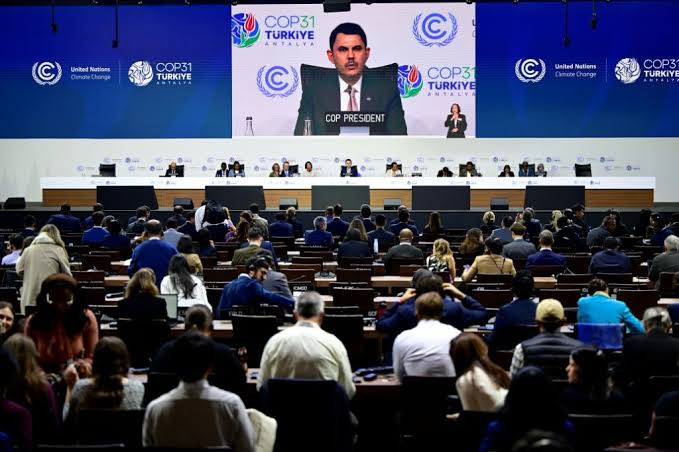
The longest United Nations climate conference in history has ended without a major breakthrough, exposing deep divisions over fossil fuels, financial responsibility and the future of international cooperation.
The world has been waiting for stronger climate leadership, but the conclusion of COP31 in Turkey has delivered another disappointing reminder of how difficult global cooperation can become when political interests collide. After negotiations continued beyond their scheduled Friday deadline and stretched into Sunday, participating countries failed to reach a major new agreement capable of addressing the growing climate crisis.
The conference became the longest United Nations climate summit on record, yet the additional hours of negotiations were not enough to overcome disagreements between wealthy industrialised nations, developing countries and countries heavily dependent on fossil fuel industries.
At the centre of the disagreement was the question of whether the final agreement should directly address the future of fossil fuels. Oil, coal and gas remain the primary drivers of human-caused global warming, but the final deal failed to include an explicit reference to moving away from these energy sources. The omission angered the European Union, Pacific island nations and other countries that had pushed for stronger commitments.
For vulnerable island nations, the issue is far more than a political disagreement. Rising sea levels, stronger storms, coastal erosion and changing weather patterns threaten communities, economies and even the long-term survival of some countries. Their representatives have repeatedly called for urgent international action, arguing that delaying decisions places the greatest burden on nations that have contributed relatively little to global emissions.
Financial support created another major obstacle. Developing countries objected to the absence of clear financial commitments from wealthier nations to help them adapt to rising temperatures and strengthen their climate resilience. Many poorer economies are already struggling with the costs of extreme weather, damaged infrastructure, agricultural losses and growing pressure on public finances.
The failure has drawn strong criticism from United Nations Secretary-General Antonio Guterres, who expressed deep disappointment over the outcome. In what was his final COP summit before leaving office, he warned against the influence of powerful fossil fuel interests, accusing them of delaying climate policies and placing profits ahead of public welfare.
His remarks highlighted a central challenge facing international climate negotiations: governments are expected to protect the planet while balancing energy security, economic growth, employment and powerful commercial interests.
Australian Prime Minister Anthony Albanese also acknowledged the disappointing outcome, attributing the difficulties to the challenging geopolitical environment. Australia’s Climate Minister Chris Bowen was among the key figures involved in the negotiations, as the country co-hosted the talks.
The breakdown also revived memories of the 2009 Copenhagen climate summit, when negotiations similarly failed to produce an agreed political outcome. For many climate campaigners, the comparison raises uncomfortable questions about whether decades of international discussions have delivered progress at the speed required.
The consequences of the latest failure extend beyond diplomatic disappointment. Without stronger agreements on emissions reductions and financial assistance, countries facing the most severe climate impacts could find themselves increasingly isolated. Businesses and investors may also face greater uncertainty as governments struggle to establish consistent long-term climate policies.
Nevertheless, the collapse of negotiations does not mean international climate action has stopped. Individual countries can still strengthen domestic environmental policies, accelerate renewable energy development and cooperate through regional agreements. However, global warming remains a problem that no country can solve independently.
COP31 has exposed a serious leadership challenge for the international community. The world does not lack scientific evidence, warnings or proposed solutions. What remains uncertain is whether political leaders can overcome competing interests and accept the responsibilities necessary to deliver meaningful action.
As climate risks continue to intensify, the message from Turkey is difficult to ignore: global leadership will ultimately be measured not by the number of climate conferences organised or promises announced, but by the decisions governments are willing to make when the negotiations become difficult.





+ There are no comments
Add yours