







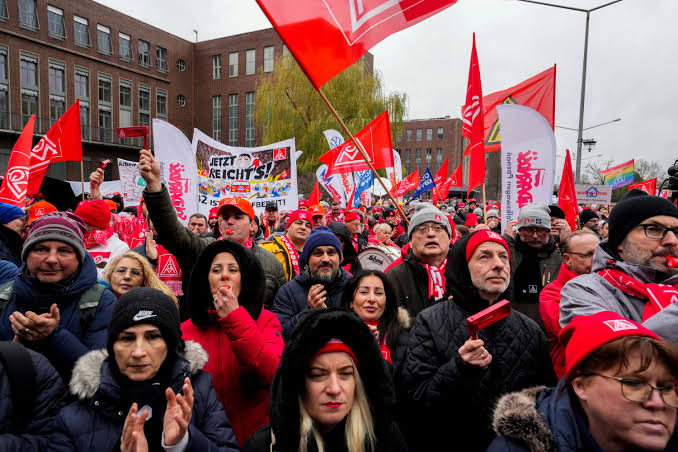
A growing pay dispute threatens to disrupt Germany’s automotive and shipbuilding industries as powerful trade union IG Metall intensifies pressure on employers with a nationwide industrial walkout in the north.
Germany’s industrial sector is facing another wave of disruption as thousands of workers prepare to walk off the job in an escalating dispute over wages and working conditions. The powerful IG Metall trade union has announced a fresh 24-hour strike for Monday, November 23, calling on approximately 23,000 employees across 19 companies in northern Germany to join the action.
The planned walkout marks a significant escalation in the confrontation between industrial workers and employers at a time when Germany’s manufacturing sector is already navigating economic uncertainty, rising business costs and intense international competition.
The strike is expected to affect workers connected to the automotive and shipbuilding industries, two important pillars of Germany’s industrial economy. With thousands of employees potentially absent from workplaces, companies could face production interruptions, operational delays and growing pressure to reach an agreement with their workforce.
IG Metall, one of Europe’s most influential industrial trade unions, is leading the campaign as part of a broader struggle over pay. The union’s decision to organise another 24-hour stoppage signals that previous negotiations have failed to deliver a settlement acceptable to workers.
For employees, the dispute is about more than a disagreement over numbers on a payslip. Workers are increasingly concerned about their purchasing power, household expenses and financial security amid changing economic conditions. Many believe that industrial employees should receive better compensation for their contribution to businesses that depend heavily on their skills and productivity.
For employers, however, the situation presents a difficult challenge. German manufacturers are already under pressure from international competitors, changing consumer demand, energy expenses and the costly transition towards new technologies. Additional wage increases could place further pressure on operating budgets, particularly for companies struggling to maintain profitability.
The automotive industry is especially important to Germany’s economic identity. Global manufacturers and their extensive networks of suppliers support hundreds of thousands of jobs, making industrial stability essential not only for workers but also for the wider economy.
Shipbuilding companies also play an important role in Germany’s industrial landscape, supporting maritime trade, engineering and specialised manufacturing. A prolonged labour dispute could create further uncertainty for businesses operating in an increasingly competitive global market.
The latest strike announcement also highlights the growing influence of organised labour in shaping the future of European manufacturing. Across the continent, workers are demanding stronger wage protection and improved working conditions as companies restructure operations and adapt to economic and technological changes.
Investors and industry observers will be watching closely to see whether the latest industrial action pushes employers back to the negotiating table or triggers a longer confrontation. Even a one-day stoppage can create operational complications, particularly when production schedules involve multiple suppliers and interconnected manufacturing facilities.
The immediate question is whether both sides can reach a compromise before the dispute spreads further. A successful agreement could restore confidence and prevent additional disruption, while continued disagreement risks placing greater pressure on an already challenged industrial sector.
Germany’s manufacturing strength has long depended on its skilled workforce, engineering expertise and ability to compete in international markets. But the latest confrontation sends a clear message: the future of industrial growth cannot be separated from the financial security and expectations of the people who keep factories and shipyards operating.
As 23,000 workers prepare to strike, Germany faces another important test of its industrial resilience. The outcome could influence not only the companies involved but also the wider debate over wages, competitiveness and the future of Europe’s manufacturing economy.







+ There are no comments
Add yours