







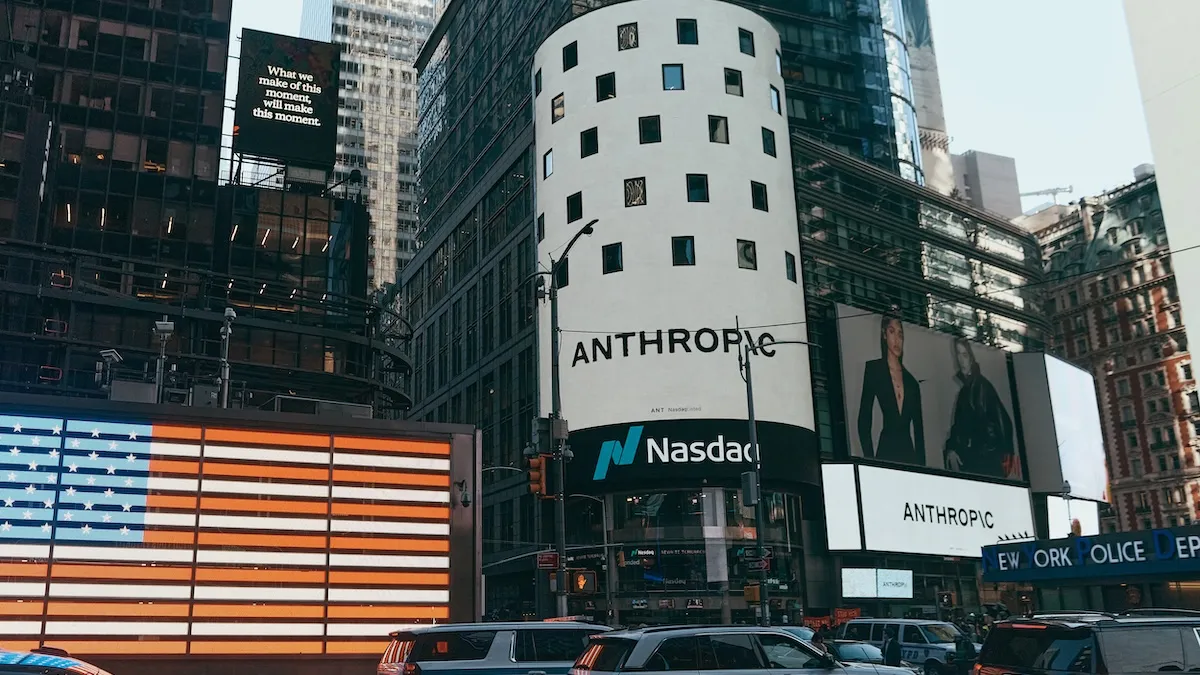
Anthropic’s highly anticipated stock market debut fails to restore investor confidence as technology shares tumble, raising fresh questions about the future of the artificial intelligence boom.
Wall Street suffered a dramatic setback on Friday as investors continued to abandon artificial intelligence-related stocks, pushing two of America’s most closely watched stock market indexes into correction territory. The sharp sell-off marked another difficult chapter for financial markets, highlighting growing concerns that the extraordinary enthusiasm surrounding artificial intelligence may have pushed technology valuations too far.
The S&P 500 dropped 3.70% to close at 6,910.39, while the Dow Jones Industrial Average declined 949.73 points, or 1.93%, ending at 48,147.33. Both indexes fell more than 10% from their recent record highs, officially entering correction territory. Meanwhile, the technology-heavy Nasdaq Composite suffered an even steeper decline, plunging 5.28% to 22,617.73 and wiping out its gains for the year.
The latest market turmoil came despite the highly anticipated public market debut of artificial intelligence company Anthropic. The company, known for developing the Claude AI chatbot, had attracted enormous investor attention ahead of its stock market listing. Its shares initially generated excitement, but the enthusiasm quickly weakened as investors reassessed the value of AI businesses and the enormous costs associated with developing advanced technology.
Anthropic shares fell approximately 9% during Friday’s trading session, adding to the pressure on an already struggling technology sector. The disappointing performance raised questions about whether the excitement surrounding major AI companies can continue supporting increasingly expensive stock valuations.
Technology giant Nvidia was also caught in the widespread sell-off, with its shares dropping nearly 14% despite reporting strong quarterly results. Other semiconductor and AI-related companies experienced significant losses as investors reduced their exposure to businesses closely connected to the artificial intelligence boom.
The growing uncertainty reflects a broader shift in investor sentiment. For much of 2026, expectations surrounding artificial intelligence have helped fuel substantial gains across the technology sector. Companies investing billions of dollars in data centres, advanced computer chips and AI infrastructure attracted considerable market attention. However, investors are increasingly questioning whether the financial returns will justify such enormous spending.
Concerns about inflation and the future direction of US interest rates have added another layer of uncertainty. Investors are closely watching signals from Federal Reserve officials, with expectations of tighter monetary policy creating additional pressure on growth-focused technology stocks.
The market downturn also extended beyond individual technology companies, demonstrating how heavily major American indexes depend on a relatively small group of influential businesses. When investors lose confidence in these companies, the effects can spread throughout the broader financial market.
Despite Friday’s dramatic losses, a correction does not automatically indicate the beginning of a prolonged economic crisis. Financial markets have experienced similar declines before, and investors will be watching upcoming economic data and corporate earnings for signs of stability.
Attention is now turning towards the upcoming holiday shopping season and consumer spending figures, which could provide important clues about the strength of the American economy. Strong consumer demand may help restore confidence, while disappointing results could deepen concerns about economic growth.
For global investors, the latest Wall Street decline serves as a reminder that even the most promising technological revolutions do not guarantee uninterrupted stock market growth. Artificial intelligence remains one of the world’s most closely watched industries, but investors are increasingly demanding stronger evidence that massive investments can translate into sustainable profits.
As markets enter a period of heightened uncertainty, the biggest question is no longer simply how powerful artificial intelligence could become, but whether the companies leading the revolution can deliver enough financial value to justify their extraordinary market expectations.









+ There are no comments
Add yours